

Maddy summaryThis non-binding resolution expresses the House's support for 10 specific rights of youth in foster care, directly affecting young people aged 18-21 navigating the system. It affirms their right to remain in original schools, access health services (including mental health), live free from abuse, maintain sibling contact, and receive adequate food and housing. The resolution does not create new legal obligations but calls for child welfare agencies to uphold these standards, based on documented challenges like high school graduation gaps and trauma exposure.
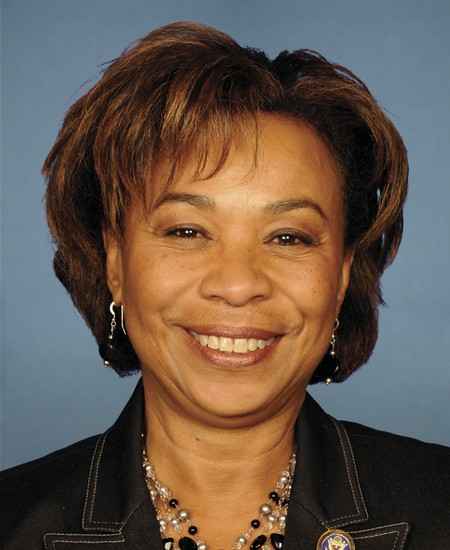
Rep. Barbara Lee
Sponsored bills
Maddy summaryHRES 505 is a non-binding resolution recognizing June 19, 2023, as the annual observance of Juneteenth Independence Day. It acknowledges the historical significance of June 19, 1865, when Union troops announced the end of slavery in Texas, marking the first widespread celebration of freedom for formerly enslaved people in the U.S. The resolution encourages all Americans to observe the day through ceremonies and educational activities to honor this milestone in U.S. history. It does not create new policy or benefits but formally supports public recognition of Juneteenth as part of the nation's heritage.
Maddy summaryHRES 272 is a non-binding resolution passed by the U.S. House of Representatives calling on Russia to immediately release Paul Whelan, a U.S. citizen and Michigan resident imprisoned since 2018 on espionage charges without evidence. It demands Russia provide Whelan with consular access, ensure due process rights, and release him from his 16-year labor camp sentence. The resolution also thanks Canada, Ireland, and the U.K. for their efforts to secure his freedom and expresses sympathy to his family. As a formal statement of congressional position, it does not compel action but underscores the House's stance on Whelan's case.
Maddy summaryThe Tax on Wall Street Speculation Act would impose a tax on certain financial transactions involving securities like stocks, bonds, and derivatives. The tax rate would vary depending on the security type, ranging from 0.005% for derivatives to 0.5% for stocks and bonds. Transactions occurring on U.S. trading facilities or involving U.S. persons would be subject to the tax, with payment responsibilities falling on trading facilities, brokers, or parties to the transaction. The bill also includes a credit against income tax for eligible individuals who pay the transaction tax, with income limits of $50,000 for single filers. The tax would apply to transactions after December 31, 2023.
Maddy summaryHR 4122, the Henrietta Lacks Congressional Gold Medal Act, authorizes a posthumous Congressional Gold Medal to honor Henrietta Lacks for her contribution to medical science through the HeLa cell line. The bill directs the Treasury to strike the medal recognizing how her cells enabled major medical advances, including the polio vaccine and cancer treatments, without altering any laws or policies. The medal will be displayed at the Smithsonian Institution to commemorate her legacy in scientific research and bioethics. This is a purely commemorative measure with no direct effect on current legislation or affected individuals.
Maddy summaryThe College for All Act of 2023 would create a federal-state partnership to eliminate tuition and required fees for eligible students at public community colleges and 4-year institutions. It would provide federal funding to cover tuition costs for students from families earning up to $125,000 annually (or $250,000 for married couples) at public institutions, with states gradually increasing their financial contribution over time. The bill also includes provisions to support historically Black colleges and universities, minority-serving institutions, and expands Pell Grant eligibility to include Dreamers. States would be required to maintain funding levels for higher education and implement specific reforms to improve student outcomes, including transfer pathways and support services.
Maddy summaryHR 3962 establishes an Advisory Council to support victims of gun violence, directly affecting individuals impacted by gun violence (including survivors, witnesses, and relatives of victims) and the professionals who assist them. The council, composed of federal agency heads, victims, and victim assistance professionals, will assess needs, review existing programs, and compile accessible resources covering medical, financial, mental health, legal, and housing support. It must publish a public report within 180 days of enactment detailing best practices and gaps, with a follow-up report after two years. The council’s work will be shared online and distributed to congressional offices, state agencies, schools, and local prosecutors, with no new federal funding authorized for implementation.
Maddy summaryThis bill increases per diem payments for homeless veterans receiving VA services. It raises the daily payment rate from $115 to $200 for certain housing-related services, including emergency responses. The change directly affects homeless veterans who qualify for these VA-funded housing supports. The key provision adjusts the payment rate in Section 2012(a)(2)(B) of the U.S. Code to provide higher funding for services assisting homeless veterans.
Maddy summaryHR 4070, the Disaster Mitigation and Tax Parity Act of 2023, excludes certain payments received from state disaster mitigation programs from taxable income. It directly affects homeowners who get funds from state or state-regulated programs to make property improvements specifically designed to reduce damage from windstorms, earthquakes, or wildfires (like installing fire-resistant roofing or seismic upgrades). The bill adds a new tax exclusion in the Internal Revenue Code, meaning these qualified mitigation payments won't be counted as gross income for tax purposes. This change applies to payments made after December 31, 2020, with options for retroactive tax filings.
Maddy summaryHR 4071, the Moneyball Act, requires professional baseball teams that relocate more than 25 miles from their previous home to pay compensation to their former host communities. The compensation must cover at least the total tax revenue those communities received from the team over the prior decade, paid directly to the relevant state, local, or tribal governments. If a team fails to pay, it loses its special antitrust exemption, meaning it would be subject to standard antitrust laws. The bill also holds team officers personally liable for compensation costs if a team disbands to avoid the requirement.