

Maddy summaryThe Public Health Emergency Response Act (HR 4009) creates new paid leave requirements for employees during public health emergencies. It requires employers to provide up to 12 weeks of paid leave (capped at $511 per day) for employees needing to care for family members due to disruptions in childcare or school, or for employees who are ill with a covered infectious disease. The bill provides tax credits to employers who pay for this leave, covering 100% of qualifying wages for businesses with fewer than 500 employees. Self-employed individuals are also eligible for tax credits to cover equivalent leave costs. The law applies to public health emergencies declared by the Secretary of Health and Human Services on or after January 1, 2022.
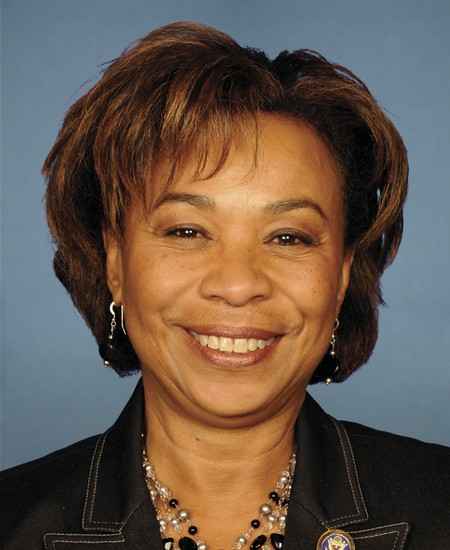
Rep. Barbara Lee
Sponsored bills
Maddy summaryHR 3875, the Expanded Telehealth Access Act, expands Medicare coverage for telehealth services by adding new healthcare professionals to the list of providers eligible for payment. It specifically includes licensed audiologists, occupational therapists (and their assistants under supervision), physical therapists (and their assistants under supervision), and speech-language pathologists. The bill ensures these providers are paid the same rate for telehealth services as they would be for in-person care under Medicare. This change directly affects Medicare beneficiaries seeking remote therapy services and the new provider types who can now offer these services via telehealth.
Maddy summaryThe Menstrual Equity For All Act of 2023 requires free menstrual products to be available at no cost in public schools, colleges, correctional facilities, and federal buildings. It makes menstrual products covered by Medicaid, prohibits taxes on these products, and provides funding through social services programs to help low-income individuals access menstrual products. The bill directly affects students (K-12 and college), incarcerated people, homeless individuals, employees (in businesses with 100+ workers), Medicaid beneficiaries, and people receiving Temporary Assistance for Needy Families (TANF). Key provisions include amending school funding to require free products, creating college grant programs for menstrual product distribution, and adding menstrual products to Medicaid coverage and social services programs.
Maddy summaryHR 3589, the Affordability is Access Act of 2023, requires health insurance plans to cover FDA-approved over-the-counter birth control without cost-sharing (like copays or deductibles). It directly affects millions of people who use contraception, particularly low-income individuals and those in areas with limited access to reproductive health services ("contraceptive deserts"). The bill clarifies that existing insurance coverage rules under the Affordable Care Act apply to over-the-counter contraceptives, and directs the FDA to expedite reviews for over-the-counter status. Retailers must not block access to these products but may refuse sales if payment isn’t provided.
Maddy summaryThe FAMILY Act (HR 3481) would establish a national paid family and medical leave insurance program administered by the Social Security Administration. Eligible workers would receive wage replacement benefits (up to 85% of average earnings, with a maximum of $4,000 monthly) for up to 60 caregiving days per 12-month benefit period for qualifying reasons like caring for a sick family member, personal serious health conditions, or responding to domestic violence. The program would be funded through 0.2% payroll taxes from employees and employers (with self-employed individuals paying 0.4%), with benefits coordinated with existing state programs. The law includes protections against employer retaliation for taking leave and requires employers to maintain health coverage during leave periods.
Maddy summaryHR 3443, the Foster Youth Mentoring Act of 2023, creates a federal grant program to fund structured mentoring programs for youth in foster care and those who have aged out of foster care (under age 26). The bill authorizes $50 million annually for grants to eligible organizations (like nonprofits, state agencies, or tribes) to establish or expand mentoring that provides consistent, year-long relationships focused on academic support, emotional development, and transition to adulthood. Key requirements include mandatory mentor training on trauma, cultural competence, and child welfare coordination, along with strict background checks and recruitment strategies to reflect the diversity of youth served. The program directly affects approximately 443,000 youth in foster care (per 2017 data) and aims to improve their educational outcomes, reduce school absences, and build supportive connections through evidence-based mentoring.
Maddy summaryThe Medicare for All Act would establish a single-payer national health insurance program providing comprehensive coverage to all U.S. residents without cost-sharing. It would replace current private insurance and government programs like Medicare and Medicaid with a unified system covering all medically necessary services including hospital care, prescription drugs, mental health services, reproductive care, long-term care, and preventive services. The bill prohibits private insurers from offering duplicate coverage and requires providers to participate without charging patients for covered services. Implementation would occur over a two-year transition period, with a "Medicare Transition Buy-In" option allowing people to enroll before full implementation.
Maddy summaryThis bill changes Medicare coverage for colorectal cancer screenings. It eliminates out-of-pocket coinsurance costs for these screenings starting in 2026, requiring Medicare to cover 100% of the cost instead of the previous 85% for that year. The change applies to all subsequent years and directly affects Medicare beneficiaries seeking routine colorectal cancer screenings. The key provision amends Medicare Part B to remove the coinsurance requirement for these specific preventive services.
Maddy summaryThis bill would allow diapers to be counted as qualified medical expenses under federal tax law, enabling low-income families with infants and toddlers to use pre-tax funds from health savings accounts, dependent care benefits, and flexible spending arrangements to cover diaper costs. It also prohibits states and localities from imposing sales tax on diaper purchases. These changes directly benefit families who spend up to 14% of their income on diapers - over 5 million children in low-income households face this burden. The policy aims to reduce financial strain by expanding access to tax-advantaged spending for a basic need.
Maddy summaryThe Strengthening Social Security Act of 2023 makes several key changes to Social Security taxation and benefit calculations. It gradually reduces the percentage of high earners' income subject to Social Security taxes, starting with 80% in 2025 and decreasing to 0% by 2029. The bill also increases the first bend point factor for calculating benefits from 90% to 95%, with a phased implementation starting in 2029, and creates a new Consumer Price Index for Elderly Consumers to determine cost-of-living adjustments. These changes will directly affect Social Security beneficiaries, high earners, and widows and widowers in two-income households.