

Maddy summaryHR 6451, the Mental Health Justice Act of 2023, provides $250 million in federal grants to states, tribes, and localities to hire mental health professionals as first responders for specific emergencies. It directs these professionals to replace police in situations involving mental health crises, substance use, or intellectual/developmental disabilities - such as when a 911 caller describes a mental health emergency or a first responder identifies someone needing mental health support. The bill requires grantees to train responders in de-escalation techniques, link individuals to community-based services (not incarceration), and report on outcomes like reduced arrests or use of force. It also mandates data collection on demographics and prevents funneling people into institutional settings, with annual reports to Congress on program effectiveness.
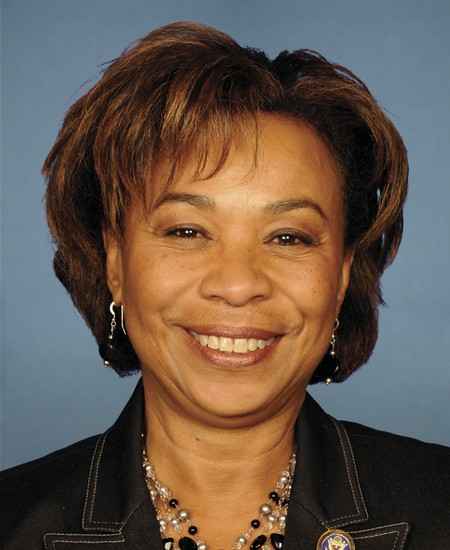
Rep. Barbara Lee
Sponsored bills
Maddy summaryHRES 881 is a symbolic House resolution commemorating the 50th anniversary of the Endangered Species Act of 1973. It honors the Act's role in preventing the extinction of species like the bald eagle and humpback whale, citing its success in protecting 99% of listed species. The resolution does not create new legal requirements or affect any specific group, as it serves solely as a ceremonial recognition of the Act's conservation achievements.
Maddy summaryHRES 886 is a non-binding House resolution supporting Transgender Day of Remembrance (TDoR) by recognizing the epidemic of violence against transgender people and memorializing those lost in the year ending September 30, 2023. It specifically acknowledges the disproportionate impact of violence on transgender women of color, citing 33 documented deaths in the U.S. during that period (with estimates suggesting the actual number is higher due to underreporting). The resolution calls for Congress to prioritize studying and preventing such violence while affirming that all transgender people deserve dignity and respect. As a symbolic resolution, it does not create new laws or allocate funding but serves to raise awareness and honor victims.
Maddy summaryThis bill requires all federal agencies to report detailed spending on advertising contracts. Specifically, agencies must break down total advertising expenditures and show how much was spent with women-owned, minority-owned, and socially/economically disadvantaged small businesses. These reports must include both prior-year actual spending and projected spending for the upcoming fiscal year. The new reporting requirements apply to agency budgets submitted for fiscal year 2025 and beyond.
Maddy summaryHR 6397, the STAR Act, is a procedural bill that makes minor technical changes to existing transportation law. It rearranges the numbering of sections in Title 49 of the U.S. Code related to transit art programs, specifically modifying Section 5323(h) and Section 5309. The bill does not create new policies or affect any people, organizations, or funding. It only updates the legal structure of current provisions without changing any substantive requirements for transit art. As a technical amendment, it has no direct impact on transit agencies, artists, or the public.
Maddy summaryHR 6415, the CARE for First Responders Act, creates targeted mental health support for first responders, including law enforcement, firefighters, EMTs, and 911 operators (previously excluded from many services). It establishes a 24/7 confidential mental health hotline integrated with the 988 Suicide Lifeline, funds mobile crisis teams for disaster response, and mandates specialized training to reduce stigma and improve access to culturally competent care. The bill requires the development of peer support programs and education for responders and their families on mental health coping strategies. It authorizes $5 million annually (2024-2028) for grants to states and organizations to implement these services, specifically addressing the higher rates of mental health challenges and suicide among first responders compared to the general population.
Maddy summaryHCONRES 77 designates the week of November 13-19, 2023, as "National Caregiving Youth Week" to raise public awareness about children and adolescents under 18 who provide primary or secondary care for family members with health conditions like chronic illness, disability, or aging. It recognizes these young caregivers as an underserved group facing challenges balancing care duties with school, mental health, and well-being. The resolution encourages educators, health professionals, and policymakers to acknowledge their contributions and supports new federal research to better understand their needs. As a symbolic gesture, it does not create new laws, funding, or services but aims to foster national recognition of this population.
Maddy summaryThe Confronting Police Violence Against Children Act of 2023 requires the National Institute of Justice to study all incidents where children under 18 were seriously harmed or killed by law enforcement officers over the past 15 years. The report must analyze demographic details (like age, race, disability status), officer training, incident circumstances, and whether children were in mental health crises, while gathering input from legal experts, medical professionals, and community groups. It will provide recommendations for preventing excessive force, improving officer training for youth interactions, and ensuring children receive help from mental health professionals instead of police. The goal is to inform future policies and training practices, not to enact immediate legal changes.
Maddy summaryThis bill extends a tax incentive allowing businesses to immediately deduct costs for cleaning up contaminated properties (brownfields). It modifies the tax code to permit these deductions for expenses paid between 2012-2022 and starting in 2027. The change directly affects developers and property owners involved in brownfields redevelopment projects, enabling them to reduce taxable income for cleanup costs. The policy update avoids requiring capitalization of remediation expenses over time, providing immediate tax relief during specified periods.
Maddy summaryHR 3601, the Student Veteran Work Study Modernization Act, expands eligibility for a Veterans Affairs work-study allowance to veterans enrolled at least half-time in rehabilitation, education, or training programs - lowering the previous requirement from three-quarter-time. The bill establishes a five-year pilot program to test this change, requiring the VA to apply the same allowance rules to these veterans as to other participants, except for the enrollment threshold. It also mandates annual reports to Congress tracking participation numbers, four-year degree completion rates, and full-time VA employment outcomes for participants. The policy directly affects veterans seeking education benefits while balancing academic and personal responsibilities.