

Maddy summaryThe Restore Honor to Service Members Act of 2023 establishes a Department of Defense "Tiger Team" to improve outreach to veterans with certain discharge statuses (specifically those discharged under "former section 654" before 2011, often related to policies like the "Don't Ask, Don't Tell" era). The team will collaborate with the VA, veterans' groups, and other stakeholders to identify eligible veterans, share contact information, and guide them through the existing review process under Section 527 of the 2020 National Defense Authorization Act. The bill requires the team to submit regular progress reports to Congress and a final report within three years, tracking how many veterans successfully changed their discharge status to "honorable" through the review process. This focuses on streamlining access to an existing review mechanism, not creating new benefits or altering discharge standards.
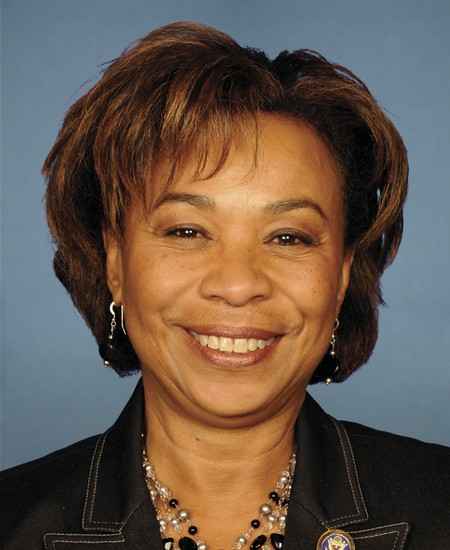
Rep. Barbara Lee
Sponsored bills
Maddy summaryHRES 936 is a symbolic resolution commemorating the 80th anniversary of the Magnuson Act of 1943, which repealed the Chinese Exclusion Act of 1882. It honors the contributions of Chinese Americans and acknowledges the historical injustice of laws that excluded Chinese immigrants and denied them citizenship. The resolution celebrates Chinese American communities and reaffirms commitment to equal civil rights for all, regardless of race. As a commemorative measure, it does not create new laws or alter policies.
Maddy summaryHR 6830, the "Books Save Lives Act," requires covered schools (elementary/secondary schools receiving federal funds) and public libraries receiving federal assistance to maintain staffed libraries with diverse book collections. These collections must include books written by, illustrated by, or about individuals from underrepresented communities - defined as racial/ethnic minorities, LGBTQ+ individuals, religious minorities, or people with disabilities. The bill states that excluding such "covered books" could be used as evidence of discrimination under civil rights laws like the Civil Rights Act of 1964. It also mandates a report on the impact of book-banning campaigns on these communities within 180 days of enactment.
Maddy summaryThe Brittany Clardy Missing and Murdered Black Women and Girls Act establishes a new Office within the Department of Justice to address the disproportionate rates of missing and murdered Black women and girls in the U.S. The Office will collect and analyze data on these cases - including case resolution times, Amber Alert usage, and trafficking links - and create a public dashboard for tracking. It also creates a grant program for community organizations to provide culturally appropriate prevention services, law enforcement training, and victim support. The Office must submit biennial reports to Congress with findings and recommendations to improve the criminal justice response to these cases. This bill directly affects Black women and girls facing violence, law enforcement agencies, and community organizations providing related services.
Maddy summaryThis bill designates the Elk River Trail in California's Headwaters Forest Reserve as the "Senator Dianne Feinstein Memorial Trail." It updates all official federal references - such as laws, maps, and documents - to reflect this new name. The bill directly affects the Elk River Trail and federal records mentioning it. No substantive policy changes or funding are involved; it solely honors Senator Feinstein through a trail naming designation.
This resolution condemns all forms of discrimination and expresses support for policies to prevent and respond to hate crimes, including education and training on prevention and response.
Maddy summaryThe Rent Relief Act of 2023 creates a new refundable tax credit for renters whose rent exceeds 30% of their adjusted gross income. It directly affects low-to-moderate income renters in their principal residence, with credit percentages ranging from 100% (for incomes under $25,000) down to 0% (for incomes over $100,000). The credit is limited to rent within HUD's fair market rent guidelines, and the IRS will make monthly advance payments starting July 2024 for eligible taxpayers who elect this option. The bill requires no additional tax filing for the credit but includes $50 million for outreach to help eligible households enroll.
Maddy summaryThe Eviction Prevention Act of 2023 provides $125 million annually to states and local governments to fund legal counsel for eligible individuals (those with income below 125% of the federal poverty level) facing eviction. It establishes a national database requiring courts to collect detailed data on eviction cases, including tenant demographics, reasons for eviction, representation status, and case outcomes. The database will track court-ordered evictions, administrative evictions, and illegal evictions, with specific requirements for reporting by courts and law enforcement. This legislation authorizes $100 million annually for the database's operation through fiscal year 2028, aiming to improve understanding of eviction patterns and outcomes. The bill creates concrete mechanisms for increasing legal representation access and gathering comprehensive eviction data to inform policy decisions.
Maddy summaryThis bill creates a federal grant program to fund electric bicycle sharing services in disadvantaged communities. It provides up to $5 million per grant to states, local governments, or nonprofits for purchasing e-bikes (required to be made in the U.S.), installing charging infrastructure, and offering community outreach and subsidized memberships. Grants must address community transportation needs, improve cyclist safety, and include reporting on usage, emissions reductions, and user demographics. The program, authorized for $100 million annually through 2033, requires services to operate in communities identified by the federal Climate and Economic Justice Screening Tool.
Maddy summaryThis bill restricts warrantless surveillance of U.S. persons by amending the Foreign Intelligence Surveillance Act. It limits who can conduct queries of U.S. person data (capping at five personnel per FBI field office), prohibits using such queries for law enforcement without proper authorization, and requires documentation of all queries. The bill creates exceptions for emergencies, consent, and cybersecurity, but prohibits using metadata results to access protected communications. It also limits how information acquired under Section 702 can be used in criminal proceedings, requiring specific approvals for such use.