

Maddy summaryThis bill establishes an Interagency Task Force on Black Women and Girls, requiring the Attorney General and Health Secretary to create a group within 180 days of enactment. The Task Force will examine systemic issues affecting Black women and girls - including school discipline, economic opportunities, healthcare access, justice system involvement, and housing - and make policy recommendations across these areas. It mandates the U.S. Commission on Civil Rights to annually study specific disparities like maternal mortality rates, the school-to-prison pipeline, and housing barriers, then report findings to Congress. The bill directly targets policies impacting Black women and girls as defined in the legislation, with recommendations due within two years.
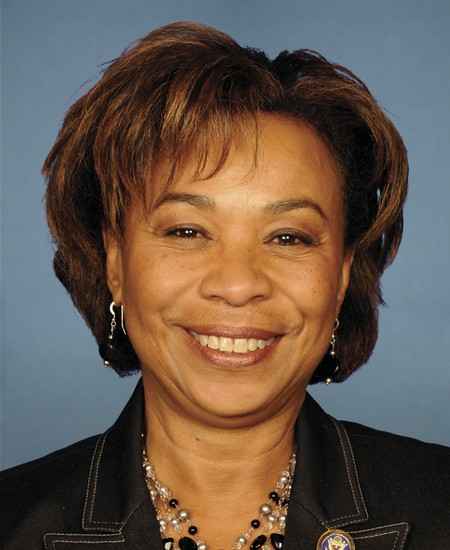
Rep. Barbara Lee
Sponsored bills
Maddy summaryHR 7314, the Diversify Tech Act, establishes a federal Task Force within the Department of Commerce to address diversity, equity, inclusion, and accessibility (DEIA) in the tech industry. The Task Force, composed of federal officials and industry experts, must conduct an initial audit within 60 days of enactment to assess minority employment rates, hiring practices, and layoff trends in tech companies (defined as entities with over 10 million users/subscribers). It is required to submit annual reports to Congress evaluating DEIA progress, assessing how layoffs affected diversity efforts, and examining AI's role in discrimination, while also advising on outreach for minority-owned startups. The bill directly affects large U.S. tech companies and minority-owned tech startups by mandating transparency and accountability in DEIA practices.
Maddy summaryHR 7378, the Frederick Douglass Congressional Gold Medal Act, authorizes Congress to posthumously award a gold medal to honor Frederick Douglass's legacy as a pivotal abolitionist, writer, and advocate for civil rights. The medal, designed by the Treasury Secretary, will be presented to the National Museum of African American History and Culture for display, with bronze duplicates available for sale to cover costs. This ceremonial bill does not create new laws or affect current policies - it solely commemorates Douglass's historical contributions to ending slavery and advancing equality.
Maddy summaryThis bill would grant Temporary Protected Status (TPS) to Ecuadorian nationals already living in the United States. It designates Ecuador for TPS under existing immigration law, protecting up to 300,000 Ecuadorians from deportation and allowing them to work legally for at least 18 months. The designation applies to those continuously present in the U.S. since the bill's enactment, who meet standard admissibility requirements. This provides temporary relief from deportation due to Ecuador's severe security crisis, including a sharp rise in homicides and gang violence documented in the bill's findings.
Maddy summaryThis resolution (HRES 1012) is a symbolic statement by the U.S. House of Representatives condemning Azerbaijan's detention of Dr. Gubad Ibadoghlu, an imprisoned academic and economist. It specifically addresses Azerbaijan's alleged wrongful arrest, beatings in custody, denial of medical care and legal access, and poor prison conditions. The resolution calls for Dr. Ibadoghlu's immediate release and urges the U.S. Secretary of State to prioritize his case in diplomatic engagements with Azerbaijan. As a non-binding resolution, it expresses congressional concern but does not enact new laws or impose sanctions.
Maddy summaryHRES 966 is a symbolic resolution condemning alleged sexual violence committed by Hamas during its October 7, 2023, attack on Israel. It specifically references eyewitness accounts, forensic evidence, and Hamas fighters' admissions of ordering gang rape, sexual mutilation, and assault against Israeli civilians. The resolution calls for international condemnation of such acts as weapons of war, urges nations to criminalize sexual violence, and supports investigations into Hamas' actions. As a non-binding resolution, it does not create new laws or directly affect any individuals but formally expresses the House's position on the issue.
Maddy summaryThis bill prevents states from banning or discouraging the use of specific financial industry codes (merchant category codes) that identify firearm and ammunition merchants. It directly affects financial institutions and payment processors that use these standardized codes for transaction tracking. The law requires states to allow the use of these codes, and the Attorney General can enforce this through civil lawsuits. The bill does not change gun laws or affect gun owners; it only addresses financial coding standards.
Maddy summaryHR 7329, the Election Day Holiday Act of 2024, would designate November 5, 2024 (and subsequent general elections) as a federal public holiday. This change would require federal offices to close and provide federal employees a paid day off on Election Day. The bill amends Title 5 of the U.S. Code to add "Election Day" to the list of designated federal holidays, following Columbus Day. This directly affects federal employees and operations, ensuring they have a day off during general elections.
Maddy summaryHRES 1003 is a symbolic resolution recognizing the contributions of Vietnamese Americans. It acknowledges that approximately 800,000 Vietnamese refugees resettled in the U.S. after the Vietnam War and that over 1.7 million Vietnamese Americans now live in the U.S., forming the fourth largest Asian American group. The resolution highlights their achievements in fields like business, education, the military, and public service, as well as their support for democracy and cultural diversity. As a non-binding resolution, it has no legal effect or direct impact on policy or individuals.
Maddy summaryHRES 1002 is a symbolic House resolution recognizing the cultural and historical significance of Lunar New Year (celebrated as the Year of the Dragon in 2024). It acknowledges the holiday's 4,000-year history in China, its celebration across Asia (including Seollal and Tết), and its significance to Asian Americans and others in the U.S. The resolution expresses respect for those observing the holiday and wishes them a happy new year, but it does not create new laws, policies, or funding. As a ceremonial resolution, it has no direct effect on legislation or constituents.