

Maddy summaryThis House resolution (HRES 1036) expresses the U.S. House of Representatives' support for designating February 29, 2024, as "Rare Disease Day." It acknowledges the global observance of Rare Disease Day - first recognized in the U.S. in 2009 - and highlights the challenges faced by the over 25 million Americans living with rare diseases (affecting fewer than 200,000 people in the U.S. each). The resolution recognizes the importance of improving awareness, encouraging early diagnosis, and supporting efforts to develop treatments for rare diseases. It is a symbolic gesture with no new policies or funding, aligning with the annual global observance of Rare Disease Day.
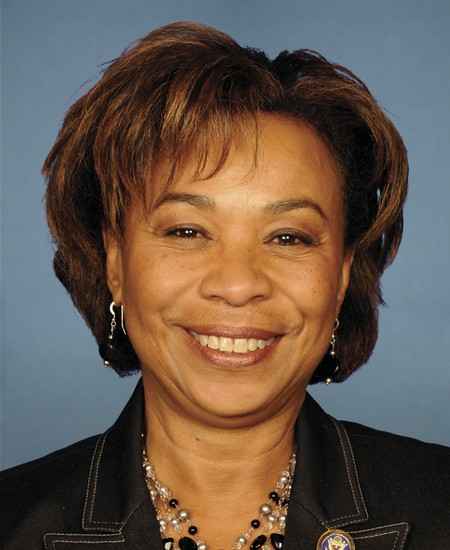
Rep. Barbara Lee
Sponsored bills
Maddy summaryThis bill requires states to immediately stop Medicaid recovery claims against beneficiaries' estates. Specifically, it mandates that states withdraw all existing liens within 90 days of enactment and notify affected individuals or their estates about the withdrawal. The law also prohibits states from initiating, maintaining, or collecting any future Medicaid recovery claims for benefits correctly paid. It directly affects Medicaid recipients and their heirs who were previously subject to state recovery efforts. The key mechanism is the 90-day deadline for states to remove existing liens and cease all new recovery actions.
Maddy summaryHR 7481 establishes a new CDC program to address social determinants of health - such as housing, food access, and transportation - that impact community health outcomes. It authorizes $100 million annually (2025-2029) to fund grants for state/local health agencies, nonprofits, and universities to design and implement community-based strategies tackling unmet health needs. Grantees must collaborate with health systems, housing organizations, and local stakeholders to collect data, develop evidence-based solutions, and monitor impacts on health equity and healthcare costs. The bill requires annual reporting and a national evaluation after five years to assess program effectiveness.
Maddy summaryThis bill establishes a 5-year pilot program to connect eligible veterans with manufacturing careers. It authorizes $10 million annually (2025-2029) to award competitive grants to three states, which will then provide funding to manufacturing employers. The program reimburses employers for training costs related to covered manufacturing-specific skills (like on-the-job training or apprenticeships), exclusively for eligible veterans. States must demonstrate sufficient veteran populations, a strong manufacturing sector, and plans for sustainable high-wage employment. The program requires quarterly reporting on participant pay rates and annual evaluations to Congress.
Maddy summaryHRES 1059 is a symbolic resolution supporting the designation of the week beginning March 5, 2024, as "School Social Work Week." It honors school social workers for their role in addressing students' mental health challenges, learning barriers, and community needs within schools. The resolution encourages public observance through ceremonies and activities to raise awareness of their contributions to student success. As a non-binding resolution, it does not create new policies or affect specific groups directly.
Young Adult Tax Credit Act This bill allows a refundable young adult tax credit and a monthly advance payment of such credit. The bill defines young adult as an individual who is at least age 18, but not yet 25, and is either a citizen, national, or resident of the United States. The amount of such credit is the sum of $500 for each taxpayer or taxpayer dependent who is a young adult in any calendar month.
Maddy summaryThis resolution (HRES 1050) designates March 2024 as National Colorectal Cancer Awareness Month. It symbolically supports existing public awareness efforts around colorectal cancer prevention, screening, and early detection, without creating new requirements or funding. The resolution encourages the public to observe the month with educational activities, aligning with ongoing annual campaigns. It directly affects public awareness efforts but has no binding policy impact.
Maddy summaryThe Tribal Cultural Areas Protection Act would establish a system to permanently protect Tribal cultural sites on public land by designating them as Tribal cultural areas, directly affecting Indian Tribes, federal land management agencies (Interior and Agriculture), and the public. Federal agencies must manage these areas in consultation with Tribal commissions, limiting new development that would disturb the land while preserving existing traditional practices like religious ceremonies and gathering of medicinal plants. The law requires management plans that incorporate Native knowledge and traditional practices, with special protections for sacred sites including restrictions on public disclosure of their locations. This bill ensures existing treaty rights are preserved while preventing commercial development that would harm cultural resources, without affecting existing water rights or federal environmental laws.
This concurrent resolution honors the lives and work of Mary and John Meachum and recognizes the importance of the Mary Meachum Freedom Crossing, which is part of the National Underground Railroad Network to Freedom.
Maddy summaryThis resolution honors the Greensboro Four (Joseph McNeil, Jibreel Khazan, Franklin McCain, and David Richmond) for their 1960 sit-in at a Greensboro, North Carolina Woolworth's store, which sparked the civil rights movement. It formally recognizes their role in challenging racial segregation and inspiring nationwide protests during Black History Month. The resolution encourages schools to include the Greensboro Four's story in their educational curriculum to highlight their contributions to civil rights. As a commemorative resolution, it has no binding effect but aims to promote historical awareness.