

Maddy summaryHR 8390, the Mental Health and MAMA Act of 2024, eliminates cost-sharing (like copays or deductibles) for mental health and substance use disorder services during pregnancy and for one year after birth. It applies to people enrolled in group health plans, individual insurance, or federal employee health plans, covering services provided by in-network providers. The bill requires insurers to waive these costs starting two years after enactment, explicitly including telehealth services. It specifically targets care for pregnant and postpartum individuals, ensuring coverage from pregnancy diagnosis through the 12 months following birth.
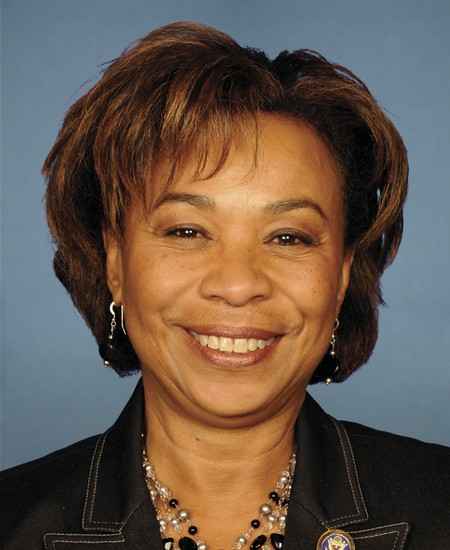
Rep. Barbara Lee
Sponsored bills
Maddy summaryThe Youth Homelessness Guaranteed Income Pilot Program Act of 2024 would establish a 36-month pilot program providing monthly cash payments to up to 105,000 homeless youth and young adults aged 18-30. Participants would receive payments of at least $1,400 per month (or the adjusted fair market rent for a 2-bedroom home in their area) along with housing navigation services, financial coaching, and workforce development support. The program would prioritize individuals from historically marginalized communities and include a study to evaluate how direct cash payments affect housing stability, economic outcomes, and health for participants. The bill aims to address systemic barriers to stable housing faced by homeless youth, particularly those from Black, Indigenous, and other communities of color.
Maddy summaryThis bill (HR 7397) would define "essential health system" in federal law to specifically include certain hospitals serving high numbers of low-income patients. It targets non-Federal, non-profit hospitals that meet one of three criteria: having Medicaid disproportionate share status, serving at least 35% low-income Medicare patients, or receiving significant uncompensated care payments under Medicare. The definition applies to hospitals already designated under existing Medicaid and Medicare programs. This is a technical clarification to standardize how these hospitals are identified in federal statutes.
Maddy summaryHR 7119, the Fairness in Nursing Home Arbitration Act, prohibits nursing homes and providers of home health or community-based care from requiring residents or patients to sign arbitration agreements before any dispute arises. It directly affects residents of skilled nursing facilities (covered under Medicare) and individuals receiving home health or nursing care (covered under Medicaid), preventing facilities from enforcing such agreements for current or former patients. The key provision bans the use of pre-dispute arbitration agreements entirely, making them invalid and unenforceable, and ensures courts - not arbitrators - decide disputes related to these agreements. The bill applies to all service providers, including their employees and affiliates, and takes effect upon enactment.
Maddy summaryHR 7038, the Guaranteed Income for Foster Youth Act, creates a federal program providing automatic $12,000 annual cash benefits to former foster youth who exited care after age 16 but before age 27. Eligible youth aged 18-27 receive benefits for up to five years with no requirements to prove need, and states must enroll them automatically upon turning 18. Benefits are disregarded for other federal program eligibility, and states must offer financial literacy education while reporting detailed data on participants (including race, disability status, and housing). The program takes effect October 1, 2025, with states required to submit annual reports on outcomes.
Maddy summaryHR 6780 establishes a 4-year Medicare demonstration program testing whether hospitals providing medically tailored home-delivered meals to specific patients improves health outcomes and reduces hospital readmissions. The program targets Medicare beneficiaries with diet-sensitive chronic conditions (like diabetes or heart failure) who are at high risk of readmission and meet specific discharge criteria, such as limited daily living activities. Selected hospitals must screen patients, provide at least two tailored meals daily for 12 weeks, and offer medical nutrition therapy, all without patient cost-sharing. The program requires hospitals to submit data for evaluation, with the goal of assessing impacts on hospital admissions, care costs, and patient satisfaction before reporting to Congress in 2027 and 2030.
Maddy summaryThe Healthy MOM Act (HR 6716) would require health insurance plans to provide a special enrollment period for pregnant individuals beginning when pregnancy is reported to the insurer. It would mandate that group health plans cover maternity care for all dependents, including young women who might otherwise lack coverage due to plan exclusions. The bill would extend Medicaid coverage for pregnant individuals and infants to a full 12 months postpartum, rather than the current 60-day period. These provisions aim to improve access to comprehensive maternity care, which the bill states could prevent 3 in 5 pregnancy-related deaths by addressing coverage gaps that disproportionately affect women of color.
Maddy summaryThe Marriage Equality for Disabled Adults Act removes a rule requiring disabled adult children to remain unmarried to receive Social Security benefits. It ensures married disabled adult children, or their spouses, can maintain eligibility for Social Security Disability Insurance and Medicaid without losing benefits due to marriage. The bill changes how income and resources are counted, so a spouse's income and resources are no longer deemed against the disabled adult child for benefit calculations. It also requires states to preserve Medicaid eligibility for these individuals at the same level as if they were unmarried.
Maddy summaryThe FOREST Act of 2023 prohibits U.S. imports of products made from commodities (palm oil, soybeans, cocoa, cattle, and rubber) produced on land where illegal deforestation occurred after the law's enactment. Importers must file declarations demonstrating they've assessed supply chain risks of illegal deforestation, with stricter requirements for products from countries identified in action plans. The law establishes a process to identify countries without adequate deforestation protections and requires them to develop action plans with specific benchmarks for compliance. It creates a fund using import penalty revenue to provide foreign assistance to help countries eliminate illegal deforestation and includes procurement preferences for federal contracts with suppliers demonstrating deforestation-free supply chains.
Maddy summaryHR 6417 amends the existing "Ending Importation of Russian Oil Act" to ban imports of energy products (classified under Harmonized Tariff Schedule chapter 27) produced at any refinery using crude oil originating in Russia. This directly affects U.S. importers and companies bringing in such refined petroleum products. The key provision prohibits these imports regardless of where the refinery is located, targeting oil that has been "laundered" through foreign processing. The bill updates the existing law by adding this origin-based import ban as a new section.