

Maddy summaryHRES 1299 is a non-binding resolution passed by the U.S. House of Representatives that reaffirms the United States' commitment to the 1994 International Conference on Population and Development (ICPD) Programme of Action, which promotes comprehensive sexual and reproductive health and rights as fundamental human rights. The resolution calls for advancing bodily autonomy, opposing reproductive coercion (such as forced abortion or sterilization), and increasing funding for international family planning programs while ending policies like the global gag rule and Helms Amendment. It does not create new laws but sets a policy direction for U.S. government actions on global health and human rights.
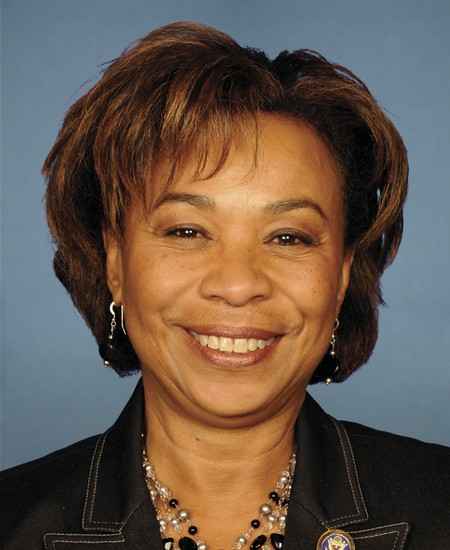
Rep. Barbara Lee
Sponsored bills
Maddy summaryHR 8732, the Domestic Workers Bill of Rights Act, would establish new labor protections for domestic workers including nannies, housekeepers, and caregivers who work in private homes. The bill requires written agreements between employers and domestic employees, provides earned sick days, ensures fair scheduling practices, and prohibits unfair wage deductions for cash shortages or communications. It also creates a Domestic Employee Standards Board to recommend workplace standards and establishes a National Domestic Employee Hotline for assistance. The bill specifically targets domestic workers who have historically been excluded from labor protections under the Fair Labor Standards Act and Civil Rights Act, benefiting an estimated 2.2 million domestic workers in the U.S. who are disproportionately women of color and immigrants.
Maddy summaryThis resolution condemns Russia's detention of opposition leader Vladimir Kara-Murza, who faces up to 24 years in prison for criticizing Putin's war in Ukraine and advocating for democracy. It calls on Russia to immediately release Kara-Murza and all political prisoners, expresses solidarity with him and other detained activists, and urges global leaders to support democratic efforts in Russia. As a symbolic congressional statement (not a binding law), it has no legal effect but formally aligns U.S. policy with international condemnation of his detention. The resolution specifically references his poisoning attempts and deteriorating health while highlighting his advocacy for democratic values.
Maddy summaryHR 8722 establishes a new entitlement program guaranteeing housing choice vouchers (HCVs) for homeless youth and young adults aged 18-30 (or emancipated minors) who qualify under existing HCV rules. It directly affects approximately 4.2 million annually experiencing homelessness, particularly in marginalized communities, by removing systemic barriers like long wait times (132-140 days) and restrictive eligibility. Key provisions include requiring HUD to fund vouchers for eligible households starting in 2026, mandating support services (housing navigation, job training, safety planning), ensuring housing choice without discrimination based on credit or background, and protecting privacy and immigration status. The bill also requires HUD to improve language access for limited English proficiency applicants through translation services and a dedicated resource center.
Maddy summaryHR 8714, the "Home of Your Own Act of 2024," establishes a federal grant program administered by the Department of Housing and Urban Development (HUD) to assist first-time homebuyers. It provides up to $30,000 per person for down payments, closing costs, or necessary home repairs to make a home accessible for people with household incomes up to 120% of local median income (150% in high-cost areas). States and tribes receiving funds must distribute at least 25% through community development financial institutions and require financial counseling for applicants. The assistance must be repaid if the home is not occupied as a primary residence for 60 months, with exceptions for hardship or selling at a loss, and the program is funded at $6.7 billion annually for 2025-2029.
Maddy summaryThis bill allows veterans who served between 1944 and 1977 (and never used VA home loan benefits) to transfer those benefits to family members. Living veterans can transfer benefits to spouses, children, grandchildren, or other direct descendants. For deceased veterans who served in that period and never used benefits, the VA will transfer benefits to eligible family members who apply within 10 years of the law's enactment. Legatees receive full benefits immediately but cannot transfer them further and must still pay applicable fees. The bill updates VA definitions to treat transferred-benefit recipients as "veterans" for home loan purposes.
Maddy summaryHR 537 authorizes a Congressional Gold Medal to honor 60 diplomats who saved Jewish lives during the Holocaust by issuing visas and passports against their governments' orders, risking expulsion and personal danger. The medal will be presented to the next of kin of these diplomats, alongside representatives from their home countries, and permanently displayed at the United States Holocaust Memorial Museum. The bill also permits the sale of bronze duplicates to cover production costs, with proceeds going to the U.S. Mint. This legislation recognizes the diplomats' humanitarian actions without creating new government programs or altering existing laws.
Maddy summaryHR 8698, the SCREEN for Type 1 Diabetes Act of 2024, directs the CDC to launch a national public awareness campaign about type 1 diabetes detection and screening. The campaign will provide written materials on early symptoms and screening benefits, develop public service announcements across media platforms, and distribute culturally competent resources to healthcare providers, schools, and public health departments. It specifically targets communities with rising type 1 diabetes incidence and requires consultation with health organizations and affected communities. The bill authorizes $5 million annually from 2025-2029 to fund this campaign and mandates a report to Congress on its impact one year after enactment.
Maddy summaryHRES 1279 is a non-binding House resolution expressing support for designating June 2024 as "Black Music Month." It honors Black musicians, creators, and communities whose contributions have shaped American music across genres like blues, jazz, hip-hop, and gospel. The resolution calls on all Americans to recognize the month through actions that elevate Black music's artistry, promote diversity, and spread awareness of its historical impact. It does not create new laws or allocate funding, but serves as a symbolic gesture to celebrate Black music's cultural significance. The resolution was introduced by multiple House members and refers to Black music's role in American history and the civil rights movement.
Maddy summaryThis bill bans rental property owners (with 4+ units) and software services from using algorithms that coordinate pricing or lease terms among landlords, which could enable price-fixing. It specifically prohibits "coordinating functions" like collecting and analyzing rental data to recommend prices or occupancy levels, deeming such use a per se violation of antitrust law. The Federal Trade Commission and state attorneys general can enforce these rules, and victims of violations can sue for triple damages. Pre-dispute arbitration agreements or waivers preventing class actions related to these violations are also invalidated.