

Protecting Access to Post-COVID-19 Telehealth Act of 2021 This bill makes permanent several telehealth flexibilities that were initially authorized during the public health emergency relating to COVID-19 (i.e., coronavirus disease 2019), particularly with respect to Medicare coverage of telehealth services. For example, the bill permanently allows federally qualified health centers and rural health clinics to serve as the distant site (i.e., the location of the health care practitioner) for telehealth services under Medicare. Payment must be made in the same manner as for non-telehealth services, rather than in accordance with a separate methodology determined by the Centers for Medicare & Medicaid Services (CMS). The bill also permanently allows beneficiaries to receive Medicare telehealth services at any site, regardless of type or location, and grants the CMS general authority to waive any other requirements during any emergency period.
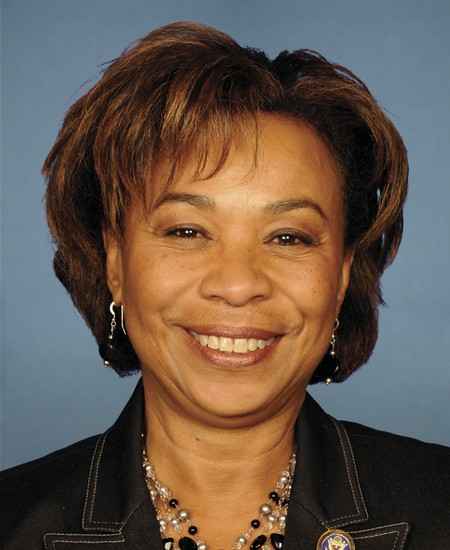
Rep. Barbara Lee
Sponsored bills
Neuromyelitis Optica Spectrum Disorder Consortium Act This bill requires the National Institutes of Health to establish a national consortium to coordinate and support research on neuromyelitis optica spectrum disorder, including by awarding grants. This is a neurological disease that can cause blindness, paralysis, and premature death.
Adult Day Center Enhancement Act This bill requires a survey of, and establishes grants for, adult day programs. These programs provide care to individuals living with neurological diseases and conditions (e.g., Parkinson's disease and traumatic brain injury). In carrying out the survey, the Administration for Community Living (ACL) must identify successful programs, programs that serve younger people, and financial support provided to programs by the ACL. In addition, the ACL must develop best practices for establishing adult day programs. The ACL must also award grants to programs that support younger people.
Women and Climate Change Act of 2021 This bill addresses climate change and its effects on women and girls. Specifically, the bill establishes the Federal Interagency Working Group on Women and Climate Change within the Department of State. The bill outlines the functions of the working group, including the coordination of agencies' policies and activities relating to combating the effects of climate change on women and improving the government's response to and strategy for climate change. In addition, the Office of Global Women's Issues of the State Department must submit a strategy to prevent and respond to the effects of climate change on women.
End Diaper Need Act of 2021 This bill establishes and expands programs to increase access to diapers and related supplies primarily for low-income families. The Department of Health and Human Services must award demonstration grants to entities with experience in community distribution of basic necessities or other community services to meet diapering needs of eligible families with infants and toddlers. Additionally, the bill permits states to use Medicaid funds to provide medically necessary diapers and supplies to certain low-income families. These families must have a child who is over age three and diagnosed with a serious condition such as bowel or bladder incontinence. It also allows individuals to buy medically necessary diapers and supplies with funds from health savings accounts and other tax-advantaged accounts for health care expenses.
Insular Area Medicaid Parity Act This bill eliminates Medicaid funding limitations for U.S. territories beginning in FY2021.
COVID-19 Cold Storage Expansion Act of 2021 This bill requires the Department of Health and Human Services to reimburse health care providers for costs to obtain and operate certain equipment capable of maintaining cold storage of COVID-19 (i.e., coronavirus disease 2019) vaccines. To receive this reimbursement, health care providers must sign an agreement to participate in the Center for Disease Control and Prevention's COVID-19 Vaccination Program. The agreement sets out prioritization, reporting, and other requirements for the program.
This concurrent resolution recognizes the difficult challenges Black veterans faced when returning home after serving in the Armed Forces, their heroic military sacrifices, and their patriotism in fighting for equal rights and for the dignity of a people and a nation. The concurrent resolution also recognizes the need for the Department of Veterans Affairs to continue to work to eliminate any health and benefit disparities for minority veterans.
This concurrent resolution calls for the Citizens' Stamp Advisory Committee to recommend that the Postmaster General issue a commemorative postage stamp honoring the Buffalo Soldiers.
This resolution recognizes Black History Month as an important time to reflect on the significant contributions of African Americans in the history of the United States, including in the Armed Forces.