

Maddy summaryHRES 1345 is a ceremonial resolution recognizing the 100th anniversary of diplomatic relations between the United States and Ireland, established on October 7, 1924. It commemorates the historical milestone, highlighting the strong cultural ties (with over 30 million Americans claiming Irish heritage), economic partnership (over $1 trillion in annual trade), and shared values supporting peace in Northern Ireland. The resolution does not create new laws or directly affect any individuals or entities, as it is purely symbolic. It affirms congressional support for continued U.S.-Ireland friendship and the enduring people-to-people connections between the two nations.
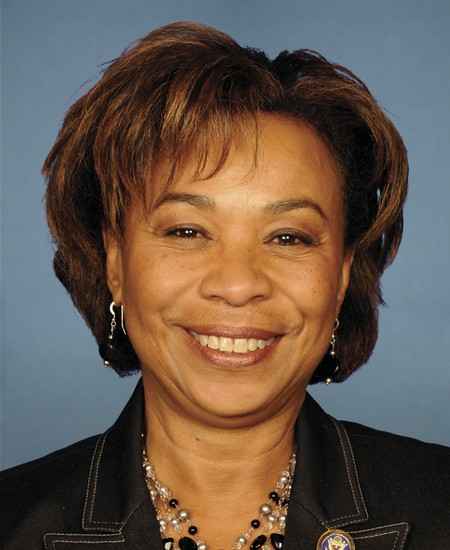
Rep. Barbara Lee
Sponsored bills
Maddy summaryThis bill creates a national registry to help Korean American families separated from relatives in North Korea after the 1953 Korean War Armistice reunite. The Secretary of State must identify eligible families and collect their information (including deceased members) to support future in-person or video reunions. It authorizes $1 million for this registry and requires the State Department to push for family reunions during U.S.-North Korea talks, while consulting South Korea. The State Department must also report annually to Congress on the registry's status, reunion progress, and North Korea's policies affecting family reunions.
Maddy summaryHR 8933 requires large public companies (with over 100 employees or $300 million+ in capital) to conduct racial equity audits every two years. These audits must assess company policies on diversity and disclose any historical ties to or profits from slavery, with findings reported publicly. Companies failing to comply face daily fines ($20,000/day), with 50% of fines funding Treasury's minority programs and 50% supporting HUD housing initiatives for low-income minority communities. The bill mandates transparency on historical inequities while directing penalties toward targeted community investments.
Maddy summaryThis bill (HR 2365, Public Law 118-66) directs the U.S. Department of Health and Human Services (HHS) to establish the National Parkinson’s Project. It requires HHS to create and update a coordinated national plan for preventing, diagnosing, treating, and researching Parkinson’s disease and related disorders (including multiple system atrophy and progressive supranuclear palsy), while coordinating federal research and care efforts across agencies like the NIH, CDC, and VA. The law mandates annual progress assessments, an advisory council with patient advocates and diverse experts, and annual reports to Congress on federal Parkinson’s programs and recommendations for improvement. It affects federal agencies managing Parkinson’s-related programs and aims to improve care coordination and research efficiency for patients and caregivers, with the law sunsetting in 2035.
Maddy summaryHR 8891 amends the Federal Water Pollution Control Act to establish a formal San Francisco Bay Restoration Program. It allows federal funding through grants, cooperative agreements, or contracts for projects on an annual priority list, requiring at least 25% non-federal funding for grants (capping federal share at 75%) while permitting full federal coverage for other agreements. The bill directly affects federal, state, local, and nonprofit organizations, including the Estuary Partnership, working on Bay restoration projects. Key provisions define funding mechanisms and cost-sharing requirements to support specific restoration activities and studies.
Maddy summaryHRES 1333 is a symbolic House resolution recognizing June as National Caribbean American Heritage Month. It affirms the significant contributions of Caribbean Americans to U.S. history, culture, and society, and encourages the public to observe the month through ceremonies and activities. The resolution does not create new laws, programs, or impose requirements on any group; it is a non-binding expression of support for the established observance. This follows annual presidential proclamations since 2006, as noted in the resolution's historical context.
Maddy summaryHRES 1331 is a non-binding House resolution supporting Immigrant Heritage Month by recognizing immigrants' economic, cultural, and military contributions to the United States. It cites data showing immigrants contributed $1.9 trillion to the economy in 2021, made up 20% of entrepreneurs, and serve in critical roles like healthcare and agriculture. The resolution calls on elected officials, educators, and the executive branch to counter anti-immigrant rhetoric, educate the public about immigrant contributions, and protect immigrant communities. It does not create new legal obligations but aims to raise awareness and promote inclusion.
Maddy summaryHRES 1332 is a symbolic resolution recognizing June as LGBTQIA+ Pride Month. It encourages the celebration of Pride Month to honor the historical struggles and achievements of LGBTQIA+ people in the United States, while acknowledging the ongoing challenges they face. This resolution does not create new laws or policies, but serves as a formal recognition of LGBTQIA+ rights as human rights and highlights their integral role in American history. The resolution was introduced by multiple members of Congress and passed by the House of Representatives.
Maddy summaryHR 8911, the Worker Rights and Support Act, requires most employers to provide specific breaks to employees under the Fair Labor Standards Act. It mandates 30-minute meal breaks after 6 hours of work (unpaid unless work continues), 10-minute rest breaks every 4 hours (paid), and medical breaks (up to 20 minutes per need, paid) for documented health conditions. The bill ensures breaks are paid if employees aren't fully relieved of work duties or can't leave the premises. It does not override collective bargaining agreements or stricter state laws, and adds enforcement penalties for violations of these break requirements.
Maddy summaryThis bill bans developers and deployers of AI algorithms from using them to deceive voters about election procedures (like voting locations or registration rules) or intimidate people from voting. It requires clear disclaimers - such as "AI Disclaimer: This output was generated by artificial intelligence" - on AI-generated election content, including fake candidate videos or altered voting information. The law sets safety standards for election-related AI, requiring developers to ensure algorithms are "safe and effective" before use. The Federal Trade Commission enforces these rules, with violations potentially leading to fines or up to one year in prison.