

Child Poverty Reduction Act of 2021 This bill requires the Department of Health and Human Services (HHS) and the Census Bureau to take certain actions with respect to poverty measures and data related to child poverty. It also requires the National Academy of Sciences to report annually on child poverty and study other issues, such as policies to reduce intergenerational poverty. Specifically, HHS must enter into an agreement with the Census Bureau to annually report an anchored supplemental poverty measure for individuals under the age of 18 and must otherwise collaborate with the bureau to, for example, correct income data to account for underreporting. Currently, the Census Bureau uses the official poverty measure (based on cash resources) and the supplemental poverty measure (based on both cash and certain noncash resources, such as nutrition assistance program benefits) to measure poverty. Anchoring the supplemental poverty measure fixes the poverty threshold at a given point in time and then adjusts it for inflation. HHS must publish resources on its website related to child poverty, and the Census Bureau must release certain economic and survey data at the same time it releases a specific report related to income, poverty, and health insurance coverage in the United States.
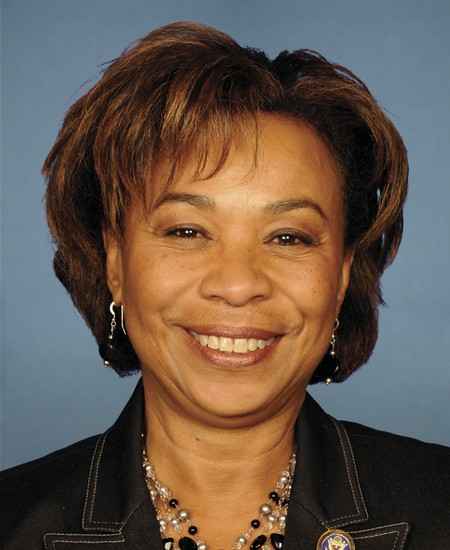
Rep. Barbara Lee
Sponsored bills
Nuclear SLCM Ban Act of 2021 This bill prohibits the obligation or expenditure of Department of Defense or Department of Energy funds for FY2022, or any year thereafter, for the research and development, production, or deployment of the nuclear-armed sea-launched cruise missile and its associated nuclear warhead.
Research Investment to Spark the Economy Act of 2021 or the RISE Act of 2021 This bill authorizes the Departments of Agriculture, Commerce, Defense, Education, Energy, the Interior, Health and Human Services, and Transportation, National Aeronautics and Space Administration (NASA), National Science Foundation, and Environmental Protection Agency to provide support for research regarding COVID-19 (i.e., coronavirus disease 2019) or research disrupted by the COVID-19 pandemic. Support may be used to provide supplemental funding to extend the duration of a grant to a research institution, national laboratory, or individual that was awarded prior to the enactment of this bill, or to expand the purposes of such a grant as specified; issue awards to research the effects of the current pandemic and potential future pandemics; and provide flexibility on awards to account for facility closures or other limitations during the COVID-19 public health emergency. Agencies must provide the support as rapidly as possible. Provided funds shall remain available through FY2021.
This resolution expresses support for the goals of the International Decade for People of African Descent and calls on the United States, in cooperation with African descent communities and organizations, to develop strategies to combat racism domestically and globally.
Alzheimer's Caregiver Support Act This bill authorizes grants to expand training and support services for families and caregivers of individuals living with Alzheimer's disease or a related dementia. The Department of Health and Human Services may award these grants to community organizations and health care and social service providers.
This resolution expresses support for the designation of COVID-19 Victims and Survivors Memorial Day to memorialize the lives lost to COVID-19 (i.e., coronavirus disease 2019).
This bill requires the Joint Committee on the Library to obtain, and the Architect of the Capitol to permanently install in the U.S. Capitol or on the U.S. Capitol Grounds, a monument honoring Associate Justice of the Supreme Court Ruth Bader Ginsburg.
Menstrual Equity in the Peace Corps Act This bill requires the Peace Corps to ensure access to menstrual products for its volunteers who require them, either by increasing stipends for these products or providing these products to its volunteers.
Ultra-Millionaire Tax Act of 2021 This bill imposes a tax on the net value of all taxable assets of the taxpayer on the last day of any calendar year (wealth tax). The amount of such tax shall be equal to the sum of 2% of the amount of taxpayer assets exceeding $50 million but not in excess of $1 billion, plus the applicable percentage (3% or 6% if certain legislation is in effect) of the net value of such taxable assets exceeding $1 billion. There is no tax on the net value of taxable assets not in excess of $50 million. The bill defines net value of all taxable assets as the value of all property of the taxpayer, real or personal, tangible or intangible, wherever situated reduced by any debts (including secured debts) owed by the taxpayer. The definition excludes property with a value of $50,000 or less, tangible personal property, certain property used in a trade or business, and collectibles. The Internal Revenue Service (IRS) must audit annually not less than 30% of taxpayers required to pay the tax imposed by this bill. The bill provides funding to the IRS for FY2022-FY2032 for enforcement of the requirements of this bill, taxpayer services, and for business system modernization.
This bill redesignates the federal building located at 935 Pennsylvania Avenue, NW, in the District of Columbia (currently known as the J. Edgar Hoover Building) as the Federal Bureau of Investigation Building.