

Healthy Families Act This bill provides for paid and unpaid sick leave for employees to meet their own medical needs and those of their families. It requires employers with 15 or more employees to provide their employees with at least one hour of earned paid sick leave for every 30 hours worked, up to a maximum of 56 hours of paid sick leave in a year. An employer with fewer than 15 employees may also provide the same amount of paid sick leave, but may opt out of such requirement, in which case such employer must provide its employees at least 56 hours of unpaid leave in a year. An employee may use sick leave for absences (1) resulting from a physical or mental illness, injury or medical condition; (2) resulting from obtaining professional medical diagnosis or care, or preventive medical care; (3) to care for a child, parent, spouse, a domestic partner, or other blood or close relative; and (4) resulting from domestic violence, sexual assault, or stalking. The bill makes it unlawful for any employer to interfere with, restrain, or deny the exercise of an employee's right to accrue sick leave as provided by this bill. An employee may take legal action to enforce the right to sick leave granted by this bill and the Department of Labor must investigate complaints of violations of the requirements of this bill. Labor is authorized to conduct a public awareness campaign to educate and inform the public of the requirements for paid sick leave provided by this bill.
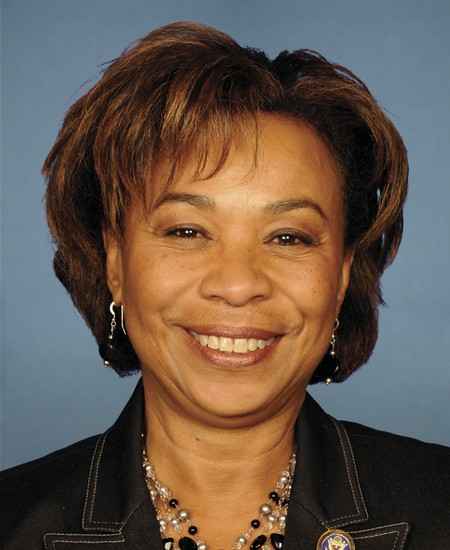
Rep. Barbara Lee
Sponsored bills
Ensuring Safe Disposal of Coal Ash Act This bill updates the requirements related to state permit programs for the regulation of coal combustion residuals units, as administered by the Environmental Protection Agency (EPA). Specifically, the EPA must revise its regulations related to approved state programs for regulating coal combustion residuals units to include any criteria necessary to protect human health and the environment, including the health of vulnerable or disproportionately exposed subpopulations. The regulation revisions must include specified requirements, for example, requiring meaningful public participation in the issuance and renewal of all permits or other prior approvals. The EPA must promulgate regulations that (1) set forth minimum requirements for state and federal coal combustion residuals permit programs, and (2) require owners of closed coal combustion residuals disposal sites to identify the locations of such sites and record the information in the public record to ensure that the locations are known and can be located in the future. Under the bill, the EPA must also implement a requirement for a public hearing in the approval process for establishing a state permit program; review state permit programs at least once every 5 years (the current requirement is once every 12 years); review such programs not later than one year after it revises applicable criteria for federal regulations related to coal combustion residuals units; and include a reasonable period of time, not to exceed 180 days, for a state to correct deficiencies with respect to its permit program.
Climate Justice Act of 2021 This bill requires the President to establish a Climate Justice Working Group that must advise federal entities on a just and equitable transition towards a clean, climate-resilient, and zero-emission economy.
This resolution recognizes the Islamic faith as one of the great religions of the world, acknowledges the onset of Ramadan (the holy month of fasting and spiritual renewal for Muslims), and expresses respect to Muslims in the United States and throughout the world on this occasion.
Farmers Fighting Climate Change Act This bill expands the Conservation Stewardship Program of the Department of Agriculture (USDA) to provide for the establishment of climate change mitigation bundles. Climate change mitigation bundle is defined as a group of conservation activities carried out together to achieve substantial progress toward reducing greenhouse gas emissions or increasing carbon sequestration and improving soil health. Specifically, USDA must make state- or region-specific climate change mitigation bundles available to producers in all regions of the country to promote agricultural practices that increase carbon sequestration and reduce green gas emissions, including by making available bundles that are appropriate for cropland, pastureland, rangeland, and forestland.
Taxpayer Research and Coronavirus Knowledge Act of 2021 This bill requires the Department of Health and Human Services (HHS) to coordinate with specified federal entities to compile a public database of federal contracts, tax benefits, and other support for COVID-19 (i.e., coronavirus disease 2019) biomedical research and development. HHS must develop the database within one month and update it every two weeks.
This resolution expresses support for the goals and ideals of National Youth HIV & AIDS Awareness Day.
Student Loan Forgiveness for Frontline Health Workers Act This bill establishes temporary programs to provide federal and private student loan forgiveness to certain frontline health care workers. Frontline health care workers are those individuals who have made significant contributions to the medical response (e.g., patient care, medical research, or testing) to the COVID-19 (i.e., coronavirus disease 2019) national emergency. Specifically, the Department of Education (ED) must carry out a program to forgive the outstanding balance of principal and interest due on federal student loans for borrowers who are frontline health care workers. Additionally, the Department of the Treasury must carry out a program to repay in full the outstanding balance of principal and interest due on certain private student loans for borrowers who are frontline health care workers. ED and Treasury must coordinate to ensure that eligibility determinations are consistent across both programs and that frontline health care workers who are eligible for both programs may apply for loan forgiveness with a single application. Further, such programs must be available to frontline health care workers who were borrowers of eligible loans and who died as a result of COVID-19. The bill specifies the notification requirements related to the availability of these programs. ED, Treasury, and the Department of Health and Human Services must jointly establish an intergovernmental working group to assist with the administration of these programs, including the development of the application process. The bill also excludes discharged student loan debt under these programs from an individual's gross income.
Stay in Line To Vote Act This bill prohibits states from restricting the provision of food or drink to individuals who are at a polling place to cast their ballots in a federal election.
Providing Responsible Emergency Plans for Animals at Risk of E merging Disasters Act or the PREPARED Act This bill establishes requirements governing the care of animals by entities, such as zoos, in emergencies or disasters. Specifically, the bill requires each research facility, dealer, exhibitor, intermediate handler, and carrier to develop and follow a contingency plan to provide for the humane handling, treatment, transportation, housing, and care of their animals in the event of an emergency or disaster.