

Bolstering Long-term Understanding and Exploration of the Great Lakes, Oceans, Bays, and Estuaries Act or the BLUE GLOBE Act This bill addresses data collection and monitoring of the Great Lakes, oceans, bays, estuaries, and coasts. The bill increases domestic and international coordination to enhance data management and monitoring of the Great Lakes, oceans, bays, estuaries, and coasts. It adds programs for the application and development of innovative technology to the list of technology programs used to combat illegal, unreported, and unregulated fishing. It also modifies requirements related to the scientific workforce in areas of oceanic and atmospheric research and development to include investigating whether there is a workforce shortage, workforce diversity, actions the federal government can take to increase diversity in the scientific workforce, and actions it can take to shorten the hiring backlog for such workforce. The National Oceanic Atmospheric Administration (NOAA) must (1) ensure that a goal of its cooperative institutes is to advance or apply emerging technologies, (2) create an ocean innovation prize to catalyze the rapid development and deployment of data collection and monitoring technology, and (3) seek to enter into an agreement with the National Academy of Sciences to assess the potential for an Advanced Research Projects Agency-Oceans. The bill also reauthorizes through FY2024 various NOAA hydrographic programs, including nautical mapping and charting. Additionally, relevant federal agencies must measure the value and impact of industries related to the Great Lakes, oceans, bays, estuaries, and coasts on the U.S. economy.
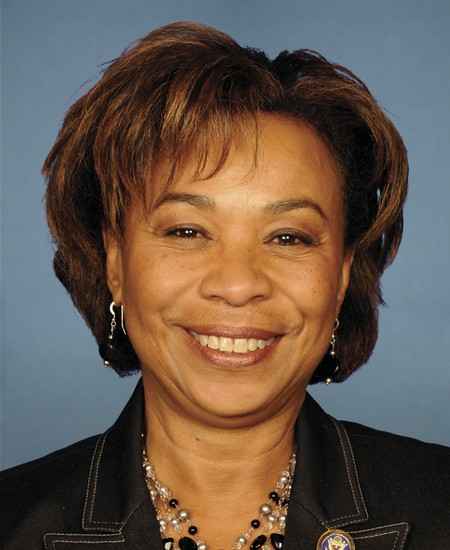
Rep. Barbara Lee
Sponsored bills
Blue Carbon for Our Planet Act This bill addresses the protection and restoration of coastal blue carbon ecosystems, which are vegetated coastal habitats and include mangroves, tidal marshes, and other tidal or salt water wetland that have the ability to sequester and store carbon. Specifically, the bill establishes the Interagency Working Group on Coastal Blue Carbon to (1) develop and maintain a map of these ecosystems, (2) assess the impediments to the protection and restoration of these ecosystems, and (3) establish national protection and restoration priorities regarding these ecosystems. The National Oceanic and Atmospheric Administration (NOAA) must chair the group and establish a national goal for conserving ocean and coastal blue carbon ecosystems within the territory of the United States and set targets to restore degraded coastal blue carbon ecosystems as appropriate. NOAA must also (1) establish integrated pilot programs to restore degraded coastal blue carbon ecosystems, and (2) enter into an agreement with the National Academy of Sciences to assess the long-term effects of geologic stores of carbon dioxide in a deep seafloor environment. Finally, the bill establishes requirements concerning the stewardship and standardization of blue carbon data in the Coastal Carbon Data Clearinghouse.
Water Quality Protection and Job Creation Act of 2021 This bill addresses water infrastructure and the discharge of pollution (e.g., wastewater or stormwater) into waters of the United States, including by reauthorizing through FY2026 and revising the Clean Water State Revolving Fund (SRF) program. The clean water SRF program provides communities low-cost financing for water quality infrastructure projects.
Puppy Protection Act of 2021 This bill requires the Department of Agriculture to expand standards that govern the humane handling, care, treatment, and transportation of animals to include new requirements for commercial dog dealers. Specifically, the standards must require dog dealers to provide to dogs adequate housing, exercise, and veterinary care; appropriate and nutritious food; continuous access to potable water; and meaningful socialization with humans and compatible dogs for at least 30 minutes each day. The standards must also include requirements for breeders to use safe breeding practices and make all reasonable efforts to find humane placement for retired breeding dogs.
This joint resolution nullifies the Oil and Natural Gas Sector: Emission Standards for New, Reconstructed, and Modified Sources Review rule published by the Environmental Protection Agency on September 14, 2020. The rule finalized amendments to new source performance standards under the Clean Air Act for the oil and natural gas sector, such as an amendment that removed limitations on methane emissions from such sector.
This resolution expresses support for the efforts of health and wellness coaches.
This bill repeals the Authorization for Use of Military Force Against Iraq Resolution of 2002.
This resolution recognizes the historical significance to the nation of Juneteenth Independence Day (commemorating the end of slavery in the United States).
This bill extends the 400 Years of African-American History Commission through July 1, 2023.
Support UNFPA Funding Act This bill authorizes annual contributions to support the core functions and programs of the United Nations Population Fund for the five fiscal years following the bill's enactment.