

Part-Time Worker Bill of Rights Act This bill modifies various employment, leave, and pension rules with respect to part-time workers. Specifically, the bill removes the requirement that employees work a minimum number of hours during the preceding 12-month period before becoming eligible for family and medical leave. The bill also sets the maximum length of service on which employers may condition the eligibility of part-time employees for a qualified pension plan (e.g., 401(k) retirement plan). Except as required by an applicable collective bargaining agreement, such service requirement may be no longer than two consecutive 12-month periods of at least 500 hours of service for part-time employees who have reached the age of 21 by the end of such periods. The bill further prohibits employers of more than 15 employees from setting disparate terms of employment or working conditions for part-time employees, including with respect to compensation, notice of work hours, and promotion opportunities, among others. Additionally, the bill requires such employers to offer available, qualified part-time employees additional work hours before hiring new employees for such hours. Among other enforcement methods, employers must maintain three years of records for offers of additional hours and employee responses to such offers. The bill also provides a private right of action for employees to enforce the nondiscrimination requirements of this bill.
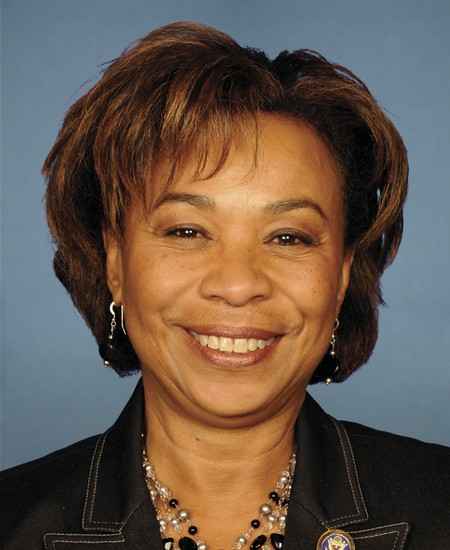
Rep. Barbara Lee
Sponsored bills
Designates the facility of the United States Postal Service located at 120 4th Street in Petaluma, California, as the "Lynn C. Woolsey Post Office Building."
Maddy summaryHRES 911 is a symbolic resolution supporting National Black HIV/AIDS Awareness Day, observed annually on February 7 to address the disproportionate impact of HIV/AIDS on African American communities. It encourages state and local governments, public health agencies, and media to promote HIV testing, education, and community engagement within Black communities. The resolution commends organizations providing HIV services and aligns with the National HIV/AIDS Strategy’s goals to reduce new infections, improve care access, and address health disparities. As a non-binding resolution, it does not create new laws or funding but serves as a call to action to combat HIV/AIDS through prevention, treatment, and reducing stigma.
Advancing Maternal Health Equity Under Medicaid Act This bill provides a 90% federal matching rate for Medicaid maternal health care expenditures that exceed 2021 levels. Qualifying services must be provided by maternity care providers or perinatal health workers (e.g., doulas) and include prenatal and postpartum telehealth services, home visits, and behavioral health care.
Affordable Housing Resident Services Act of 2022 This bill requires the Department of Housing and Urban Development to award competitive grants to owners of federally-assisted affordable housing for specified resident assistance activities, including obtaining health care, enhancing economic self-sufficiency, and assisting older adults and residents with disabilities.
Stop the Wait Act of 2022 This bill allows individuals with disabilities to begin receiving Social Security Disability Insurance (SSDI) benefits in the month they become eligible for the benefits. It also allows these individuals to immediately enroll in Medicare if they cannot afford minimum essential coverage. (Under current law, an individual must generally wait 5 months after the onset of disability to begin receiving SSDI benefits and an additional 24 months to become eligible for Medicare.)
Jumpstart on College Act This bill directs the Department of Education (ED) to award grants to support early-college high schools and dual- or concurrent-enrollment programs. Specifically, ED must award grants to (1) institutions of higher education in partnership with one or more local educational agencies to assist them in establishing or supporting early-college high schools or dual- or concurrent-enrollment programs, and (2) states to assist them in supporting or establishing these schools or programs.
This resolution recognizes the cultural and historical significance of the Lunar New Year. The resolution expresses, in observance of this Lunar New Year, the Year of the Tiger, the deepest respect of the House of Representatives for Asian Americans and all individuals throughout the world who celebrate this significant occasion. The resolution wishes Asian Americans and all individuals who observe this holiday a happy and prosperous new year.
Maddy summaryHR 6525, the Lunar New Year Day Act, would designate the Lunar New Year as an official federal holiday. The bill amends Section 6103(a) of Title 5 of the U.S. Code to add "Lunar New Year Day" to the list of holidays observed by federal employees. This holiday would be observed on the actual date of the Lunar New Year, which varies annually based on the lunar calendar. As a result, federal employees would receive a paid day off, and federal agencies would adjust operations to accommodate the new holiday.
National Climate Adaptation and Resilience Strategy Act This bill requires the President to identify or appoint a Chief Resilience Officer that must (1) direct a government-wide effort to build resilience to climate change vulnerabilities in the United States in collaboration with existing federal initiatives and interagency adaptation efforts, and (2) create working groups. The officer and the working groups must jointly submit to the President and Congress a strategy for the government to address such vulnerabilities in partnership with nonfederal partners, a plan to implement the strategy, and updates by specified deadlines.