

Energy Security and Independence Act of 2022 This bill addresses domestic industrial base and manufacturing capabilities for specified energy-efficiency and renewable energy systems and technologies (e.g., electric transportation systems), including by establishing a program to provide financial assistance for the construction of new facilities that manufacture components of specified energy-efficiency and renewable energy systems and technologies (or to retool, retrofit, or expand such facilities).
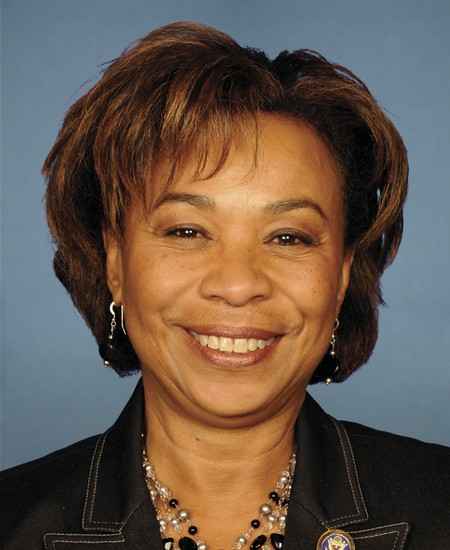
Rep. Barbara Lee
Sponsored bills
Maddy summaryThis non-binding resolution (HRES 1050) encourages Congress to adopt the Black Women Best (BWB) framework in policymaking to address systemic disparities affecting Black women. It does not create new laws but recommends using this framework - based on the Congressional Caucus on Black Women and Girls' "An Economy for All" report - to center Black women's lived experiences in legislative decisions. Key issues highlighted include severe wealth gaps (Black women’s median wealth at $1,700 vs. $81,200 for White women), labor market discrimination, healthcare inequities, and housing barriers. The resolution specifically urges policymakers to prioritize frameworks like the BWB to develop more inclusive policies, without mandating any concrete legislative changes.
This resolution recognizes the discrimination that Sikhs have faced and continue to face in the United States and elsewhere and condemns all acts of bias and hatred against the Sikh community. The resolution also expresses respect and gratitude for the contributions of all Sikh Americans.
Increase Federal Disaster Cost Share Act of 2021 This bill increases the federal cost share from 75% to 90% for any emergency or major disaster declared by the President beginning on January 1, 2020, and ending on December 31, 2020.
Medical Marijuana Research Act This bill establishes a new, separate registration process to facilitate medical marijuana research. Specifically, it directs the Drug Enforcement Administration to register (1) practitioners to conduct medical marijuana research, and (2) manufacturers and distributors to supply marijuana for such research. Additionally, the Department of Health and Human Services must continue to produce marijuana through the National Institute on Drug Abuse Drug Supply Program and implement a specialized process for supplying marijuana products available through state-authorized marijuana programs to researchers until manufacturers and distributors can provide a sufficient supply of marijuana for medical research.
Ensuring Lasting Smiles Act This bill requires private health insurance plans to cover diagnosis and treatment of congenital anomalies and birth defects, such as reconstructive services and items. Coverage must include services and items that functionally improve, repair, or restore any body part that is medically necessary for normal bodily functions or appearance, as determined by the treating physician. Coverage limits and cost-sharing requirements for such services and items may not be more restrictive than those applicable to all medical and surgical benefits under the plan.
Future of Water Act of 2022 This bill prohibits the trading of futures contracts in water or water rights. A futures contract is an agreement to buy or sell a commodity or financial instrument at a set price at a specific time.
Marijuana Opportunity Reinvestment and Expungement Act or the MORE Act This bill decriminalizes marijuana. Specifically, it removes marijuana from the list of scheduled substances under the Controlled Substances Act and eliminates criminal penalties for an individual who manufactures, distributes, or possesses marijuana. The bill also makes other changes, including the following: replaces statutory references to marijuana and marihuana with cannabis , requires the Bureau of Labor Statistics to regularly publish demographic data on cannabis business owners and employees, establishes a trust fund to support various programs and services for individuals and businesses in communities impacted by the war on drugs, imposes an excise tax on cannabis products produced in or imported into the United States and an occupational tax on cannabis production facilities and export warehouses, makes Small Business Administration loans and services available to entities that are cannabis-related legitimate businesses or service providers, prohibits the denial of federal public benefits to a person on the basis of certain cannabis-related conduct or convictions, prohibits the denial of benefits and protections under immigration laws on the basis of a cannabis-related event (e.g., conduct or a conviction), establishes a process to expunge convictions and conduct sentencing review hearings related to federal cannabis offenses, directs the Government Accountability Office to study the societal impact of state legalization of recreational cannabis, directs the National Highway Traffic Safety Administration to study methods for determining whether a driver is impaired by marijuana, directs the National Institute for Occupational Safety and Health to study the impact of state legalization of recreational cannabis on the workplace, and directs the Department of Education to study the impact of state legalization of recreational cannabis on schools and school-aged children.
This resolution recognizes the Islamic faith as one of the great religions of the world, acknowledges the onset of Ramadan (the holy month of fasting and spiritual renewal for Muslims), and expresses respect to Muslims in the United States and throughout the world on this occasion.
This resolution recognizes the accomplishments and example of Cesar Estrada Chavez. The resolution also encourages the people of the United States to commemorate his legacy and to always remember his rallying cry, "Si, se puede!" (which means "Yes, we can!").