

Stop Wall Street Looting Act This bill generally revises provisions related to the regulation of private equity funds. Among other things, the bill increases financial and legal liability for these funds in the event of certain violations of law, gives employee compensation higher priority in bankruptcies, and generally prohibits the payment of dividends for two years from an acquired asset firm to a private equity fund. The bill modifies the tax treatment of carried interest—compensation that is typically received by a partner of a private equity fund and is based on a share of the fund's profits. (Under current law, carried interest is taxed as investment income rather than at ordinary income tax rates.) Among other things, the bill treats as ordinary income the net capital gain with respect to a private equity fund.
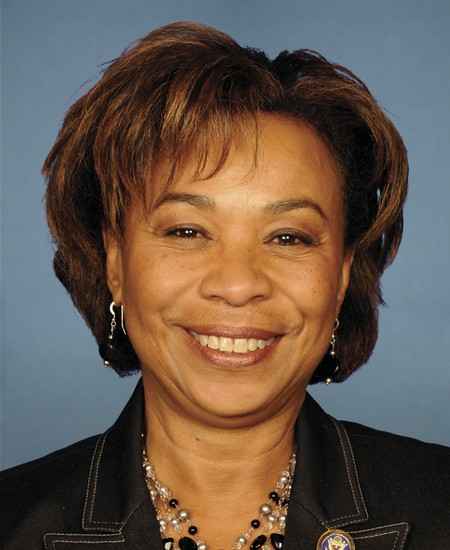
Rep. Barbara Lee
Sponsored bills
Cameroon TPS Act of 2021 This bill permits nationals of Cameroon to qualify for temporary protected status, which prevents their removal from the United States and allows them to obtain employment and travel authorization. Such status shall be available to qualifying nationals of Cameroon for 18 months starting from this bill's enactment.
Gun Trafficker Detection Act This bill requires gun owners to report the theft or loss of a firearm to law enforcement. It imposes civil monetary penalties on a violator.
Lifting Immigrant Families Through Benefits Access Restoration Act of 2021 or the LIFT the BAR Act of 2021 This bill repeals certain limits on the eligibility of noncitizens who lawfully reside in the United States for federal means-tested programs, including Medicaid, the Children's Health Insurance Program (CHIP), programs funded through Temporary Assistance for Needy Families (TANF) grants, Supplemental Security Income (SSI), and certain nutrition and housing programs.
Preventing Vigilante Stalking that Stops Women's Access to Healthcare and Abortion Rights Act of 2021 This bill increases the maximum prison term for a domestic violence or stalking offense, if the offense is committed with the intent to obtain health care information of an individual or to prevent the health care decisions of an individual.
Supreme Court Term Limits and Regular Appointments Act of 2021 This bill establishes staggered, 18-year terms for Supreme Court Justices and limits the Senate's advice and consent authority in relation to the appointment of Justices. Specifically, the bill requires the President to appoint a Supreme Court Justice every two years. If the appointment of a Justice would result in more than nine Justices on the Court, then the nine most junior Justices shall make up the panel of Justices exercising judicial power in cases and controversies. Further, any Justice who has served a total of 18 years is deemed retired from regular service and may continue to serve as a Senior Justice. Senior Justices may continue to perform judicial duties assigned to them by the Chief Justice. However, no Justice appointed before the date of enactment shall be counted towards such panel, nor shall they be required to retire from regular active service. In the event of a vacancy on the Court, the Chief Justice must assign the Justice most recently designated as a Senior Justice to serve on the Court until the appointment of a new Justice. Additionally, the Senate's advice and consent authority is waived if the Senate does not act within 120 days of a Justice's nomination.
Frank Harrison, Elizabeth Peratrovich, and Miguel Trujillo Native American Voting Rights Act of 2021 This bill addresses the voting rights of Native American and Alaska Native voters and voting access on tribal lands. The bill includes provisions expanding the types of facilities that can be used as voter registration agencies; increasing polling site accessibility, including by expanding early in-person voting and providing ballot drop boxes; providing enforcement power to citizens and attorneys general; requiring approval for actions like moving a polling place; validating certain tribal identification for voting or registering to vote; permitting voters to designate another individual to return a ballot on their behalf; and expanding requirements for bilingual voting accessibility. In addition, the bill establishes a Native American voting task force grant program for the purpose of increasing voter outreach, education, registration, turnout, and accessibility for Native American communities. The bill also directs the Government Accountability Office to study and report on (1) the prevalence of nontraditional or nonexistent mailing addresses among Indians, members of tribes, and individuals residing on Indian lands; and (2) the alternatives for removing barriers to voter registration, receipt of voter information and materials, and receipt of ballots.
Improving Diaper Affordability Act of 2021 This bill treats diapers as qualified medical expenses for purposes of certain health savings accounts and spending arrangements. The bill prohibits a state or local government from imposing a sales tax on the retail sale of diapers.
Hold Accountable and Lend Transparency on Campus Sexual Violence Act of 2021 or the HALT Campus Sexual Violence Act of 2021 This bill addresses dating violence, domestic violence, sexual assault, or stalking incidents on college campuses, including by expanding requirements governing the disclosure of such incidents and efforts to prevent them. Specifically, the bill requires the Department of Education (ED) to make available an online survey tool regarding student experiences with domestic violence, dating violence, sexual assault, harassment, and stalking. ED must publish a biennial report that includes campus-level data for each institution of higher education (IHE). The bill permits ED to impose civil penalties on IHEs that have violated a law under the jurisdiction of its Office for Civil Rights. In addition, the bill directs ED, the Department of Health and Human Services, and the Department of Justice to create a task force on sex-based harassment and violence in education.
Journalist Protection Act This bill establishes new criminal offenses for intentional acts (or attempts to commit acts) that cause bodily injury to a journalist.