

This resolution supports access to contraception and related reproductive health services, including by affirming the substantive due process rights that protect such access.
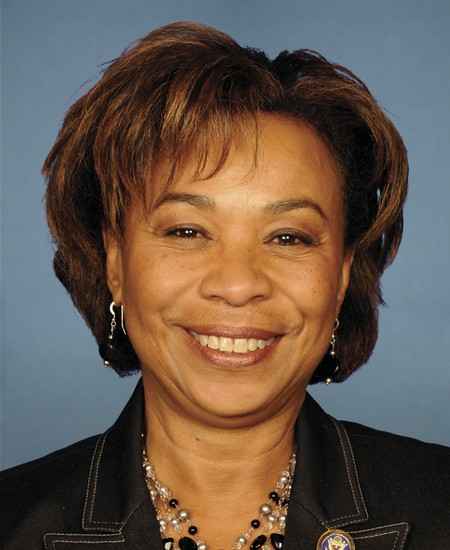
Rep. Barbara Lee
Sponsored bills
Maddy summaryHRES 1144 is a symbolic resolution designating June 3, 2022, as "National Gun Violence Awareness Day" and June 2022 as "National Gun Violence Awareness Month." It does not create new laws or policies but urges the public to wear orange, promote gun safety awareness, and hold community discussions about reducing gun violence during these dates. The resolution cites U.S. statistics on gun-related deaths and injuries as context for the designation. It directly affects the general public by encouraging voluntary observance and community engagement. The bill has no binding effect or funding provisions.
This resolution expresses support for the goals and values of the 54th anniversary of the Fair Housing Act and for efforts to strengthen housing protections, particularly during the COVID-19 pandemic and recovery.
Maddy summaryThis resolution (HRES 981) commemorates the one-year anniversary of the March 16, 2021, Atlanta spa shootings that killed eight people, six of whom were Asian women, and denounces anti-Asian hate. It formally condemns the violence, honors the victims, and recognizes the ongoing impact of anti-Asian hate crimes on the Asian American and Pacific Islander community. The resolution reaffirms support for the existing COVID-19 Hate Crimes Act and commits the federal government to combating hate and violence against AAPI communities. As a symbolic measure, it does not create new laws or funding but serves as a formal statement of solidarity.
This resolution supports the goals and ideals of the International Day for the Elimination of Violence against Women. The resolution also recognizes and honors the individuals and organizations in the United States and in other countries who have fought and continue to struggle to eliminate violence against women. Finally, the resolution encourages the President, among other goals, to increase legal and judicial protection to address violence against women and girls, change social norms to end violence against women and girls, and increase women's economic opportunity and education.
This resolution recognizes Claudette Colvin as an integral figure of the civil rights movement and honors her actions leading to the Montgomery Bus Boycott and the related Supreme Court ruling that found segregation on buses to be unconstitutional.
This resolution condemns racism and invidious discrimination as evil and antithetical to the U.S. Constitution and declares unconditional war on racism and invidious discrimination in America. (Invidious discrimination generally refers to discrimination based on a classification that is arbitrary or irrational and not related to a legitimate purpose.) The resolution also expresses the intention of the House of Representatives to pass legislation establishing a Cabinet-level Department of Reconciliation. The department shall be charged with developing and coordinating the implementation of a comprehensive national strategy to eliminate racism and invidious discrimination.
This resolution expresses the sense of the House of Representatives that the proposed constitutional amendment known as the Equal Rights Amendment has been duly proposed by Congress and ratified by the states and is therefore valid as the Twenty-Eighth Amendment to the Constitution. (The proposed amendment prohibits the United States or any state from denying or abridging equal rights under the law on account of sex.)
This resolution expresses support for the principles of Transgender Day of Remembrance, memorializing the lives lost to anti-transgender violence this year.
Maddy summaryHRES 798 is a symbolic House resolution expressing the sense of Congress about the link between firearm violence and intimate partner violence, honoring victims like Gladys Ricart. It cites statistics showing firearms are used in 59% of intimate partner homicides, with women facing a 5x higher risk of being killed when an abusive partner has access to a gun. The resolution recommends specific policy actions, including strengthening background checks, restricting firearm access for those subject to domestic violence restraining orders, and supporting research on the disproportionate impact on Black, American Indian/Alaska Native, and Hispanic women. It does not create new law but urges Congress to advance related legislation like the Zero Tolerance for Domestic Abusers Act. The resolution directly addresses the intersection of firearms and intimate partner violence affecting millions of women, particularly in marginalized communities.