Mercury 13 Congressional Gold Medal Act This bill provides for the award of a Congressional Gold Medal to commemorate the Mercury 13 in recognition of their accomplishments as part of the First Lady Astronaut Trainees (FLATs) Program (a privately funded project testing women pilots for astronaut fitness in the 1960s), their work for gender equity, and their example of women in the science, technology, engineering and mathematics (STEM) fields.
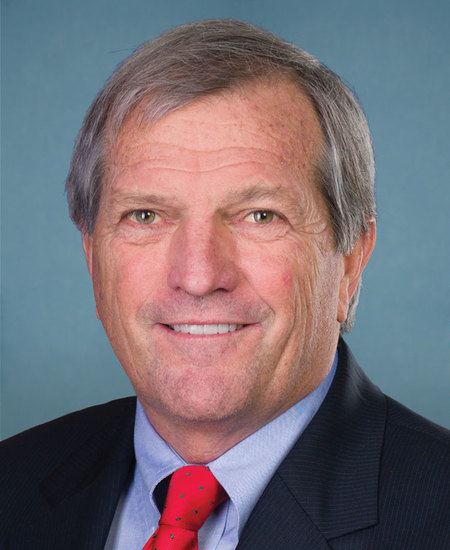
Rep. Mark DeSaulnier
Sponsored bills
Maddy summaryHCONRES 56 is a non-binding congressional resolution recognizing that climate change disproportionately harms children's health, economic opportunities, and rights. It expresses Congress's view that U.S. leadership is urgently needed to address the climate crisis and calls for a national climate recovery plan. The resolution specifically demands a science-based plan to phase out fossil fuels, protect natural carbon sinks, and reduce atmospheric CO2 to below 350 parts per million by 2100. This resolution does not create new laws or allocate funds but formally states congressional support for a comprehensive climate strategy prioritizing children's well-being.
Maddy summaryHJRES 82 is a non-binding resolution stating that the Equal Rights Amendment (ERA) has been validly ratified by the required 38 states (including Virginia's 2020 ratification) and should be certified as the 28th Amendment to the U.S. Constitution. It directs the Archivist of the United States to fulfill their statutory duty under Title 1, U.S. Code, to certify and publish the ERA without delay. The resolution argues Article V of the Constitution has no ratification deadline, citing precedents like the 27th Amendment. It does not change the Constitution itself but urges the Archivist to complete the certification process. The bill affects the Archivist’s office, requiring them to act on the ERA’s ratification status.
Transportation Megaprojects Accountability and Oversight Act This bill sets forth additional requirements for certain recipients of National Highway System assistance for a megaproject. (A megaproject is a project that has an estimated total cost of $2.5 billion or more.) Specifically, the bill requires a recipient of federal financial assistance for a megaproject to submit to the Department of Transportation (DOT) a comprehensive risk management plan that contains, among other things, a description of the process for identifying, quantifying, and monitoring the risks that might result in cost overruns, delays, reduced construction quality, or reduced megaproject benefits; establish a peer review group that consists of at least five individuals to give expert advice on the scientific, technical, and project management aspects of the megaproject; and publish specific information online, including the name, license number, and license type of each engineer supervising an aspect of the megaproject. DOT must make arrangements with the Transportation Research Board of the National Academies of Sciences, Engineering, and Medicine under which the board must convene a transportation megaprojects committee. These requirements apply to projects that are authorized for construction beginning at least one year after the bill's enactment.

Maddy summaryHR 4609, the *Incentivizing Value Capture for Greener Transportation Act*, provides federal grants to state and local governments to develop "value capture" systems that fund public transit and affordable housing near transit hubs. The bill requires grantees to demonstrate increased transit ridership and reduced emissions/VMT (vehicle miles traveled) while maintaining their own funding levels for transit programs. Key provisions include technical assistance grants, performance benchmarks, and rules to prevent local governments from cutting transit funding after receiving federal support. This directly affects cities and counties seeking to use rising property values near transit investments to finance greener transportation, aiming to reduce congestion, emissions, and car dependency.
Maddy summaryThe Algorithmic Justice and Online Platform Transparency Act requires major online platforms to disclose how they use personal information in algorithmic processes that recommend content, moderate posts, and target advertisements. Platforms must provide transparent notices to users about data collection and use, publish annual transparency reports showing content moderation decisions broken down by demographic information, and maintain an accessible advertisement library showing targeted ads. The bill prohibits algorithms from discriminating in housing, employment, credit, and education opportunities based on protected characteristics like race, gender, or disability. It establishes an interagency task force to study discriminatory algorithmic practices and empowers the Federal Trade Commission to enforce these requirements.
Maddy summaryThis bill authorizes $30 million annually (2024-2028) for the National Institutes of Health to expand research on uterine fibroids, including studies on racial disparities (noting Black women are 80% likely to develop fibroids by menopause versus 70% of White women). It also requires the creation of a Medicaid database to track treatment services for fibroids and mandates a congressional report on related costs and coverage. The bill directs the Department of Health and Human Services to develop public education materials about fibroid symptoms, treatment options (including non-hysterectomy care), and racial prevalence differences. It directly affects women with fibroids - particularly those from racial minority groups - and aims to improve data collection and awareness around a condition causing significant health burdens and healthcare costs.
Maddy summaryThis bill requires the Committee on Foreign Investment in the United States (CFIUS) to review real estate transactions involving foreign adversaries (including China, Russia, Iran, and North Korea) near sensitive sites like military installations, ports, or critical infrastructure. It defines "elevated risk real estate transactions" as purchases or leases by foreign adversaries near such sites, creating a presumption that these deals pose unresolvable national security risks unless CFIUS explicitly approves them with evidence. The bill also adds food security considerations to CFIUS reviews and mandates declarations for these high-risk transactions. These changes aim to prevent foreign adversaries from gaining access to strategic U.S. land or infrastructure through real estate deals.
Maddy summaryJaime’s Law requires federal background checks for ammunition purchases by expanding existing firearm background check rules to include ammunition. It mandates that unlicensed buyers must transfer ammunition through a licensed dealer (e.g., a gun store), who conducts the background check before completing the sale. The law includes exemptions for transfers between family members, law enforcement, transfers due to death, immediate self-defense situations, and legitimate shooting or hunting activities (with specific conditions). It explicitly states the law does not create a national ammunition registry and does not override state laws on ammunition.
Maddy summaryThe Federal Death Penalty Prohibition Act would ban the federal government from imposing or carrying out the death penalty for any violation of federal law after the bill's enactment. It would require federal courts to resentence all individuals currently under a federal death sentence to a non-death penalty. This bill directly affects federal criminal defendants and inmates on federal death row, but does not impact state-level death penalty cases. The law would take effect immediately upon passage, ending federal death penalty sentencing for future cases and changing current death row sentences.