

Maddy summaryThis bill would create a new wealth tax on individuals with significant assets, targeting those with net assets exceeding $50 million. It would tax assets between $50 million and $1 billion at 2%, and assets above $1 billion at 3% (potentially increasing to 6% if certain health care legislation is enacted). The tax would apply to individuals, married couples treated as a single taxpayer, and certain trusts, with specific valuation and reporting requirements for assets. The bill also includes $70 billion in funding over 10 years for the IRS to enforce this new tax and related reporting requirements.
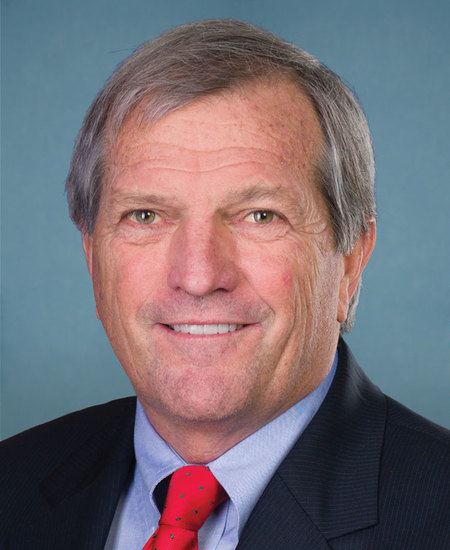
Rep. Mark DeSaulnier
Sponsored bills
Maddy summaryThis bill prohibits owners or operators of non-barge vessels from abandoning them on U.S. navigable waters for more than 45 days. It requires the Coast Guard to notify owners of potentially abandoned vessels, conduct a 45-day review, and impose a $500 penalty for violations. The Coast Guard must create a public inventory of abandoned vessels using geographic data and establish a process for states, tribes, or individuals to report such vessels. Removal costs can be covered by the Oil Spill Liability Trust Fund if the Coast Guard confirms abandonment and the action serves the public interest.
Maddy summaryThis bill clarifies that drug manufacturers must offer 340B discounted pricing for covered outpatient drugs regardless of where or how the drugs are dispensed - specifically including arrangements where covered entities (like community health centers, clinics, and hospitals) contract with pharmacies to dispense 340B drugs to patients. It explicitly prohibits manufacturers from imposing conditions on these arrangements, such as restricting delivery locations or requiring additional data. The bill also establishes civil penalties of up to $2 million per day for manufacturers violating these rules, with penalties assessed by the Secretary of Health and Human Services. This directly affects covered entities that rely on contract pharmacies to access specialty drugs for patients with conditions like cancer or multiple sclerosis, ensuring they can stretch scarce resources to provide comprehensive care.
Maddy summaryHR 7634, the Plastic Pellet Free Waters Act, prohibits plastic pellets and pre-production plastic materials from being discharged into water through wastewater, spills, or runoff from specific facilities. It directly affects plastic polymer production facilities, plastic molding and forming facilities, and any point source (like packaging or transport operations) handling plastic pellets. The bill requires the EPA to issue a final rule within 60 days of enactment banning these discharges and updating all relevant wastewater, stormwater, and performance standards in permits and regulations. This creates a legal requirement for facilities to prevent plastic pellet pollution in waterways, targeting a major source of ocean plastic pollution.
Maddy summaryThis concurrent resolution (HCONRES 97) recognizes the gender wage gap, noting that women working full-time earn 84 cents for every dollar earned by men. It highlights racial disparities (e.g., Latinas earn 57 cents, Black women 69 cents) and the economic impact of the gap, including $965 billion in annual lost wages for women. As a symbolic resolution, it does not create new laws or policies but formally acknowledges the issue and reaffirms Congress’s commitment to addressing wage inequality.
Maddy summaryHRES 1074 is a symbolic House resolution reaffirming congressional support for a two-state solution to the Israel-Palestine conflict. It explicitly states the House supports Israel's right to exist as a Jewish, democratic state and recognizes Palestinians' right to sovereignty through a separate state. The resolution identifies a two-state solution as the best path to lasting peace and condemns efforts opposing this approach. As a non-binding resolution, it does not create new law or policy but formally expresses the House's position on this issue. It was introduced by multiple House members on March 12, 2024.
Maddy summaryHR 7629, the Protect Our Letter Carriers Act of 2024, allocates $1.4 billion annually (2025-2029) to the U.S. Postal Service for high-security collection boxes and replacing physical universal mailbox keys with electronic versions, directly affecting USPS operations and letter carriers. It requires the Attorney General to appoint specialized prosecutors in each district to coordinate investigations and prosecutions of postal-related crimes, such as assaults on carriers or mail theft. The bill also mandates the U.S. Sentencing Commission to adjust guidelines so that assaults or robberies against postal employees are treated with the same severity as assaults against law enforcement officers. These provisions aim to enhance safety through infrastructure upgrades, improved prosecution, and stricter sentencing for crimes targeting postal workers.
Maddy summaryThis bill establishes a Federal Advisory Panel to analyze climate change risks to federal retirement investments and advise on transitioning toward low-carbon portfolios. It directly affects the Federal Retirement Thrift Investment Board (which manages retirement funds for over 5 million federal employees) by requiring the panel to assess fossil fuel investments, examine other pension funds' climate strategies, and produce a report within one year. Key mechanisms include creating a new "Climate Choice Stock Index Fund" that excludes fossil fuel companies (if the Board determines fossil fuel investments aren't financially sound), and mandating annual climate cost reports from the Federal Reserve and SEC. The bill focuses on aligning retirement fund investments with climate risk management while maintaining financial responsibility, without mandating immediate divestment.
National Public Health Act This bill requires the Department of Health and Human Services (HHS) to take a series of actions relating to the impact of certain products on public health. Specifically, HHS must (1) contract with the National Academy of Medicine, or a similar entity, to develop a list of public health crises; (2) develop a list of products that have a specified fiscal impact on the national public health system; and (3) require manufacturers of such products to develop and implement a plan to mitigate the effects of the products on public health.
Maddy summaryHR 7492, the Bots Research Act, directs the Federal Trade Commission to establish a task force to study automated accounts (bots) on social media and their impact on public discourse and elections. The task force, composed of government, academic, nonprofit, and industry experts, must assess what qualifies as a bot, how widely they are used, and how to address harmful uses while protecting free speech. It must submit a report to Congress within one year, covering these issues and considering technological innovation, constitutional rights, and election security. This bill is procedural - it creates a study, not new regulations.