

Maddy summaryHRES 533 is a non-binding House resolution calling on the President to lift the indefinite suspension of U.S. refugee admissions, which has left over 100,000 refugees stranded in limbo since January 2025. It specifically references Executive Order 14163 (2025) that halted refugee arrivals, citing the plight of refugees conditionally approved for resettlement, including Afghans, Rohingya, and Sudanese. The resolution reaffirms U.S. commitments under the Refugee Act of 1980 and international obligations, urging restoration of the U.S. Refugee Admissions Program to protect vulnerable refugees. It also calls for increased international cooperation, support for frontline host countries, and meeting global refugee protection pledges. The resolution does not create new law but expresses congressional intent to address the refugee crisis.
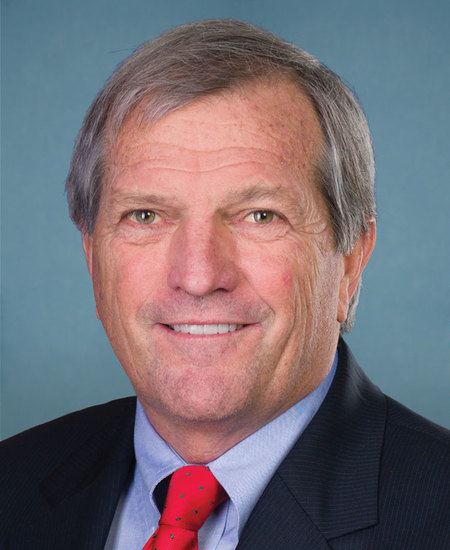
Rep. Mark DeSaulnier
Sponsored bills
Maddy summaryHR 4084, the Access to Birth Control Act, requires pharmacies that stock contraception to provide it without delay when requested by a customer. If a requested method is out of stock, pharmacies must immediately offer referrals to nearby pharmacies or expedite an order. The bill prohibits pharmacists from intimidating customers, misrepresenting availability, breaching confidentiality, or refusing to fill valid prescriptions for contraception. It directly affects pharmacies nationwide, addressing reported refusals to provide birth control - particularly after the *Dobbs* decision - and ensures access to FDA-approved contraceptive methods without cost-sharing barriers.
Maddy summaryHR 4074, the Optimizing Postpartum Outcomes Act of 2025, requires the Health and Human Services Secretary to issue guidance within one year on improving Medicaid and CHIP coverage for pelvic health services during pregnancy and the postpartum period (defined as up to 6 months after birth or during lactation). The bill directs the GAO to study coverage gaps for these services and mandates a new CDC-led education campaign to train healthcare providers and inform postpartum women about pelvic floor exams and physical therapy. Key provisions include standardizing terminology for pelvic health conditions, sharing state best practices for payment models, and authorizing $2 million annually for the education program through 2030. This bill directly affects postpartum women covered by Medicaid or CHIP by aiming to increase access to evidence-based pelvic health care.
Maddy summaryHRES 509 is a symbolic resolution expressing the U.S. House of Representatives' support for designating June 2025 as "Black Music Month." It does not create new laws or directly affect any individuals or entities; instead, it urges the public to recognize and celebrate Black music's cultural impact through voluntary actions like promoting artists and spreading awareness. The resolution highlights Black music's historical influence across genres - from spirituals to hip-hop - and calls for honoring its legacy in education, media, and community initiatives. It follows a tradition started by President Carter in 1979 but has no legal force.
Maddy summaryHR 3946, the FIGHT Act of 2025, amends the Animal Welfare Act to specifically prohibit gambling on animal fighting events and restrict the interstate transport of roosters used in such ventures. It defines "rooster" as male chickens over six months old and makes it unlawful to sponsor, exhibit, attend (for those under 16), or gamble on animal fighting events - whether in-person or broadcast. The bill creates a civil enforcement mechanism allowing any person to file a lawsuit to stop violations after providing 60 days' notice to authorities, with potential fines up to $5,000 per violation. It also establishes seizure of property used to facilitate violations and clarifies that state laws on animal fighting remain in effect unless directly conflicting with federal provisions.
Maddy summaryThis bill requires colleges receiving federal work-study funds to notify eligible students about potential eligibility for the SNAP food assistance program. It specifically targets students participating in federal work-study or receiving Pell Grants, mandating that institutions send email notifications with state-specific SNAP eligibility details and a document confirming their work-study status to overcome a key ineligibility barrier. The notifications, developed jointly by the Education and Agriculture Departments, include application contacts and guidance for schools on identifying eligible students. The policy change directly enables more college students to access nutrition assistance by clarifying their SNAP eligibility through institutional outreach.
Maddy summaryThe RISE Act (HR 3939) streamlines documentation for college students with disabilities by requiring institutions to accept multiple forms of proof, including past Individualized Education Programs (IEPs), Section 504 plans, or licensed professional evaluations, instead of demanding current documentation. It mandates that colleges establish transparent, accessible processes for determining accommodation eligibility and share these policies with students, parents, and faculty. The bill also requires institutions to report specific data on students with disabilities (like enrollment numbers and accommodations used) to federal databases, while authorizing $10 million for a national support center. These changes directly affect colleges receiving federal aid and students seeking disability accommodations in higher education.
Maddy summaryThe Domestic Workers Bill of Rights Act (HR 3971) would establish key labor protections for domestic workers, including nannies, housekeepers, and caregivers who work in private homes. The bill requires written agreements for workers employed 8+ hours per week, provides earned sick days (1 hour for every 30 hours worked), mandates fair scheduling practices with 72-hour notice for schedule changes, and extends overtime protections to live-in domestic employees. It also prohibits unfair wage deductions, guarantees meal and rest breaks, and ensures privacy protections including no monitoring in private living spaces. The bill directly affects approximately 2.2 million domestic workers across the U.S., who are disproportionately women of color and immigrants. Enforcement would be handled by the Department of Labor through new complaint resolution mechanisms and oversight.
Maddy summaryHR 3931, the Kids on the Go Act of 2025, requires states to appoint a "Safe routes to school coordinator" for transportation projects. If a state hires such a coordinator, the federal government will cover 95% of eligible project costs under the relevant transportation program (previously a lower percentage). This bill directly affects state transportation agencies and school districts receiving federal funds for safe routes to school initiatives. The key change is the increased federal funding rate tied to the coordinator position, aiming to improve student safety during school commutes. The bill does not mandate hiring but offers a significant funding incentive for states that choose to implement this role.
Maddy summaryThis bill codifies existing protections for designated roadless areas within the National Forest System by prohibiting new road construction, road reconstruction, and logging in these areas. It directly affects National Forest lands already identified as "inventoried roadless areas" under the current Roadless Rule, which covers roughly 58 million acres. The key mechanism requires the Secretary of Agriculture to enforce these prohibitions, maintaining current protections without expanding restrictions to other lands or altering existing multiple-use management. The bill does not create new protected areas but legally solidifies the existing regulatory framework to preserve ecological and recreational values.