Joint Consolidation Loan Separation Act This bill allows two borrowers, who had previously received a joint consolidation loan for their federal student loan debt, to submit a joint application to the Department of Education to sever their consolidated loan into two separate loans. One borrower may submit a separate application in the event that the individual is experiencing domestic or economic abuse from the other individual borrower or is unable to reasonably reach or access the loan information of the other borrower.
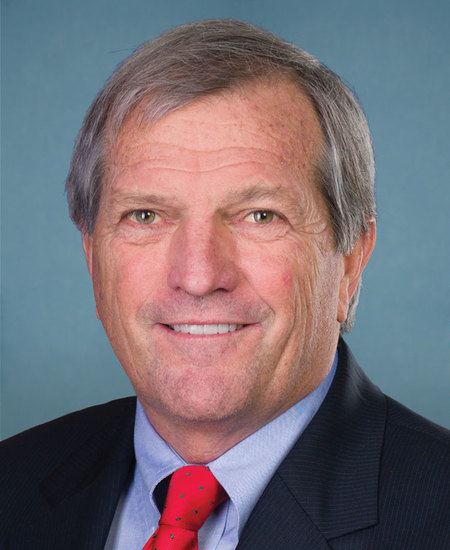
Rep. Mark DeSaulnier
Sponsored bills
Taxpayer Research and Coronavirus Knowledge Act of 2021 This bill requires the Department of Health and Human Services (HHS) to coordinate with specified federal entities to compile a public database of federal contracts, tax benefits, and other support for COVID-19 (i.e., coronavirus disease 2019) biomedical research and development. HHS must develop the database within one month and update it every two weeks.
Supporting Eating Disorders Recovery Through Vital Expansion Act or the SERVE Act This bill provides for inpatient and outpatient treatment of eating disorders under TRICARE for dependents of members of the uniformed services. Dependents are eligible for such care regardless of (1) their age, except with respect to residential service; and (2) whether the eating disorder is their primary or secondary diagnosis. The bill also requires the Department of Defense (DOD) and the Department of Homeland Security (with respect to the Coast Guard) to identify, treat, and rehabilitate members of the armed forces who have an eating disorder. Finally, DOD and the Department of Veterans Affairs must jointly develop, publish, and disseminate clinical practice criteria and guidelines on the identification and treatment of eating disorders.
Student Loan Forgiveness for Frontline Health Workers Act This bill establishes temporary programs to provide federal and private student loan forgiveness to certain frontline health care workers. Frontline health care workers are those individuals who have made significant contributions to the medical response (e.g., patient care, medical research, or testing) to the COVID-19 (i.e., coronavirus disease 2019) national emergency. Specifically, the Department of Education (ED) must carry out a program to forgive the outstanding balance of principal and interest due on federal student loans for borrowers who are frontline health care workers. Additionally, the Department of the Treasury must carry out a program to repay in full the outstanding balance of principal and interest due on certain private student loans for borrowers who are frontline health care workers. ED and Treasury must coordinate to ensure that eligibility determinations are consistent across both programs and that frontline health care workers who are eligible for both programs may apply for loan forgiveness with a single application. Further, such programs must be available to frontline health care workers who were borrowers of eligible loans and who died as a result of COVID-19. The bill specifies the notification requirements related to the availability of these programs. ED, Treasury, and the Department of Health and Human Services must jointly establish an intergovernmental working group to assist with the administration of these programs, including the development of the application process. The bill also excludes discharged student loan debt under these programs from an individual's gross income.

Excellence in Recovery Housing Act This bill tasks the Substance Abuse and Mental Health Services Administration (SAMHSA) with various activities to promote the availability of high-quality recovery housing for individuals with substance use disorders. Recovery housing refers to shared living environments free from alcohol and illicit drug use and centered on peer support and connection to services that promote sustained recovery from substance use disorders. Specifically, SAMHSA must develop and publish on its website standards and guidelines for recovery housing; award grants to states, tribal nations, territories, and localities to implement such standards and guidelines; convene an interagency working group to coordinate federal activities related to recovery housing; and arrange for research on the supply, quality, and effectiveness of recovery housing.
Transformation to Competitive Integrated Employment Act This bill addresses employment standards for individuals with disabilities. The bill directs the Department of Labor to award grants to states and certain eligible entities to assist them in transforming their business and program models to support individuals with disabilities by providing competitive integrated employment, assisting disabled individuals in finding and retaining work in such employment, providing integrated employment and integrated community participation and wraparound services for such individuals, and ensuring that such services comply with federal regulations for individuals receiving home and community-based services. The bill also prohibits the issuance of new special certificates that allow payment of subminimum wages to disabled individuals and phases out existing certificates over a four-year period. The bill directs Labor's Office of Disability Employment to award grants to provide technical assistance and other strategic support to employers transitioning from special certificates to competitive integrated employment for disabled individuals. Labor must contract with a nonprofit entity to conduct an evaluation of the impact of these transitions.
Water Affordability, Transparency, Equity, and Reliability Act of 2021 This bill increases funding for water infrastructure, including funding for several programs related to controlling water pollution or protecting drinking water. Specifically, it establishes a Water Affordability, Transparency, Equity, and Reliability Trust Fund. The fund may be used for specified grant programs. The bill increases the corporate income tax rate to 24.5% to provide revenues for the fund. In addition, the bill revises requirements concerning the clean water state revolving fund (SRF) and the drinking water SRF. It also creates or reauthorizes several grant programs for water infrastructure.
This resolution supports the vision, mission, and goals of the Global Partnership for Education, and it affirms the role of the United States in improving access to quality public education and improved learning outcomes for children and adolescents (particularly for girls) in the poorest countries.
This resolution condemns Iranian state-sponsored terrorist attacks against U.S. citizens and officials and Iranian dissidents and expresses support for the people of Iran who are engaged in legitimate and peaceful protests against the Iranian regime.
Closing Loopholes for Oil and other Sources of Emissions Act or the CLOSE Act This bill repeals exemptions from the Clean Air Act under which (1) emissions from oil and gas wells and pipeline facilities are excluded from aggregation with emissions from other similar units for purposes of determining major sources, and (2) the Environmental Protection Agency (EPA) excludes oil and gas production wells from being listed as area sources. Additionally, the bill requires the EPA to issue a final rule adding hydrogen sulfide to the list of hazardous air pollutants under the Clean Air Act and revising such list to include categories and subcategories of major sources and area sources of hydrogen sulfide, including oil and gas wells.