

Newborn Screening Saves Lives Reauthorization Act of 2021 This bill reauthorizes through FY2026 and revises several programs and activities relating to newborn screening for certain conditions and genetic, endocrine, and metabolic diseases. Among its changes, the bill reauthorizes and makes mandatory the Hunter Kelly Research Program at the National Institutes of Health, and national surveillance activities conducted by the Centers for Disease Control and Prevention. The bill also aligns statutory requirements for research on non-identified newborn blood spots with federal regulations governing research on human subjects. These blood spots are collected as part of newborn screening programs, and some states make them available for biomedical and public health research. Under current regulations, research on non-identified bio-specimens such as blood spots is not considered to be research on human subjects, to which additional protections apply.
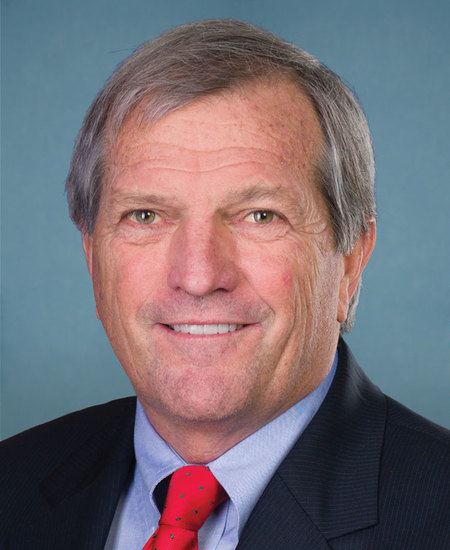
Rep. Mark DeSaulnier
Sponsored bills
Cultivating Opportunity and Recovery from the Pandemic through Service Act or the CORPS Act This bill makes several changes to AmeriCorps programs during the COVID-19 health emergency. Specifically, the bill: increases living allowance payments to program participants; increases educational awards for program participants; relaxes program requirements, including reducing the age requirement for AmeriCorps Seniors to 45 and older; creates a pilot program to allow state commissions to directly place individuals in approved AmeriCorps programs; and allows for targeted AmeriCorps grants to fund recovery projects in communities disproportionately affected by COVID-19. The bill also excludes AmeriCorps living allowance payments and educational awards from taxable income for program participants.
Patsy T. Mink and Louise M. Slaughter Gender Equity in Education Act of 2021 This bill requires the Department of Education (ED) to establish an Office for Gender Equity to support state and local educational agencies, institutions of higher education, and elementary and secondary schools in fully implementing title IX of the Education Amendments of 1972, which prohibits discrimination on the basis of sex in federally funded education programs or activities. The office may provide grants and perform activities to reduce or prevent sex discrimination in all areas of education. The office must provide technical assistance and annual training to title IX coordinators and develop a handbook for conducting self-evaluations of title IX compliance. The training must address discrimination based on multiple characteristics, including race, ethnicity, national origin, disability status, religion, age, or actual or perceived sex. The office may award grants to eligible entities and partnerships that apply to carry out programs and activities designed to implement title IX and prevent and reduce sex discrimination, including programs that increase access to resources. ED must coordinate with the Institute of Education Sciences and other federal entities to investigate, identify, and disseminate best practices to (1) reduce and prevent sex stereotyping, bias, and discrimination in educational materials; (2) address sex-based harassment and violence on campuses; (3) develop counseling and career guidance training; (4) mitigate implicit bias in teaching and discipline; and (5) address the needs of students who face discrimination based on multiple characteristics.
Vanessa Guillén Military Justice Improvement and Increasing Prevention Act This bill modifies the process and policy related to the disposition of charges and convening of courts-martial for certain sexual assault cases and other specified offenses under the Uniform Code of Military Justice (UCMJ). Among other elements, the bill provides that the determinations on the preferral, disposition, and referral of charges for specified offenses under the UCMJ must be made by a commissioned officer of the Armed Forces who is designated as a court-martial convening authority (in grade O-6 or higher) and who is available for detail as trial counsel, has significant trial experience, and is outside the chain of command of the member subject to the charges.
Water Quality Protection and Job Creation Act of 2021 This bill addresses water infrastructure and the discharge of pollution (e.g., wastewater or stormwater) into waters of the United States, including by reauthorizing through FY2026 and revising the Clean Water State Revolving Fund (SRF) program. The clean water SRF program provides communities low-cost financing for water quality infrastructure projects.
Puppy Protection Act of 2021 This bill requires the Department of Agriculture to expand standards that govern the humane handling, care, treatment, and transportation of animals to include new requirements for commercial dog dealers. Specifically, the standards must require dog dealers to provide to dogs adequate housing, exercise, and veterinary care; appropriate and nutritious food; continuous access to potable water; and meaningful socialization with humans and compatible dogs for at least 30 minutes each day. The standards must also include requirements for breeders to use safe breeding practices and make all reasonable efforts to find humane placement for retired breeding dogs.
Cover Outstanding Vulnerable Expansion-eligible Residents Now Act or the COVER Now Act This bill establishes a demonstration program to allow local governments to provide health benefits to the Medicaid expansion population in states that have not expanded Medicaid. Under the program, local governments may provide coverage for individuals who are newly eligible for Medicaid under the Patient Protection and Affordable Care Act (i.e., the Medicaid expansion population) for a maximum of 10 years, or until their respective states expand Medicaid. The bill provides a 100% federal matching rate for the first three years of program participation. The bill prohibits states from taking certain actions against participating localities, such as withholding funding, increasing taxes, or restricting provider participation. States that violate these requirements are subject to certain funding penalties.
Caregivers, Access, and Responsible Expansion for Kids Act of 2021 or the CARE for Kids Act of 20 21 This bill extends eligibility for the National School Lunch Program and school breakfast program of the Department of Agriculture. A local educational agency (including any school operated by the Bureau of Indian Education) may certify as eligible for free lunches or breakfasts the following: children whose placement with a caregiver was carried out with the involvement of an agency that administers a state plan or a tribal child welfare agency, without regard to whether the agency is responsible for the care and placement of the child; children being raised by a relative who receives adoption or guardianship assistance; and children of a family that lives in housing dedicated to low-income families with a caregiver who is a grandparent or another older person that cares for the child full-time or that receives housing or housing assistance under the Native American Housing Assistance and Self-Determination Act of 1996. The bill also extends eligibility for free or reduced-price school lunches for children who were determined to be eligible in the school year prior to placement with a grandparent or relative for the school year immediately following placement. The bill provides children who receive medical assistance under the Medicaid program with direct certification for free lunches and breakfasts under the school lunch and breakfast programs.
This bill repeals the Authorization for Use of Military Force Against Iraq Resolution of 2002.
This resolution recognizes the historical significance to the nation of Juneteenth Independence Day (commemorating the end of slavery in the United States).