

Keeping School Meals Flexible Act This bill extends authority through June 30, 2023, for the Department of Agriculture (USDA) to waive certain requirements for the school meal programs to address COVID-19. The bill extends the authority for USDA to issue a single waiver of child nutrition program requirements to all states under the National School Lunch Program for purposes of providing meals and snacks with appropriate safety measures with respect to COVID-19; grant waivers of requirements to allow non-congregate feeding in the Child and Adult Care Food Program for purposes of providing meals and snacks with appropriate safety measures with respect to COVID-19; and grant waivers related to the nutritional content of meals served in child nutrition programs if it determines the waiver is necessary to provide meals and snacks, and there is a food supply chain disruption due to COVID-19.
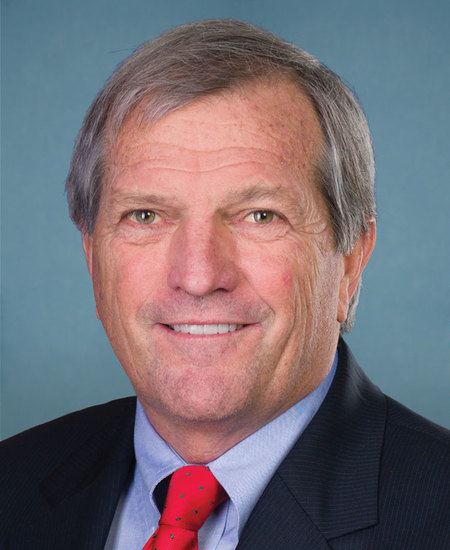
Rep. Mark DeSaulnier
Sponsored bills
Stop the Wait Act of 2022 This bill allows individuals with disabilities to begin receiving Social Security Disability Insurance (SSDI) benefits in the month they become eligible for the benefits. It also allows these individuals to immediately enroll in Medicare if they cannot afford minimum essential coverage. (Under current law, an individual must generally wait 5 months after the onset of disability to begin receiving SSDI benefits and an additional 24 months to become eligible for Medicare.)
Diverse and Equitable Participation in Clinical Trials Act or the DEPICT Act This bill requires applications for an investigational use exemption of a new drug or medical device to include information about the demographic diversity of the clinical trial population and addresses related issues. (Generally, a developer of a new drug or device may seek an investigational use exemption to facilitate clinical investigations, as part of the process to obtain approval to sell that drug or device.) Specifically, the Food and Drug Administration (FDA) must issue regulations to require applications for such exemptions to include certain information, including (1) demographic data disaggregated by subgroup, where such data is available, about the expected or potential patient population; (2) the applicant's enrollment targets for the clinical trials involved, disaggregated by age group, sex, race, and ethnicity; (3) a diversity plan for how the applicant will meet these targets; and (4) what is known about the patient population, such as comorbidities. The regulations must also require certain applicant reports to the FDA to address issues related to demographic diversity in clinical trials and product safety and effectiveness for demographic subgroups. The bill also authorizes the FDA to, in certain instances, require additional studies or surveillance after a drug or device has been approved if the clinical trials used in the application process did not meet the demographic enrollment targets.
Algorithmic Accountability Act of 2022 This bill requires certain businesses that use automated decision systems to make critical decisions to study and report about the impact of those systems on consumers. Critical decisions include those that have a significant effect on a consumer's life such as the cost or availability of health care, housing, educational opportunities, or financial services. The Federal Trade Commission (FTC), in consultation with relevant stakeholders, must issue regulations to implement the bill. The bill provides for enforcement by the FTC and specified state officials. Further, the bill establishes a Bureau of Technology to advise the FTC about the technological aspects of its functions.
TSA Security Threat Assessment Application Modernization Act This bill requires the Transportation Security Administration (TSA) to standardize the enrollment and renewal system for individuals applying for or renewing multiple TSA Security Threat Assessment programs, including the Transportation Worker Identification Credential, Hazardous Materials Endorsement, and TSA PreCheck programs. The standardization shall permit an individual to (1) enroll at a TSA-designated universal enrollment center once and use the application for one of such programs to enroll in two or more of such programs,with specified exceptions for those applying for or renewing enrollment in more than one program at different times; (2) apply successful, valid clearance results from a TSA Security Threat Assessment to satisfy vetting requirements for participation in any related program without additional cost; and (3) undergo a streamlined and expeditious renewal process. Additionally, the TSA must publish on its website information relating to the standardization of the enrollment system.
Office of Technology Assessment Improvement and Enhancement Act This bill renames and revises the functions and duties of the Office of Technology Assessment which, composed of a Technology Assessment Board and a director, provides Congress with assessments of probable technology application impacts. Specifically, the bill renames the office the Congressional Office of Technology, and it requires the office to undertake additional duties, such as providing to Members of Congress (1) certain information without the need for board review, (2) certain technical assistance on legislation related to science and technology without the need for board review, and (3) objective policy options on how Members may achieve goals with respect to science and technology policy. The bill authorizes individual Members of Congress to submit to the board a request that the office undertake an assessment activity. Additionally, the bill requires the Congressional Research Service and the Government Accountability Office to coordinate technology assessment activities with the office to avoid duplication or overlapping of research activities. The bill also (1) allows the office to temporarily appoint specified technical and professional personnel to work for the office, (2) requires the office to make the findings of completed analyses publicly available, (3) revises the appointment of board members, (4) requires the board to hold an annual meeting at which Members of Congress may appear and present information regarding technology assessment activities, and (5) requires the board to report annually on the activities of the office.
Striking Workers Healthcare Protection Act This bill prohibits an employer from terminating or significantly altering the employer-provided health insurance coverage of an employee engaged in a lawful strike. An employer that violates this prohibition is subject to a maximum civil penalty of $50,000 for each violation.
Funding Early Childhood is the Right IDEA Act This bill authorizes through FY2027 specified provisions of the Individuals with Disabilities Education Act for early childhood education. Specifically, the bill authorizes Part B, Section 619 (grants to states for preschool programs serving children with disabilities ages three to five) and Part C (grants to aid states in implementing early intervention services for infants and toddlers with disabilities and their families).
Pell Grant Sustainability Act This bill requires the Department of Education to calculate the maximum award amount for Pell Grants for award year 2022-2023 and each subsequent award year by indexing the award amount to the rate of inflation.
Restore Veterans' Compensation Act of 2022 This bill eliminates the recoupment of separation pay, special separation benefits, and voluntary separation incentive payments from members of the Armed Forces who subsequently receive disability compensation from the Department of Veterans Affairs. In addition, the bill limits recoupment of such pay from service members who subsequently receive military retired or retainer pay.