

Workforce Innovation and Opportunity Act of 2022 This bill reauthorizes through FY2028 and expands programs under the Workforce Innovation and Opportunity Act (WIOA). The bill also revises workforce investment, vocational rehabilitation, employment, training, and literacy programs for eligible individuals. For example, the bill increases workforce representation on state and local workforce investment boards from 20% to 30%; reworks one-stop center infrastructure funding by requiring costs to be covered by state allocations of WIOA funds; establishes subsidized youth employment programs that include work-readiness training and mentoring; allows states and localities to partner with educational institutions to address the skill needs for in-demand jobs; establishes grants to connect youth in communities disproportionately affected by gun violence with in-demand jobs; eliminates a requirement that the Department of Labor ensure that individuals participating in WIOA activities comply with Selective Service laws; modifies the allotment of youth workforce investment funds to states; requires Labor to prioritize providing access to certain services to girls and women and applications for assistance from minority-serving institutions; expands the Job Corps program, including by serving individuals in outlying areas and relaxing age requirements; establishes grants to expand training programs through industry or sector partnerships; expands grants for integrated English literacy and civics education to outlying areas; and expands Wagner-Peyser employment services to the Northern Mariana Islands and American Samoa. The bill also provides statutory authority for Labor to award competitive grants, contracts, and cooperative agreements to improve employment and training outcomes and reduce recidivism of justice-involved youth; and competitive grants for states to create workforce longitudinal administrative databases.
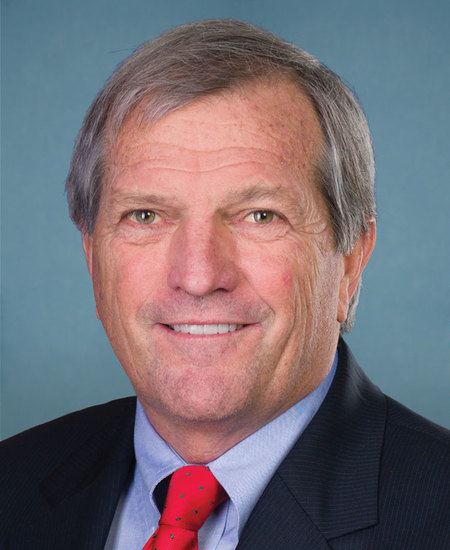
Rep. Mark DeSaulnier
Sponsored bills
Community Services Block Grant Modernization Act of 2022 This bill reauthorizes the Community Services Block Grant program through FY2032 and otherwise modifies the program. The program supports various antipoverty activities, primarily through formula-based allotments to states, Indian tribes, and territories. In particular, the bill makes changes to the program's administration and leadership; performance measurement; and allotments to states and territories. The bill also expands eligibility for services and activities funded by the program to 200% of the federal poverty line (FPL). Under current law, eligibility is generally set at the FPL.
Rights for the Transportation Security Administration Workforce Act of 2022 or the Rights for the TSA Workforce Act of 2022 This bill modifies the workplace rights, protections, and benefits applicable to Transportation Security Administration (TSA) personnel. Specifically, the bill by December 31, 2022, eliminates personnel authorities of the Department of Homeland Security (DHS) and the Department of Transportation governing the conditions of employment for TSA employees, thus making TSA employees subject to the personnel management system applicable to other federal employees; sets forth transition rules that protect the pay rates, leave rights, and other rights of TSA employees; and requires DHS to consult with the exclusive representative of TSA screening employees to carry out the conversion of those positions. The bill also permits the TSA to consult with organizations representing federal air marshals to address concerns, including mental health and suicide rates; directs the TSA to ensure its employees are provided proper guidance regarding prevention and protections against COVID-19; requires the TSA to provide a one-time bonus payment of $3,000 to each TSA employee carrying out duties that require substantial contact with the public during the COVID-19 national emergency; and requires the Government Accountability Office to report on implementation of the bill, TSA recruitment efforts, and specified TSA personnel policies.
Alzheimer's Accountability and Investment Act This bill requires the National Institutes of Health to annually submit, beginning in FY2024, an estimate of its budget and personnel needs for carrying out initiatives pursuant to the National Alzheimer's Project. This project supports coordination of federal planning, research, and other efforts to address Alzheimer's disease and related dementias.
NAPA Reauthorization Act This bill extends through 2035 and makes other changes to the National Alzheimer's Project. This project supports coordination of federal planning, programs, and other efforts to address Alzheimer's disease and related dementias. In particular, the bill incorporates a focus on promoting healthy aging and reducing risk factors associated with cognitive decline. The bill also expands the membership of the Advisory Council on Alzheimer's Research, Care, and Services to include (1) a researcher with experience recruiting and retaining diverse clinical trial participants, (2) an individual diagnosed with Alzheimer's disease, and (3) representatives from additional federal agencies (e.g., the Department of Justice and the Office of Management and Budget).
Maddy summaryHRES 1110 is a non-binding resolution passed by the U.S. House of Representatives on May 12, 2022, to recognize and mourn the 1,000,000 Americans who died from COVID-19. It formally honors the deceased and extends condolences to their families and loved ones without creating new laws or policies. The resolution does not directly affect any specific group or alter existing legislation, as it serves solely as a commemorative expression of national grief. Its key mechanism is the House’s formal acknowledgment of the pandemic’s human toll, referencing the milestone of one million deaths.
Employee and Retiree Access to Justice Act of 2022 This bill prohibits employers from including certain mandatory arbitration clauses, class action waivers, representation waivers, or discretionary clauses in employee benefit plans. It also prohibits these provisions from being enforced with respect to claims brought by plan participants or beneficiaries.
Building America's Health Care Workforce Act This bill extends certain flexibilities relating to training and competency requirements for nurse aides in Medicare skilled nursing facilities (SNFs) and Medicaid nursing facilities (NFs). Generally, SNFs and NFs may not hire nurse aides for longer than four months unless they meet certain training and certification requirements. The Centers for Medicare & Medicaid Services waived some of these requirements during the COVID-19 emergency period so as to allow facilities to maintain adequate staffing levels; the waiver ends in June 2022. The bill extends these flexibilities for at least two years after the bill's enactment and specifies that (1) any time worked by a nurse aide during the emergency period counts toward the 75 hours required for initial training, and (2) a competency evaluation may be conducted at the SNF or NF where the nurse aide is employed if the state does not offer such an evaluation at least once a week.
Tribal Access to Clean Water Act of 2022 This bill provides funding for and expands access to water resources for Native communities (i.e., Indian tribes and Native Hawaiian communities). First, the bill provides funding for the Indian Health Service to (1) provide essential sanitation facilities to community structures (e.g., schools, hospitals, and tribal offices) that were not previously considered eligible for such service; (2) provide technical assistance; and (3) operate and maintain water facilities that serve Native communities. Next, the bill provides funding for the Department of Agriculture to provide water and wastewater facility grants to eligible entities (e.g., Native communities) that have residents facing significant health risks due to inadequate water supply systems. The bill specifies that these funds shall not require any matching contribution. In addition, the bill reauthorizes through FY2032 the Bureau of Reclamation's Rural Water Supply Program. Further, the bill provides funding for and establishes a grant program for tribal clean water access projects. It also provides funding for the Native American Affairs Technical Assistance Program.
Federal Firefighters Fairness Act of 2022 This bill makes it easier for federally employed firefighters who contract certain illnesses to qualify for federal workers' compensation. Specifically, the bill provides that chronic obstructive pulmonary disease, mesothelioma, and specified other cancers of those employed in fire protection activities for at least five years are presumed to be proximately caused by such employment for purposes of a disability or death claim under the federal workers' compensation program. This presumption also applies to federal employees employed in fire protection activities for at least five years who experience a sudden cardiac event or stroke within 24 hours of performing a fire protection activity. The bill also requires the Department of Labor to conduct a review to determine whether breast cancer, gynecological cancer, and rhabdomyolysis should be included under the presumption and to conduct periodic reviews to determine whether other diseases should be included. In addition, a person may petition Labor to include another disease under the presumption. An employee in fire protection activities is a firefighter, paramedic, emergency medical technician, rescue worker, ambulance personnel, or hazardous material worker who (1) is trained in fire suppression; (2) has the legal authority and responsibility to engage in fire suppression; (3) is engaged in the prevention, control, and extinguishing of fires or response to emergency situations where life, property, or the environment is at risk, including the prevention, control, suppression, or management of wildland fires; and (4) performs such activities as a primary responsibility.