

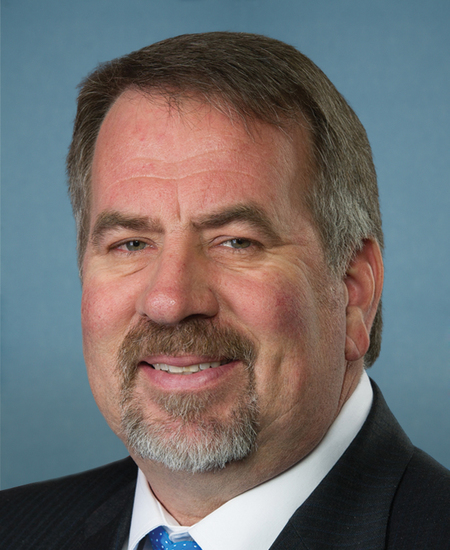
Photo of Doug LaMalfa
R United States House · District 1 · California

Rep. Doug LaMalfa

Compare
Total votes
2,525
all sessions
Attendance
94%
148 missed
Lower than 84% of chamber peers
With party
94%
of cast votes
Higher than 84% of chamber peers
Bipartisan score
3%
crosses aisle rarely
Lower than 92% of chamber peers
Sponsored
1,204
bills & resolutions
Near the chamber average
Committees
0
assignments
1,204 bills and resolutions

Sponsored bills

Total
1,204
Primary
53
Co-sponsor
1,151
This page
1,204
matching current filters
Co-sponsor HR 4784
In committee · United States House · Co-sponsor
Don Young American Grown Act

Maddy summaryHR 4784, the Don Young American Grown Act, requires that cut flowers and cut greens displayed officially in federal buildings - specifically in the Executive Office of the President, State Department, or Defense Department - must be grown in the United States. This affects federal facilities and their display practices, not the general public or commercial markets. The bill includes an exception allowing federal employees to use imported items for personal displays. It defines "produced in the United States" to include all states, the District of Columbia, territories, and federally recognized tribal lands. The rule takes effect one year after enactment.

In committee Jul 29, 2025 1 co-sponsor
Co-sponsor HR 4760
In committee · United States House · Co-sponsor
Cutting LNG Bunkering Red Tape Act

Maddy summaryThe Cutting LNG Bunkering Red Tape Act clarifies that refueling vessels with LNG as marine fuel in U.S. waters does not count as an export under the Natural Gas Act. This means LNG fuel suppliers and shipping companies operating in U.S. territorial seas or inland waters no longer need an export license for these transactions. The bill specifically states that such refueling is not an export unless the transfer occurs in foreign territorial waters, regardless of vessel flags or registry. This change directly reduces regulatory barriers for domestic LNG bunkering operations.

In committee Jul 25, 2025 1 co-sponsor
Co-sponsor HR 4633
In committee · United States House · Co-sponsor
USPS Act

Maddy summaryThis bill requires the Postal Service to immediately post public notices about emergency post office closures (including signs and website updates) and notify local elected officials within 5 days. For closures lasting 30 days, it mandates a public review period for feedback; for 60-day closures, it triggers relocation planning and additional public input. The law also requires annual reports to Congress starting in 2026 detailing all emergency closures, with "emergencies" defined to include natural disasters, safety concerns, or lease issues. It directly affects post offices during emergencies, local officials, and the public receiving closure notices.

In committee Jul 23, 2025 1 co-sponsor
Co-sponsor HR 4673
In committee · United States House · Co-sponsor
Save Our Bacon Act

Maddy summaryThis bill establishes a federal right for livestock producers to sell meat and dairy products across state lines without facing conflicting state regulations. It prevents states from imposing production standards (like animal welfare rules) on products not raised within that state, ensuring a uniform national market for covered livestock products. The law specifically covers animals raised for meat or dairy (including milk products), but excludes egg production. This aims to eliminate barriers to interstate commerce for these products while aligning with U.S. trade obligations.

In committee Jul 23, 2025 1 co-sponsor
Co-sponsor HR 345
In committee · United States House · Co-sponsor
Fire Department Repayment Act of 2025

Maddy summaryHR 345, the Fire Department Repayment Act of 2025, requires federal agencies (Agriculture, Interior, Homeland Security, and Defense) to establish clear procedures for reimbursing local fire departments under existing fire suppression cost share agreements. The bill mandates that agencies review and update current agreements within one year to align with cooperative fire protection agreements and set specific payment timelines. It requires federal agencies to reimburse fire departments promptly after a fire when they submit proper invoices, with Congress urging repayment within one year of the fire suppression event. This directly affects local fire departments that participate in federal reimbursement programs for firefighting costs.

In committee Jul 23, 2025 1 co-sponsor
Co-sponsor HR 4591
In committee · United States House · Co-sponsor
Habitat Enhancement Now Act

Maddy summaryHR 4591, the Habitat Enhancement Now Act, creates two federal grant programs to boost waterfowl populations. It provides $3.5 million annually (2026-2030) for grants to states, tribes, nonprofits, or individuals to install nesting structures (like hen houses) in the Prairie Pothole Region to improve duck nest success, and to establish nesting cover, brood ponds, and incentivize private landowners in California to enhance breeding habitat for mallards and gadwalls. The bill directly affects landowners who participate in the California program and conservation entities implementing both programs. Key mechanisms include competitive grants for specific habitat actions proven to increase nest success, based on scientific findings about declining duck populations. The funding is explicitly allocated for these targeted habitat management activities.

In committee Jul 22, 2025 1 co-sponsor
Co-sponsor HR 4454
In committee · United States House · Co-sponsor
SOIL Act of 2025

Maddy summaryHR 4454, the SOIL Act of 2025, prohibits China, Iran, North Korea, and Russia (or entities controlled by them) from buying or leasing property within 10 miles of designated sensitive sites. These sites include U.S. military installations, ports, government facilities, and any property that could enable foreign intelligence gathering or expose national security activities to surveillance. The bill amends the Defense Production Act to create this restriction, effective upon enactment, and requires the Committee to notify Congress of any violations. It directly affects foreign entities from the specified countries seeking to acquire property near these defined national security locations.

In committee Jul 16, 2025 1 co-sponsor
Co-sponsor HR 4370
In committee · United States House · Co-sponsor
SAMS Act of 2025

Maddy summaryHR 4370, the SAMS Act of 2025, codifies five existing executive orders into law to strengthen U.S. mineral supply chains. It gives legal force to orders focused on securing critical minerals (like lithium and rare earths) for national security and economic resilience, directly affecting federal agencies implementing these strategies. Key provisions require agencies to follow these established policies - addressing reliance on foreign mineral sources, supporting domestic mining, and prioritizing national security in mineral processing - without creating new regulations. The bill does not alter current mineral policies but formally enshrines them as binding federal requirements.

In committee Jul 14, 2025 1 co-sponsor
Co-sponsor HRES 575
In committee · United States House · Co-sponsor
Expressing support for the designation of July 10th as Journeyman Lineworkers Recognition Day.

Maddy summaryHRES 575 is a symbolic resolution designating July 10th as "Journeyman Lineworkers Recognition Day." It honors lineworkers who face significant risks daily - working at heights near live wires and responding to disasters like hurricanes and wildfires. The resolution specifically references Henry Miller, an early leader of the International Brotherhood of Electrical Workers, who died on July 10, 1896, while troubleshooting an outage. It encourages the public to recognize these workers' contributions but does not create new laws or allocate funding.

In committee Jul 10, 2025 1 co-sponsor
Co-sponsor HR 4354
In committee · United States House · Co-sponsor
Agricultural Emergency Relief Act of 2025

Maddy summaryHR 4354 establishes the Agricultural Emergency Relief Act of 2025, creating a new program to provide payments to farmers who suffer crop losses due to specific disasters like droughts, wildfires, floods, or extreme weather. Farmers must apply for payments by documenting "qualified losses" (such as prevented planting, crop quality damage, or wildfire smoke exposure) and agree to purchase Federal Crop Insurance or Noninsured Crop Disaster Assistance coverage for the next two crop years. Payments are calculated based on either past insurance data or farm revenue, with limits set at $125,000-$900,000 per farmer depending on their average farm income level, and capped at 70-90% of documented losses. The program requires the Secretary of Agriculture to administer both insurance-based and revenue-based payment calculations simultaneously during each crop year. This relief applies to eligible producers (excluding joint ventures or general partnerships) who experienced qualifying disasters during the crop year.

In committee Jul 10, 2025 1 co-sponsor
Showing 81 to 90 of 1,204 bills
Previous 1 … 8 9 10 … 121 Next