Reducing Farm Input Costs and Barriers to Domestic Production Act This bill addresses various provisions related to the regulation of domestic agricultural products, including by requiring the Department of Agriculture to publish criteria for considering requests from meat and poultry establishments to operate at line speeds in excess of the current regulatory limitations. The bill also nullifies the final rule issued by the Council on Environmental Quality on April 20, 2022, that reinstated various National Environmental Policy Act regulatory provisions.
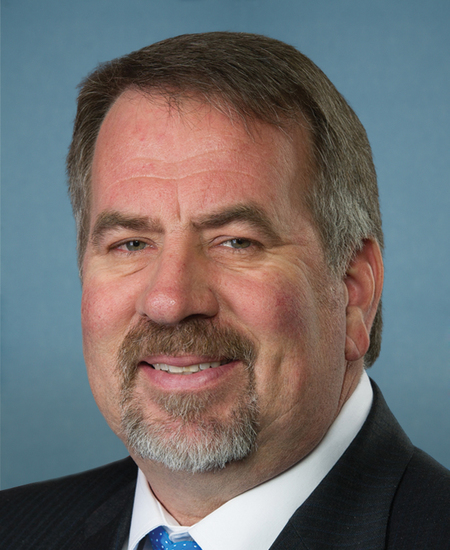
Rep. Doug LaMalfa
Sponsored bills
Airlines Independent of Restrictions Act or the AIR Act This bill directs the Department of Transportation (DOT) to rescind no fly zone restrictions over Disneyworld in Orlando, Florida, and Disneyland in Anaheim, California, imposed under Federal Aviation Administration Notices to Airmen and stop maintaining the restrictions imposed under such notices. DOT may not issue a regulation or Notice to Air Missions to impose a no fly zone over Disneyworld and Disneyland for a period longer than 30 days, with specified exceptions for national security concerns.
Advanced Aviation Infrastructure Modernization Act or the AAIM Act This bill establishes a pilot grant program to support advanced air mobility (AAM) infrastructure. AAM infrastructure refers to an air transportation system that transports individuals and property between points in the United States in both controlled and uncontrolled airspace using certain aircraft, including remotely piloted, autonomous, or vertical take-off and landing aircraft. The Department of Transportation (DOT) must award planning grants for AAM infrastructure to (1) state, local, or tribal governments; (2) airport sponsors; (3) transit agencies; (4) port authorities; (5) metropolitan planning organizations; or (6) consortia of such entities. Entities that receive these grants must develop a comprehensive plan for AAM infrastructure, including vertiports (sites that support the landing, takeoff, loading, and other operations of vertical take-off and landing aircraft). Topics covered in the plan must address matters such as identifying locations for AAM infrastructure and available sources of funding. DOT must brief Congress about the plans it receives. The briefing must include an evaluation of the planned or proposed locations for vertiports and a description of best practices or lessons learned through the review of comprehensive plans. If the Federal Aviation Administration issues type certificates for at least two aircraft models designed to provide AAM transportation and other requirements are met, DOT may award construction grants to entities that submitted comprehensive plans. Recipients may use grant funds for design, environmental studies, and other capital costs related to the construction of a public-use vertiport or associated infrastructure. Grants may not be awarded after September 30, 2023.

Promoting Cross-b order Energy Infrastructure Act This bill establishes a new process for approving the construction and operation of energy infrastructure across an international border of the United States and replaces the existing process established under specified executive orders. Specifically, this bill requires a person to obtain a certificate of crossing before constructing, connecting, operating, or maintaining a border-crossing facility for the import or export of oil, natural gas, or electricity across an international border. A certificate must be obtained from the Federal Energy Regulatory Commission (FERC) for a facility consisting of oil or natural gas pipelines or the Department of Energy (DOE) for an electric transmission facility. As a condition of issuing a certificate, DOE must require that an electric transmission facility be constructed, connected, operated, or maintained consistent with specified policies and standards. FERC and DOE must meet a deadline for issuing a certificate as set forth by this bill. The bill also requires FERC to meet a deadline for approving applications to import or export natural gas to or from Canada or Mexico.
Military Spouse Hiring Act This bill expands the Work Opportunity Tax Credit (WOTC) to include the hiring of a qualified military spouse. (The WOTC permits employers who hire individuals who are members of a targeted group such as qualified veterans, ex-felons, or long-term unemployment recipients to claim a tax credit equal to a portion of the wages paid to those individuals.) A qualified military spouse is any individual who is certified by the designated local agency as being (as of the hiring date) a spouse of a member of the Armed Forces.
Federal Columbia River Power System Certainty Act This bill requires Federal Columbia River Power System (FCRPS) operations to be consistent with a specified decision. The system includes dams in the Columbia and Snake rivers in the Pacific Northwest. Specifically, the Bureau of Reclamation, the Bonneville Power Administration, and the U.S. Army Corps of Engineers must operate the FCRPS consistent with the Columbia River System Operations Environmental Impact Statement Record of Decision dated September 2020. The preferred alternative outlined in that decision would allow specified dams in the lower Snake River to remain in place. The decision may be amended if each agency determines that (1) changes are necessary for public safety or electrical grid reliability, or (2) certain requirements in the decision are no longer necessary. Further, the bill requires statutory authorization for any structural modification, action, study, or engineering plan that (1) restricts FCRPS hydroelectric dam generation; or (2) limits navigation on the Snake River in Washington, Oregon, or Idaho.
Keeping Russia's Energy and Military Liable for Invading its Neighbors Act or the KREMLIN Act This bill temporarily prohibits federal agencies from contracting with persons that have business operations with the government of Russia or with fossil fuel companies that operate there, with exceptions where necessary to provide humanitarian assistance or disaster relief or where vital to U.S. national security interests. The bill terminates the prohibition when the President submits to specified congressional committees a written certification determining that Russia has reached an agreement relating to the withdrawal of Russian forces and cessation of military hostilities that is accepted by the Ukrainian government, poses no immediate military threat of aggression to any North Atlantic Treaty Organization member, and recognizes the right of the people of Ukraine to independently and freely choose their own government.
Farm Credit Administration Independent Authority Act This bill prohibits the Consumer Financial Protection Bureau from issuing, implementing, or continuing any policy or guidance issued after January 1, 2021, that affects the Farm Credit Administration (FCA), Farm Credit System, or FCA Board.
Flood Insurance for Farmers Act of 2022 This bill revises the National Flood Insurance Program to allow exemptions of certain agricultural structures from flood-proofing or elevation standards while receiving coverage under the program. The bill also provides for optional umbrella coverage for commercial, residential (including multifamily rental units), and agricultural property to be made available to all applicants with multiple structures on the same property.
This concurrent resolution declares that a state of emergency exists due to the Russian invasion of Ukraine. It also states that such emergency justifies a waiver of the minimum tonnage requirements for the transport of equipment, materials, or commodities related to humanitarian operations resulting from the invasion. Such requirements apply to cargoes that are transported on ocean vessels and that are procured, furnished, or financed by the United States.