

Maddy summaryThis bill, titled "SAFER Voter Act" but focused on firearms, amends federal law to require federal firearms licensees to verify that buyers of handguns (not shotguns or rifles) are at least 21 years old. It directly affects gun dealers and individuals under 21 seeking to purchase handguns. The key provision removes existing exceptions allowing sales of handguns to those under 21, requiring licensees to confirm age before transferring handguns. The bill does not address voting rights or voter registration, despite its misleading title. (Note: The bill's title conflicts with its actual provisions, which relate to firearm age restrictions.)
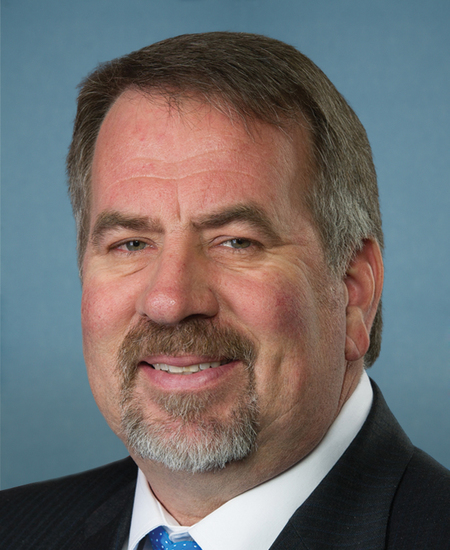
Rep. Doug LaMalfa
Sponsored bills
Maddy summaryThe ACE Act expands tax-advantaged education savings by allowing 529 plan funds to cover homeschooling costs and additional K-12 expenses like tutoring, therapies, and curriculum materials. It doubles the annual distribution limit from $10,000 to $20,000 for these expenses and adds a $20,000 annual gift tax exclusion for contributions to 529 plans. The bill also restricts tax-exempt bonds for school construction to states meeting specific school choice program metrics, requiring at least 40% of students to be eligible for programs like vouchers or education savings accounts. These changes directly affect families using homeschooling or private education, states with school choice programs, and contributors to 529 plans.
Maddy summaryHR 6734 prohibits the use of federal funds to finalize, implement, or enforce the Bureau of Alcohol, Tobacco, Firearms, and Explosives' (ATF) proposed rule (2022R-17) defining "engaged in the business as a dealer in firearms." This bill directly affects the ATF by blocking funding for this specific regulatory rule, which was proposed in August 2023. The legislation does not create new requirements but prevents federal resources from being used to advance this particular ATF regulation.
Maddy summaryHR 6636, the "Woman’s Right To Know Act," requires abortion providers performing or attempting abortions to provide specific information to patients 24 hours before the procedure. This includes showing an ultrasound, sharing results, and obtaining a signed consent form detailing the fetus's gestational age, medical risks of the procedure, and fetal developmental characteristics (like heartbeat and organ development). The bill imposes civil penalties of $100,000-$250,000 per violation and allows patients to sue for triple damages and attorney fees if providers fail to comply, with exceptions for life-threatening medical emergencies. It directly affects abortion providers in interstate commerce and applies to all patients seeking abortions, while clarifying it does not override stricter state abortion disclosure laws.
Maddy summaryThis bill prohibits the Department of Health and Human Services (including the FDA) from treating pregnancy as an illness when approving abortion drugs under the Federal Food, Drug, and Cosmetic Act. It specifically nullifies existing approvals of abortion drugs like mifepristone that relied on pregnancy being classified as an illness. The law requires the FDA to stop using this framework for approving or managing risk strategies for abortion drugs. This directly affects how the FDA regulates abortion medications, removing a specific basis for their current approval status.
Maddy summaryThe Love Them Both Act of 2023 prohibits the Equal Employment Opportunity Commission (EEOC) and the Office of Congressional Workplace Rights from finalizing, implementing, or enforcing any regulations under the Pregnant Workers Fairness Act that apply to abortion or abortion-related services. This bill directly restricts two federal agencies' regulatory authority by banning rules that would require workplace accommodations related to abortion. The key provision is a specific ban on including abortion coverage or related services in the regulatory framework of the Pregnant Workers Fairness Act. The bill does not amend the underlying law but limits its implementation to exclude abortion-related matters. As a result, workplace accommodations under this law would not extend to abortion-related needs.
Maddy summaryHR 6619, the PATROL Act, prevents the federal government from suing states for building border barriers. It specifically blocks the Attorney General from filing civil lawsuits under the 1899 Act against states that construct physical barriers (like walls, fences, or buoys) along the border to stop illegal entry or protect state territory. The law directly affects states building such barriers and the federal government’s legal authority to challenge those actions. This is a procedural change that removes a legal obstacle for states pursuing border security measures.
Maddy summaryThis bill requires courts to advise defendants convicted of drug offenses involving fentanyl analogues (or similar substances) that caused death about the extreme dangers of illicit drugs, especially when mixed with fentanyl. It establishes that prior convictions for similar drug-related deaths can be used as evidence in subsequent homicide cases. The law also allows courts to admit sworn statements from prior cases across state and federal jurisdictions. This directly affects defendants in drug-related death cases involving fentanyl analogues, excluding minors at the time of the offense.
Maddy summaryThe DETERRENT Act requires institutions of higher education to disclose foreign gifts and contracts meeting specific value thresholds ($50,000 or more) to the Department of Education, with special rules for contracts involving "foreign countries of concern" or "foreign entities of concern." It creates a public database of these disclosures, mandates faculty and staff to report foreign gifts related to research, and establishes a waiver process for institutions seeking to contract with prohibited foreign entities. Institutions that fail to comply face fines ranging from 1% to 100% of their federal funding, depending on the violation and whether it's a first or repeat offense. The bill applies primarily to institutions receiving significant federal funding, particularly those with substantial research programs. It aims to increase transparency around foreign influence in higher education while maintaining academic freedom.
Maddy summaryHR 6625, the Chinese Spy Balloon Assessment Act, requires the Secretary of Defense to submit a report to Congress within 90 days of the bill's enactment. The report must detail the national security effects of surveillance conducted by China via a high-altitude balloon shot down in U.S. airspace in February 2023, including impacts on military installations and an analysis of recovered technology's country of origin. This bill directly affects the Department of Defense and Congress by mandating a specific, time-bound assessment of a single incident. It does not create new policies or funding but establishes a procedural requirement for transparency about the 2023 balloon event. The report must be unclassified, though it may include a classified annex.