

Maddy summaryHR 7109, the Equal Representation Act, requires the U.S. Census Bureau to add a citizenship status checkbox to the 2030 and future decennial censuses, asking respondents to identify if they are U.S. citizens, U.S. nationals, lawful residents, or unlawful residents. It then mandates excluding noncitizens (both lawful and unlawful residents) from the population count used to determine each state's number of congressional seats and electoral votes starting with the 2030 census. This bill directly affects how states are apportioned representation in Congress and presidential electoral votes, based solely on the citizen population. The key change is shifting the apportionment base from total population to citizen population alone, using the new census data.
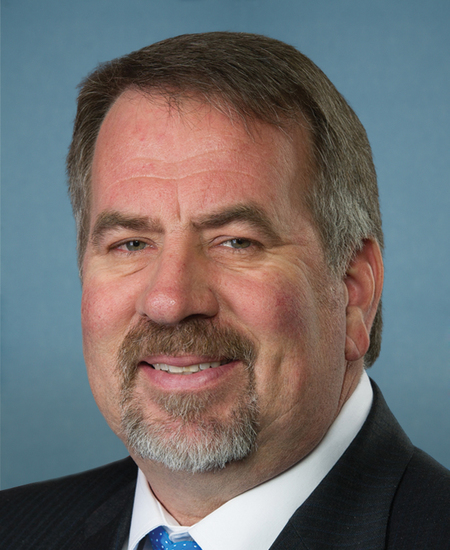
Rep. Doug LaMalfa
Sponsored bills
Maddy summaryHR 8295, the Immediate Support for Israel Act, amends an existing appropriations law to require that any ammunition purchased under the Israel Security Supplemental Appropriations Act, 2024, be delivered to Israel within 30 days of procurement. This change directly affects the timing of military aid delivery, applying specifically to ammunition acquired under the referenced 2024 supplemental funding. The key provision replaces a previous delivery condition with a strict 30-day deadline for all such ammunition. The bill does not create new funding or alter the scope of the original appropriations.
Maddy summaryThis bill names a specific United States Postal Service facility at 24355 Creekside Road in Santa Clarita, California, as the "William L. Reynolds Post Office Building." It directly affects the physical location of this post office by changing its official designation. The key provision is a simple name change, with all existing references to the building in federal documents automatically updated to reflect the new name. This is a ceremonial designation with no policy or funding changes.
Maddy summaryHJRES 131 seeks congressional disapproval of an EPA rule establishing emissions standards for light- and medium-duty vehicles model years 2027 and later. If passed, this resolution would block the EPA's rule from taking effect, preventing automakers from having to comply with those specific pollution requirements. The bill targets the EPA's April 18, 2024, rule published in the Federal Register (89 Fed. Reg. 27842). This is a procedural disapproval resolution under the Congressional Review Act, not a new policy.
Maddy summaryHR 8231, the James Earl Jones Congressional Gold Medal Act, authorizes a Congressional Gold Medal to be awarded to actor James Earl Jones in recognition of his distinguished career in theater and film, and his role in advancing inclusion and equal opportunities for people of all backgrounds in the entertainment industry. The Treasury will strike the medal with an image and inscription of Jones, and may produce and sell bronze duplicates to cover costs, with proceeds deposited into the U.S. Mint's public enterprise fund. This bill serves as a ceremonial honor with no new legal requirements or policy changes.
Maddy summaryThe FAUCI Act (HR 8211) prohibits former top officials from the National Institutes of Health (NIH), Food and Drug Administration (FDA), or Centers for Disease Control and Prevention (CDC) from serving on boards of companies developing drugs, vaccines, or medical devices for eight years after leaving federal service. It also penalizes former officials who profit from drug or device approvals they previously helped determine, with fines up to $250,000 and potential prison time. The bill requires current and future top officials (GS-13 level or higher, or those involved in approvals) to disclose ownership of related patents within 90-180 days. These rules aim to prevent conflicts of interest between federal health regulators and the industries they oversee.
Maddy summaryHR 764, the "Trust the Science Act," requires the Secretary of the Interior to reissue a specific 2020 rule removing gray wolves from the endangered species list within 60 days of the bill's enactment. This directly affects gray wolf populations by changing their federal conservation status. The bill's key provision mandates that this reissuance cannot be challenged in court, eliminating judicial review of the decision. The bill focuses solely on procedural implementation of a prior rule, not broader scientific policy.
Maddy summaryThis bill updates legal definitions in customs law to replace the outdated "four leagues" standard with current international law boundaries. It clarifies that U.S. customs enforcement applies to waters within the U.S. territorial sea (up to 12 nautical miles, as defined in Presidential Proclamation 5928) and contiguous zone (up to 24 nautical miles, as defined in Proclamation 7219). The change directly affects U.S. Customs and Border Protection's maritime enforcement operations but does not alter the actual geographic scope of enforcement areas. The bill amends the Tariff Act of 1930 and the Anti-Smuggling Act to align their language with existing international law standards.
Maddy summaryHRES 1177 designates May 5, 2024, as the "National Day of Awareness for Missing and Murdered Indigenous Women and Girls." The resolution expresses congressional support for this designation, calls on the public to commemorate affected individuals and show solidarity with families, and recommends the Department of Justice commission a new study on the crisis to update statistics since the 2016 report. It directly affects awareness efforts for Indigenous communities and families impacted by violence, while acknowledging ongoing gaps in addressing the crisis despite prior legislation like Savanna’s Act. The resolution does not create new laws or funding but focuses on recognition and data collection.
Maddy summaryThis resolution (HRES 1157) is a symbolic gesture recognizing the work of linemen. It does not create new laws or policies; instead, it formally expresses the House's support for designating April 18, 2024, as "National Lineman Appreciation Day." The resolution highlights linemen's critical role in maintaining power infrastructure, their work as first responders during emergencies, and their safety risks. It directly affects no individuals or entities through policy changes - it solely offers ceremonial recognition of linemen's contributions to public safety.