

Equal Representation Act This bill requires that the statement sent by the President to Congress after the decennial census indicating the number of persons in each state exclude noncitizens. (This statement is the basis for reapportionment of U.S. Representatives.) The bill also requires any questionnaire used in the decennial census to include a checkbox or other similar option for respondents to indicate whether the respondent and each household member is (1) a U.S. citizen, (2) a U.S. national but not a citizen, (3) a non-U.S. national ( alien under federal law) lawfully residing in the United States, or (4) a non-U.S. national unlawfully residing in the United States. The Department of Commerce must make public the number of persons in each state, disaggregated by each of these four categories.
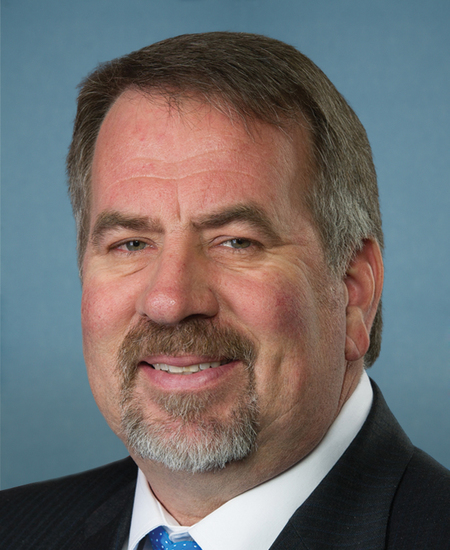
Rep. Doug LaMalfa
Sponsored bills
Maddy summaryThe ESA Amendments Act of 2025 makes significant changes to the Endangered Species Act of 1973 to streamline conservation efforts and reduce regulatory burdens. It establishes a national listing work plan with priority classifications for species to better allocate resources, and creates "Candidate Conservation Agreements with Assurances" that provide private landowners with regulatory certainty in exchange for conservation actions. The bill also requires the government to publish the basis for listings online, streamlines permitting processes for projects that comply with conservation measures, and modifies critical habitat designation to better accommodate existing conservation plans on private lands. These changes aim to improve conservation outcomes while reducing delays for landowners, developers, and federal agencies working with listed species.
Maddy summaryThis bill requires federal agencies to clarify how they recognize special districts (like water, fire, or school districts operating separately from cities or counties) as eligible for federal grants. It mandates the OMB Director to issue guidance within 180 days, directing agencies to adopt this standard within one year for all federal financial assistance programs. The bill ensures special districts - defined as state-created entities with budgetary autonomy for specific services - can consistently access existing federal funding they currently face barriers to. A report on agency implementation must be submitted to Congress two years after enactment.
Enhanced Iran Sanctions Act of 2025 This bill imposes sanctions on certain foreign persons (individuals and entities) that are involved in Iran's petroleum sector as well as certain associated persons. The bill also requires or authorizes actions to facilitate the enforcement of sanctions on Iran. Specifically, the bill requires the President to impose visa- and property-blocking sanctions on any foreign person that, after the bill's enactment, knowingly engages in any transaction related to the processing, export, or sale of oil, condensates, gas, liquefied natural gas, or other petrochemical products in whole or in part from Iran. The President must also impose sanctions on certain foreign persons associated with a sanctioned individual or entity. For example, the President must sanction the subsidiaries and corporate officers of a sanctioned business. The bill provides certain exceptions to these sanctions, including specifying that sanctions do not apply to the importation of goods or to conducting or facilitating transactions for humanitarian assistance. The Department of State must establish an interagency working group that shall seek to establish a multilateral contact group to coordinate international efforts to enforce sanctions on Iran. The bill expands the State Department rewards program to authorize a reward payment to any individual who furnishes information leading to the identification of a person (1) subject to sanctions under this bill, or (2) that has attempted or is attempting to evade sanctions under this bill.
Maddy summaryHR 5910 would expand leasing authority for federally recognized tribes by amending a 1955 law. Currently, the law only permitted leases of trust land for specific tribes (like the Chehalis), but this bill would extend that authority to all tribes listed under the 1994 Indian Tribe List Act. The change allows tribes to lease land held in trust for up to 99 years, providing greater flexibility for managing tribal resources. This directly affects all federally recognized tribes with trust land, enabling them to enter long-term leases without additional federal approval.
Law-Enforcement Innovate to De-Escalate Act This bill removes less-than-lethal projectile devices (e.g., certain TASERs) from regulation under the Gun Control Act. The term less-than-lethal projectile device means a device that (1) is not designed or intended to expel (and may not be readily converted to discharge) commonly used ammunition or projectiles exceeding a velocity of 500 feet per second; (2) is designed and intended to be used in a manner not likely to cause death or serious bodily injury; and (3) does not accept (and cannot be readily modified to accept) an ammunition feeding device. The bill also requires the Bureau of Alcohol, Tobacco, Firearms and Explosives to determine whether a device satisfies the definition of a less-than-lethal projectile device within 90 days of a request.
Protection of Women in Olympic and Amateur Sports Act This bill requires certified national governing bodies (NGBs) of amateur sports (e.g., USA Gymnastics) to prohibit a person whose sex is male from participating in an amateur athletic competition that is designated for females, women, or girls. Under the bill, male means an individual who has, had, will have—or would have, but for a developmental or genetic anomaly or historical accident—the reproductive system that at some point produces, transports, and utilizes sperm for fertilization.
Maddy summaryThis bill prevents state or local governments from banning or restricting energy connections (like installation, modification, or access) based on the type or source of energy, such as electricity, natural gas, or renewable fuels. It directly affects consumers choosing energy providers and energy companies seeking to offer services. The key provision prohibits local laws, regulations, or policies that limit energy services sold in interstate commerce, covering all energy types listed in the bill’s definitions. It does not create new programs but limits regulatory authority at the state or local level. The law aims to ensure open access to diverse energy sources without source-based restrictions.
Maddy summaryThis bill creates a tax exclusion for certain disaster mitigation payments received by property owners. It allows individuals to exclude from gross income funds paid by state programs (or approved entities) to make improvements that reduce damage from windstorms, earthquakes, or wildfires. The exclusion applies to payments made for specific property upgrades like storm shutters or fire-resistant roofing. The change takes effect for 2021+ tax years and includes a retroactive option for taxpayers to amend prior returns. It directly affects homeowners participating in qualifying state disaster resilience programs.
Maddy summaryThe CARE for First Responders Act (HR 6601) provides mental health support specifically for first responders, including emergency personnel and 911 operators (defined as "qualified emergency response providers"). It requires the creation of a 24/7 confidential hotline via the 988 Suicide Lifeline, peer support programs staffed by trained responders, and mobile crisis units that offer on-site mental health services during major disasters. The bill mandates trauma-informed, culturally appropriate care and education to reduce stigma around mental health, with a focus on helping responders and their families adjust after disaster work. It authorizes $5 million annually (2026-2030) for these services through grants to state/local health entities.