

Countering Hizbollah in Lebanon's Military Act of 2021 This bill limits the use of security assistance funds for Lebanon until certain conditions are met. Specifically, 20% of funds appropriated or made available for such security assistance may not be obligated or expended until the President certifies to Congress that (1) the Lebanese Armed Forces have taken measurable steps to limit or expel Hezbollah-influenced military personnel that have significant influence over the Lebanese Armed Forces' policies or activities, (2) activities of the Lebanese Armed Forces to disarm Hezbollah demonstrate a serious commitment to fulfill United Nations Security Council Resolution 1701 calling for such disarmament, and (3) the Lebanese Armed Forces have not cooperated or partnered with Hezbollah during the last year. The President may waive the first two requirements if it is in U.S. national security interest to do so.
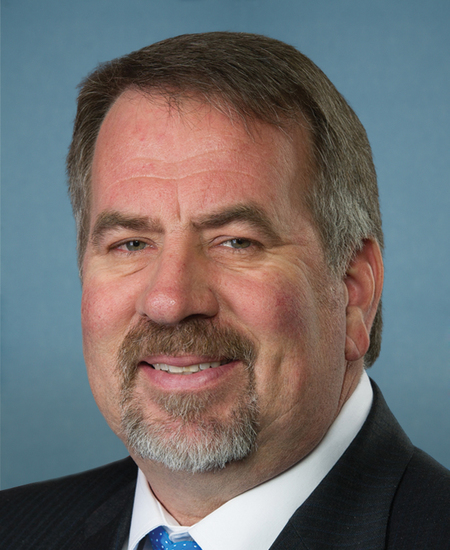
Rep. Doug LaMalfa
Sponsored bills
National Strategic and Critical Minerals Production Act of 2021 This bill sets forth environmental review requirements for the mine permitting process and limits the review to 30 months. Under the bill, projects that provide minerals vital to job creation, energy infrastructure, coastal resilience and restoration, economic competitiveness, and national security must be considered to be infrastructure projects as described in Executive Order 13807, titled Establishing Discipline and Accountability in the Environmental Review and Permitting Process for Infrastructure Projects and dated August 15, 2017.This order directed agencies to ensure that the environmental review and permitting process for infrastructure is coordinated, predictable, and transparent. The Bureau of Land Management (BLM)or the Forest Service must appoint a project lead for the mine permitting process to coordinate with other agencies to ensure that the agencies minimize delays, set and adhere to timelines for completion of the permitting process, set clear permitting goals, and track progress against goals. The project lead must also determine the amount of financial assurance required for reclamation of a mineral exploration or mining site. The bill considers the requirements of the National Environmental Policy Act of 1969to be satisfied if the BLM or the Forest Service determines that the agency issuing the permit will address specified factors, such as environmental impacts of the permit or alternatives to issuance of the permit. Additionally, the bill exempts projects on National Forest System land from regulations that prohibit timber tree cutting and road construction in areas without roads.
No Student Exchanges with North Korean Schools Act This bill prohibits an institution of higher education (IHE) from receiving certain federal education funds if the IHE has an agreement in effect with an IHE or other organization that is directly funded by the North Korean government.
This bill recognizes the significance of the California Waterfowl Association on its 75th anniversary and the benefits of its work for California's waterfowl, wetlands, and public enjoyment of those waterfowl and wetlands.
Making Aid for Local Disasters Equal Now Act or the MALDEN Act This bill modifies requirements pertaining to the time frame for approval of major disaster or emergency declarations and the ability to make federal resources available to rural communities. Specifically, a major disaster or emergency declaration must be made not later than 30 days after a request by a governor or the chief executive of an affected Indian tribal government. Failure to meet the 30-day requirement shall result in an automatic approval of the request. Additionally, if a disaster or emergency occurs in a rural area, regardless of whether a declaration has been made, the Small State and Rural Advocate within the Federal Emergency Management Agency (FEMA) shall work in coordination with local agencies to provide guidance on developing a recovery team, including resources to help prevent flooding, mudslides, rockslides or any other natural disaster that could result after a wildfire and identifying available resources for both short-term and long-term recovery. If a request for individual assistance for residents in a rural area is made but denied, the Small State and Rural Advocate shall work in coordination with local agencies to make disaster case workers available to such residents.
Making Obligations Right by Enlarging Payments In Lieu of Taxes Act or the MORE PILT Act This bill directs the Department of the Interior to develop a modeling tool that calculates the approximate market value of land covered by the payments in lieu of taxes (PILT) program and the approximate amount of local tax revenue the land would generate if privately owned. The PILT program compensates local governments for tax revenue lost due to tax-exempt federal lands within their boundaries. Interior must annually report on the value of land covered by the PILT program, the tax revenue the land would generate if privately owned, and how PILT payments could more accurately reflect that tax revenue.
Shark Fin Sales Elimination Act of 20 21 This bill addresses the sale of shark fins and the inclusion of rays and skates in the Seafood Traceability Program. The Seafood Traceability Program has data reporting and recordkeeping requirements at the time of entry for imported fish or fish products entered into U.S. commerce. The bill makes it illegal to possess, buy, or sell shark fins or any product containing shark fins, except for certain dogfish fins. A person may possess a shark fin that was lawfully taken consistent with a license or permit under certain circumstances. Penalties are imposed for violations under the Magnuson-Stevens Fishery Conservation and Management Act. The Department of Commerce must revise its regulations to include rays and skates as species that are subject to the Seafood Traceability Program.
Biochar Innovations and Opportunities for Conservation, Health, and Advancements in Research Act of 2021 or the BIOCHAR Act of 2021 This bill establishes two temporary programs to encourage research, development, and commercialization of biochar. This is carbonized biomass produced by converting plant matter through reductive thermal processing for nonfuel uses. First, the Department of Agriculture (USDA) and the Department of Energy (DOE) must fund biochar demonstration projects through state, tribal, or local governments; land-grant colleges or universities; or private, nonprofit, or cooperative entities. In selecting projects, the departments must prioritize, for example, projects that (1) have the greatest potential for carbon sequestration; and (2) create new jobs and economic benefits, particularly in rural areas. Projects may use funds for various activities, including developing commercially and technologically viable biochar production units and demonstrating cost-effective market opportunities for biochar and biochar-based products. At least 50% of the plant matter used in a project must come from forest thinning and management activities on National Forest System land. In addition, USDA and DOE must conduct research related to the biochar produced from the projects. Second, USDA must establish a grant program for land-grant colleges and universities to conduct applied research on environmental and economic benefits of biochar. For the duration of the two programs, USDA and DOE must periodically report to Congress about issues related to commercialization of biochar and the status of the programs. The programs terminate after 10 years.
Forestry Improvements to Restore the Environment Act of 2021 or the FIRE Act of 2021 This bill provides for salvage activities after a wildfire is contained on certain National Forest System lands. No later than 60 days after a wildfire is contained on such lands (1) the Forest Service, to the maximum extent practicable, shall complete a survey of the lands that were impacted by such wildfire; and (2) the Department of Agriculture (USDA) shall convert the timber sales applicable to such lands that were impacted by such wildfire to salvage sales. The bill designates a categorical exclusion for forest management activities where the primary purpose of the activity is for roadside salvage activities that allow for the removal of hazard trees that are within 200 feet of a roadway center line. Activities carried out pursuant to this bill shall be subject to judicial review in the same manner as authorized hazardous fuels reduction projects. A court may not order a preliminary injunction enjoining the USDA from proceeding with timber sales authorized under this bill.
Flexible Financing for Rural America Act This bill allows rural utility service providers to submit to the Department of Agriculture (USDA) a request to adjust the interest rate or modify the terms of certain loans. The request shall include a report summarizing how the adjustment or modification will assist the borrower in providing critical utility services to a rural community. Specifically, on receipt of a request, USDA or the Department of the Treasury (in the case of a loan owned by the Federal Financing Bank) must adjust the interest rate on the loan to match certain interest rates for obligations of comparable maturity to the term remaining on the loan (or a higher rate requested by the borrower), and make modifications to the loan terms as necessary to address changes in the financial position of the borrower due to the COVID-19 public health emergency and to promote the financial sustainability of the borrower. In carrying out the adjustments or modifications, USDA or Treasury shall not impose or collect any fee from, or impose any penalty on, a borrower. The bill also provides funding to implement the adjustments and modifications and for the liquidation of residual intragovernmental amounts owed by the Federal Financing Bank in connection with certain loans.