

Maddy summaryHJRES 82 is a non-binding resolution stating that the Equal Rights Amendment (ERA) has been validly ratified by the required 38 states (including Virginia's 2020 ratification) and should be certified as the 28th Amendment to the U.S. Constitution. It directs the Archivist of the United States to fulfill their statutory duty under Title 1, U.S. Code, to certify and publish the ERA without delay. The resolution argues Article V of the Constitution has no ratification deadline, citing precedents like the 27th Amendment. It does not change the Constitution itself but urges the Archivist to complete the certification process. The bill affects the Archivist’s office, requiring them to act on the ERA’s ratification status.
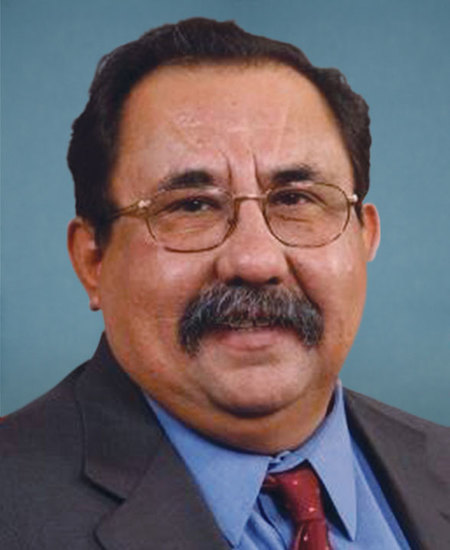
Rep. Raúl M. Grijalva
Sponsored bills
Maddy summaryHRES 584 is a symbolic House resolution expressing support for designating July as "Plastic Pollution Action Month." It does not create new laws or regulations but aims to raise public awareness about plastic pollution by encouraging all individuals in the United States to participate in reducing plastic use and waste. The resolution cites alarming statistics on plastic production, low recycling rates, and environmental harm to justify the designation. It specifically urges Americans to take action through reusable alternatives and cleanup efforts during July. As a non-binding resolution, it directly affects no specific group but seeks to promote voluntary behavior change.
Maddy summaryHRES 580 is a symbolic resolution expressing the House's support for designating "Journeyman Lineworkers Recognition Day." It honors lineworkers who work in hazardous conditions (such as at heights near live wires) and respond to disasters like hurricanes and wildfires, while recognizing their contributions and the legacy of Henry Miller, an early electrical worker who died on the job. The resolution has no legal effect - it solely encourages public recognition and reflection on these workers' service.
Maddy summaryThe Algorithmic Justice and Online Platform Transparency Act requires major online platforms to disclose how they use personal information in algorithmic processes that recommend content, moderate posts, and target advertisements. Platforms must provide transparent notices to users about data collection and use, publish annual transparency reports showing content moderation decisions broken down by demographic information, and maintain an accessible advertisement library showing targeted ads. The bill prohibits algorithms from discriminating in housing, employment, credit, and education opportunities based on protected characteristics like race, gender, or disability. It establishes an interagency task force to study discriminatory algorithmic practices and empowers the Federal Trade Commission to enforce these requirements.
This resolution supports the designation of National Farmworker Awareness Week and commends the significant contributions of farmworkers to our country.
Amend the Code for Marriage Equality Act of 2023 This bill amends the Internal Revenue Code, the Social Security Act (SSA), and other federal laws to replace (1) references to wife or husband with references to spouse , and (2) references to husband and wife or husband or wife with references to married couple or married person. For purposes of federal laws or regulations, marriage is defined as a legal union between two people as spouses. The bill eliminates a definition of spouse that refers only to a person of the opposite sex who is a husband or a wife. Requirements concerning compensation to a surviving wife after the disability or death of a person employed at a military, air, or naval base outside the United States are revised to make surviving spouses eligible for such compensation. The bill makes similar revisions to the Family and Medical Leave Act of 1993, the Federal Mine Safety and Health Act of 1977, and other federal statutes. The bill revises title II (Old Age, Survivors, and Disability Insurance) of the SSA to consolidate separate provisions for a wife's insurance benefits and a husband's insurance benefits into a single standard for a spouse's insurance benefits.
Candidate Voice Fraud Prohibition Act This bill prohibits the distribution of certain paid-for political communications that contain materially deceptive audio that is generated by artificial intelligence which impersonates a candidate's voice. It also establishes criminal penalties for related violations. The bill generally prohibits individuals, political committees, and other entities from distributing such a communication if the communication (1) contains materially deceptive audio that is generated by artificial intelligence which impersonates a candidate’s voice, (2) is distributed with actual malice, (3) is intended to injure the candidate’s reputation or to deceive a voter into voting against the candidate, and (4) is distributed within 60 or 90 days of an election (depending on the type of election). This prohibition does not apply to certain entities, such as radio or television broadcasting stations that broadcast the deceptive audio as part of a bona fide newscast. Additionally, the bill establishes a new criminal offense related to the distribution of materially deceptive audio that is generated by artificial intelligence which impersonates a candidate's voice. A violator is subject to criminal penalties—a fine, up to two years in prison, or both. The bill requires the Federal Election Commission to (1) promulgate regulations related to this bill, and (2) report to Congress on matters relating to compliance with and enforcement of this bill and recommendations to ensure compliance with this bill.
Maddy summaryHR 4580 establishes the Baaj Nwaavjo I’tah Kukveni Grand Canyon National Monument, protecting approximately 1.07 million acres of public land in Arizona. The bill directly affects 13 specific Native American tribes (including the Navajo Nation and Hopi Tribe) by requiring federal agencies to collaborate with them in managing the monument, incorporating their traditional knowledge, and protecting sacred sites. Key provisions include withdrawing the land from mining activities, mandating tribal consultation for management plans, and ensuring continued recreational uses like hunting and fishing under state law. The law explicitly preserves existing water rights, tribal treaty rights, and public access while prioritizing conservation of the Grand Canyon’s ecosystem and cultural resources.
Maddy summaryThe Veteran Service Recognition Act of 2023 requires the Department of Defense, Homeland Security, and Veterans Affairs to study noncitizen veterans removed from the U.S. between 1990 and 2023, documenting their service history and reasons for removal. It establishes a system to identify noncitizen veterans before removal proceedings and creates a Military Family Immigration Advisory Committee to review cases and recommend against removal for veterans. The bill also creates a program to facilitate citizenship for noncitizen service members and provides pathways for previously removed noncitizen veterans to adjust to lawful permanent residence. These provisions directly affect noncitizen veterans and their family members facing immigration proceedings, aiming to better recognize military service in immigration decisions.
Maddy summaryHR 4579, the Fairness for Farm Workers Act, amends the Fair Labor Standards Act to establish phased overtime requirements for agricultural workers. Starting in 2024, most farm employers must pay overtime for hours worked beyond 55 per week (reducing to 50 in 2025, 45 in 2026, and 40 in 2027), with small farms (25 or fewer employees) getting a 3-year delay on the full 40-hour standard. The bill also removes existing exemptions that allowed some agricultural employers to avoid overtime pay for certain workers. This directly affects farm workers in agriculture and their employers, requiring compliance with standard overtime rules previously not applied to this sector.