

Maddy summaryHR 4157, the "Not Just a Number Act," requires the Department of Veterans Affairs (VA) to produce annual reports on veteran suicide rates and their connection to VA healthcare and benefits. The reports must break down suicide rates by age, gender, and race, and examine how engagement with VA services (like Vet Centers, healthcare enrollment, benefits claims, and housing loans) correlates with suicide trends. The bill also mandates a VA toolkit for state/local coroners to improve veteran suicide death reporting, and a study on creating a dedicated VA suicide prevention office. These measures aim to standardize data collection and identify effective prevention strategies, directly affecting VA operations, congressional oversight, and veteran care systems.
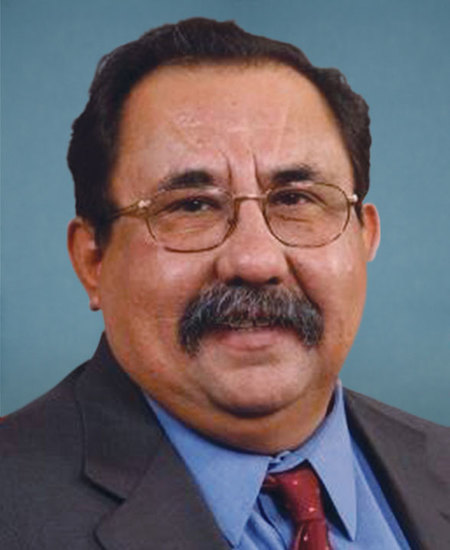
Rep. Raúl M. Grijalva
Sponsored bills
Maddy summaryHR 4801, the HONEST Enterprise Act, establishes the "Compassionate Capitalist Award" to recognize businesses for ethical and community-focused practices. The award is given annually to organizations in four size categories (small, midsize, large, very large) based on performance in four areas: environmental stewardship, ethical governance, social responsibility, and worker empowerment. A board of directors - comprising business, labor, and nonprofit representatives - administers the program, using a standardized evaluation tool to score nominations and verify applicant claims. The bill does not mandate new regulations but creates a voluntary recognition program requiring businesses to apply and pay a fee, with results and award criteria published publicly.
Maddy summaryThis bill amends the Robert T. Stafford Disaster Relief Act to define "high need communities" as small areas (under 10,000 people) with high disaster risk, not already covered by existing programs. It requires FEMA to issue guidance on extreme temperature events within one year and mandates that state and local hazard mitigation plans include resilience goals, address disparities in underserved communities, and integrate nature-based solutions. The bill also allows communities meeting advanced building codes to use disaster funds for resilience projects and directs FEMA to provide technical assistance for implementing these plans. These changes primarily affect small, high-risk communities and state/local governments managing disaster recovery funds.
Maddy summaryThe FRESHER Act of 2023 requires the Secretary of the Interior to study stormwater runoff impacts from oil and gas operations on environmental contamination and groundwater resources. The study must analyze measurable contamination levels, groundwater conditions, and aquifer vulnerability to contamination in affected areas. The Secretary must complete the study and submit a report to Congress within one year of the bill’s enactment. This bill does not impose new regulations on the oil and gas industry but mandates a federal review to inform future environmental policy decisions.
Maddy summaryThe CLEANER Act of 2023 requires the Environmental Protection Agency (EPA) to evaluate within one year of enactment whether waste from oil, gas, and geothermal energy production - such as drilling fluids and produced waters - is hazardous. If determined hazardous, these wastes must be listed and regulated under existing hazardous waste rules, with potential modifications to address their unique properties while ensuring health and environmental protection. For non-hazardous waste from these sources, the EPA must establish new facility requirements, including groundwater monitoring, location standards, and financial assurance for cleanup. This bill directly affects oil, gas, and geothermal energy producers and facilities handling such waste.
Maddy summaryHR 4796, the Reproductive Health Patient Navigator Act of 2023, establishes a federal grant program to fund organizations that help individuals access abortion services. Eligible entities - such as abortion funds, community groups, or local governments - would receive grants to provide services like connecting people to providers, coordinating travel/financing costs, offering culturally appropriate information, and ensuring data confidentiality. The bill includes strong legal protections, prohibiting states from restricting or penalizing navigators for assisting people seeking abortion services, even in states where abortion is illegal. It also allows affected navigators to sue states that violate these protections. The program is funded for fiscal years 2023 through 2027.
Maddy summaryThe People's Response Act establishes a new Division on Community Safety within the Department of Health and Human Services to fund community-based approaches to safety that are disconnected from traditional law enforcement and criminal justice systems. It creates four grant programs totaling $13 billion over five years: one for community-led organizations serving disproportionately impacted communities (especially Black and Indigenous communities), one for local governments to conduct safety needs assessments, one for states to support statewide implementation, and one for hiring and training first responders who provide non-carceral crisis response. These grants require recipients to use "qualified approaches to community safety" that avoid collaboration with carceral institutions and prioritize organizations led by or serving communities most affected by the criminal legal system. Recipients must report on outcomes including racial disparities in arrests, incarceration, and how funds are used to address safety needs through community-led initiatives.
Maddy summaryHRES 608 is a non-binding House resolution recognizing the value of diversity, equity, and inclusion (DEI) efforts at colleges and universities. It affirms that DEI initiatives help create supportive learning environments where all students, faculty, and staff thrive, and specifically supports programs like implicit bias training and cultural competence resources. The resolution emphasizes that DEI efforts strengthen institutions’ ability to recruit diverse talent and align with academic freedom principles. It also notes concerns about state-level efforts to restrict DEI programs and states that such restrictions threaten campus inclusivity. As a symbolic resolution, it does not create new laws or funding but expresses congressional support for DEI work in higher education.
Maddy summaryThe SHADE Act creates a federal grant program to plant trees in historically disadvantaged neighborhoods, primarily targeting redlined areas (former HOLC "hazardous" zones) and overburdened areas (where at least 35% of households are low-income, or 40% identify as minority/tribal, or 40% are limited English proficiency). Eligible entities - like cities, tribes, or nonprofits - must submit applications with 5-year plans, community input strategies, and evidence of housing policies preventing displacement. Grants cover tree planting, maintenance for 5 years, and training, with $50 million annually authorized through 2034. The bill directly affects communities facing environmental inequities by linking tree planting to neighborhood revitalization efforts.
Maddy summaryHR 4812, the Food for Thought Act of 2023, provides federal grants to eligible colleges and universities to offer free on-campus meals to low-income students. The bill targets institutions with high Pell Grant enrollment (at least 30% of undergrads), prioritizing community colleges, minority-serving institutions, and those in areas with high need. Participating schools must provide 1-10 free meals weekly to students facing food insecurity, with priority given to those with greatest financial need, and must report on student outcomes like retention and graduation rates. Grants cover meal costs, campus food pantries, and SNAP enrollment support, with funds allocated for 5 years and requiring detailed reporting on program impact.