

Maddy summaryThe Green Ribbon Act of 2023 establishes a voluntary program to recognize schools and institutions meeting three environmental goals: graduating environmentally literate students, reducing emissions from buildings/operations, and achieving a net positive environmental impact on students and staff. It creates a federal award program where schools can earn recognition through State nominations, with $10 million authorized for fiscal years 2024-2029 to fund grants, honorariums ($10,000 per award), and technical assistance. The program directly affects K-12 schools, tribal schools, and institutions of higher education, requiring States to allocate at least 40% of grant funds to underresourced schools. Key provisions include updated criteria aligning with EPA and CDC health standards, annual reporting requirements, and a new Office of School Infrastructure within the Department of Education.
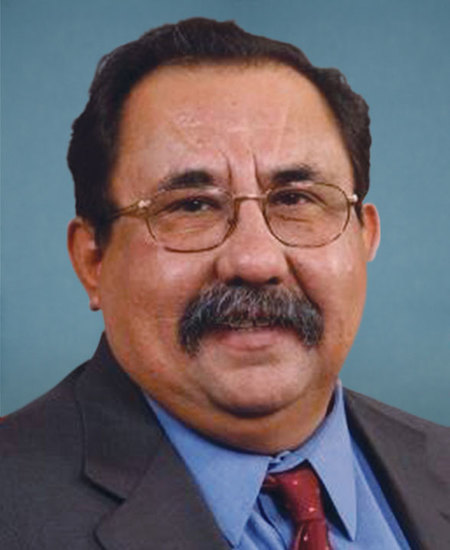
Rep. Raúl M. Grijalva
Sponsored bills
Maddy summaryHRES 682 is a symbolic resolution designating the week beginning September 11, 2023, as "National Hispanic-Serving Institutions Week." It does not create new programs or funding but formally recognizes Hispanic-Serving Institutions (HSIs) for their role in educating Hispanic students and underserved communities. The resolution calls for the public to observe the week with ceremonies during Hispanic Heritage Month, highlighting HSIs' contributions to higher education access and economic mobility. This resolution affects no specific entities or policies, as it is purely commemorative.
Maddy summaryHR 5433, the Child Care Stabilization Act, provides $16 billion annually from 2024 to 2028 to stabilize the child care sector through grants administered by the Health and Human Services Secretary. It directly affects licensed child care providers by offering stable funding to cover operating costs, while supporting higher wages for early educators without raising family fees. Key provisions include expanding access to high-quality, affordable care - especially for infants/toddlers, rural communities, and children with disabilities - and addressing shortages in underserved areas. The funding builds on existing American Rescue Plan resources, aiming to strengthen the child care workforce and increase available options for working families.
Maddy summaryThe Wage Theft Prevention and Wage Recovery Act requires employers to provide detailed paystubs showing wage calculations, initial disclosures about wage rates and classification, and timely final payments upon termination. It increases civil penalties for wage theft violations to up to $110,150 per employee affected for repeated violations and raises liquidated damages to up to 3 times the amount of unpaid wages. The bill extends the statute of limitations for wage theft claims from 2-3 years to 4-5 years and creates a $50 million grant program to support community partnerships that prevent wage theft and help workers recover unpaid wages. These provisions directly affect low-wage workers who experience wage theft, employers who engage in wage theft, and the Department of Labor's enforcement efforts under the Fair Labor Standards Act.
Maddy summaryThis bill requires federal agencies to acquire and maintain opioid overdose reversal kits (like naloxone) and train employees annually on their use, effective within 270 days of enactment. It mandates these actions for all federal agencies - including the Veterans Health Administration - while providing non-mandatory guidance to private employers on similar practices. The law directly affects federal workplaces by making kits and training a requirement, and indirectly encourages private employers to adopt similar safety measures. Key provisions include a 270-day deadline for the Labor Department to issue regulations for federal agencies and non-binding guidance for other employers. The bill focuses on practical workplace safety measures without altering existing federal health or safety laws.
Maddy summaryThis bill would prevent government shutdowns by automatically continuing federal funding at the previous year's level if Congress fails to pass annual budget bills by October 1. It requires Congress to prioritize budget legislation over other matters during funding gaps, with only limited exceptions for true emergencies like national security threats. All federal programs and agencies would operate using prior-year funding rates until a new budget is enacted, applying broadly across the government unless specific exemptions exist under current law. The bill does not create new spending but changes the process to avoid shutdowns by default.
Maddy summaryHR 5322, the Time Off to Vote Act, requires most private employers (with 25+ employees) to provide two consecutive hours of paid leave for employees to vote in federal elections. Employers must grant this leave upon request, can schedule it during early voting periods if permitted by state law, and cannot include lunch breaks in the leave period. The bill prohibits retaliation against employees who take this leave and ensures it does not affect accrued employment benefits. Violations could result in civil penalties up to $10,000 per offense, enforced by the Department of Labor.
Maddy summaryHR 5325, the Domestic Water Protection Act of 2023, imposes a 300% tax on the sale of specific water-intensive crops grown by foreign entities (non-U.S. individuals, corporations, or governments) in areas designated as experiencing severe, extreme, or exceptional drought for over six months by the U.S. Drought Monitor. The tax applies to manufacturers, producers, or exporters of these crops, with revenue deposited into a new Drought Trust Fund to support existing federal drought response programs. The bill excludes crops containing previously taxed water-intensive crops from double taxation. It does not affect U.S. farmers or crops grown outside drought-identified areas.
Maddy summaryThis bill requires infant formula manufacturers to immediately notify federal health officials within 24 hours if they know a product may lack required nutrients, is unsafe, or contains pathogens like bacteria. It mandates that the Director of the Office of Critical Foods contact manufacturers within 72 hours of receiving such a notification to discuss fixes, and confirms corrective actions within 90 days. Manufacturers must halt distribution of unsafe formula immediately upon health risk determination. The bill directly affects infant formula producers by imposing strict timing requirements for safety notifications and responses, with annual congressional reports tracking response times. It modifies existing food safety law (21 U.S.C. 350a) to accelerate action on potential infant formula risks.
Maddy summaryThis bill expands SNAP eligibility for college students by modifying existing rules. It allows students attending higher education institutions (as defined by the Higher Education Act) to qualify for SNAP benefits if they have a zero expected family contribution (EFC) from FAFSA or meet specific criteria for independent student status under the Higher Education Act. The changes replace outdated language about "employment" with "attending school or working" and remove barriers that previously excluded many low-income students. This directly affects low-income undergraduate and graduate students who may face food insecurity while enrolled in college. The policy change takes effect 180 days after enactment.