

Maddy summaryThe Better CARE for Animals Act of 2023 amends the Animal Welfare Act to strengthen enforcement of animal welfare standards. It gives the Attorney General authority to bring civil cases for violations, including seeking penalties up to $10,000 per day per violation and injunctions to remove or relocate animals. The bill also requires the Secretary of Agriculture and Attorney General to coordinate through a new Memorandum of Understanding, focusing on repeat violators. These changes directly affect dealers, exhibitors, and enforcement agencies by expanding civil enforcement tools and clarifying jurisdiction over rule violations.
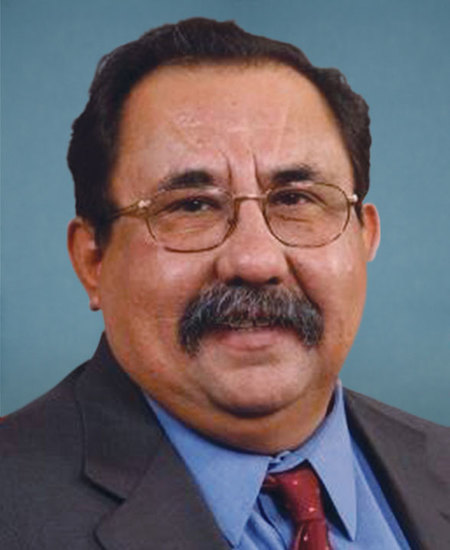
Rep. Raúl M. Grijalva
Sponsored bills
Maddy summaryHR 4845, the Food Secure Strikers Act of 2023, amends the Food and Nutrition Act to remove a restriction that previously disqualified workers from the Supplemental Nutrition Assistance Program (SNAP) if they were on strike. The bill changes eligibility rules so that striking workers are no longer automatically ineligible for SNAP benefits solely because they are participating in a labor strike. This change directly affects workers involved in strikes who rely on SNAP for food assistance, ensuring they can access benefits during labor disputes. The key provision removes specific language from Section 6(d) of the Food and Nutrition Act that had barred strike participants from SNAP enrollment.
Maddy summaryThe John R. Lewis Voting Rights Advancement Act of 2023 would strengthen the Voting Rights Act of 1965 by updating the criteria for which states and localities must obtain federal preclearance before changing voting practices. It would establish new standards for proving vote dilution and vote denial by requiring courts to consider historical discrimination, racial polarization in voting, and whether voting practices disproportionately burden minority voters. The bill would also require states and localities to provide public notice of voting changes and share demographic data about polling locations. These changes would primarily affect jurisdictions with a history of voting rights violations, aiming to prevent discriminatory voting practices before they take effect.
This resolution expresses support for the goals and ideals of PCOS Awareness Month. Polycystic ovary syndrome (PCOS) is caused by a hormone imbalance. Symptoms can include infertility, weight gain, excess hair growth, and acne.
Maddy summaryThis bill improves access to donor human milk for high-risk infants by supporting nonprofit milk banks. It amends the Child Nutrition Act to allow states to use funds for collecting, storing, and transferring unprocessed human milk to registered nonprofit milk banks, and creates $3 million in emergency grants for milk banks facing high demand or supply shortages. The bill also requires a public awareness campaign distributing educational materials to healthcare providers (like pediatricians) and WIC program participants, focusing on the safety and benefits of donor milk. These changes directly affect nonprofit milk banks, healthcare providers, and families of high-risk infants needing this resource.
Maddy summaryHR 5467, the Gun Suicide Prevention Act, requires firearm manufacturers and retailers to attach a specific label to all firearms and their packaging. The label must be in both English and Spanish, display the National Suicide Prevention Lifeline phone number, and include a yellow triangle with an exclamation mark before the hotline message. This mandate applies to all firearms sold in the U.S. and takes effect two years after enactment. Violations would be enforced under the Consumer Product Safety Act, subjecting offenders to existing penalties for safety violations. The bill directly affects firearm sellers by requiring this standardized suicide prevention information on all products.
Maddy summaryHR 5455, the Collision Avoidance Systems Act of 2023, allows automakers to install pulsating light systems as rear-end collision avoidance technology on new vehicles. The bill requires the Secretary of Transportation to issue new regulations within 180 days updating Federal Safety Standard 108 to include performance-based rules for these systems. Specifically, it defines a "pulsating light system" as a high-mounted brake light that flashes rapidly (up to 4 times for no more than 1.2 seconds) before switching to steady light, with a 5-second lockout period after braking stops. This directly affects vehicle manufacturers who must comply with the updated safety standards for brake lights.
Maddy summaryThe Humane Cosmetics Act of 2023 bans cosmetic animal testing in the United States, prohibiting companies from conducting or contracting such testing after its enactment (effective 1 year later). It also bans selling or transporting cosmetics developed using animal testing conducted after that date within U.S. interstate commerce. The law directly affects cosmetic manufacturers, retailers, and suppliers operating in the U.S. market, requiring them to use non-animal testing methods for safety evaluations. Exceptions exist for foreign regulatory requirements or when no alternative testing methods are available for specific ingredients.
Maddy summaryThe No Tax Breaks for Union Busting Act would deny tax deductions for employers who attempt to influence employees' decisions about union activities, including unfair labor practices like firing workers for organizing or using captive audience meetings. It targets expenses related to union-busting tactics, such as consulting fees and other costs used to sway workers' opinions about collective bargaining. Employers would need to report these expenses on tax returns and would no longer be able to deduct them from taxable income. The bill aims to prevent employers from using tax-deductible expenses to influence union elections, aligning with existing rules that deny tax deductions for political spending. It would apply to expenses incurred in taxable years beginning 240 days after enactment.
Maddy summaryThe Arts Education for All Act requires states to integrate arts education into their plans for improving student achievement across all subjects. It mandates schools to report on arts course offerings, teacher qualifications, and student participation rates, with special attention to high-poverty schools and students with disabilities. The bill creates new pathways for arts teacher certification, requires professional development for teachers to integrate arts into core subjects, and establishes national assessment of arts education. This legislation directly affects all public K-12 schools, teachers, and students nationwide, with a focus on expanding arts access for underserved populations.