

Maddy summary# Summary of "Protecting Communities from Plastics Act" (Title II) This comprehensive legislation addresses the environmental, health, and environmental justice impacts of plastics production and use. Key provisions include: ## Environmental Justice Protections - Requires environmental justice assessments for permits of "covered facilities" (plastics manufacturing facilities) - Mandates consultation with "fenceline communities" (communities near facilities) including: * Prompt notification in multiple languages * Public hearings with translation services * Community benefit agreements - Establishes a 45-day waiting period before approving permits after public hearings ## Regulatory Requirements - Amends Clean Air Act to establish new source performance standards for plastics facilities - Requires continuous monitoring of air emissions (benzene, nitrogen oxides, etc.) - Amends Clean Water Act to prohibit discharge of plastic pellets in wastewater - Requires financial assurance for facility closure and emergency response - Prohibits new facility permits within 5 miles of community buildings (schools, hospitals, etc.) ## Research and Monitoring - Requires study of microplastics in food (including fish, meat, fruits, vegetables) - Mandates research on microplastics in human bodies (urine, breastmilk, stool) - Establishes a pilot program to test technologies for microplastic removal - Requires inventory of plastics manufacturing and distribution ## Additional Provisions - Temporary permitting moratorium on new plastics facilities (during "temporary pause period") - Requires listing of discarded polyvinyl chloride as hazardous waste - Limits National Recycling Strategy to exclude chemical recycling technologies - Creates grants to reduce single-use plastics in agricultural packaging - Requires biodegradable alternatives to plastic weed barriers The legislation aims to address the disproportionate environmental and health impacts of plastics production on vulnerable communities while establishing comprehensive regulatory frameworks for plastics manufacturing and disposal.
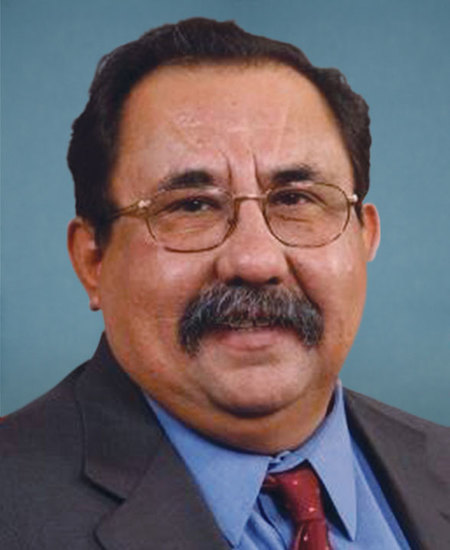
Rep. Raúl M. Grijalva
Sponsored bills
Maddy summaryThis bill designates the U.S. Postal Service facility at 209 Main Street in Duncan, Arizona, as the "Sandra Day O'Connor Post Office." It updates all official U.S. government references - such as laws, maps, and documents - to use this new name for the location. The change applies only to the Duncan post office and does not alter any postal services or policies.
Maddy summaryHR 7007, the BEST Act, provides federal grants to states to establish or improve Seal of Biliteracy programs recognizing students proficient in English and one additional language. It requires states to include Native American languages as a base language (allowing proficiency in them to substitute for English) and ensures equitable access for English learners, students with disabilities, and heritage language learners. The $10 million annual funding (2024-2028) supports program administration, public outreach, and subsidizing testing for low-income students. States must award students a permanent seal on diplomas or transcripts upon meeting state-set proficiency criteria for speaking and writing in both languages.
Maddy summaryThis bill restores visa eligibility for immigrants who had diversity visas allocated for fiscal years 2017-2022 but were denied entry due to specific travel restrictions (like Executive Orders 13769/13780 or related proclamations) or pandemic-related delays. The State Department must notify affected individuals within 90 days of the bill’s enactment, giving them one year to confirm they wish to proceed with their visa applications. Unused visas from those years can be reallocated without counting against current annual limits, and applicants who fail to respond or are denied for standard reasons (like education requirements) lose eligibility. The policy directly affects individuals impacted by these specific past barriers to immigration.
Maddy summaryHRES 962 is a ceremonial resolution honoring Reverend Dr. Martin Luther King, Jr.'s legacy, specifically celebrating his 95th birthday on January 15, 2024. It symbolically affirms his teachings by condemning hate, discrimination, and prejudice against Black Americans, Indigenous people, Jewish, Asian-American/Pacific Islander, Muslim, Hispanic/Latino communities, and LGBTQ+ individuals. The resolution does not create new laws or affect any policies - it solely expresses the House's support for Dr. King's values of diversity, tolerance, and equality through non-binding statements. As a symbolic gesture, it has no legal effect or direct impact on any group or individual.
Maddy summaryHRES 963 is a symbolic resolution honoring Korean American Day, which commemorates the January 13, 1903 arrival of the first large wave of Korean immigrants to the U.S. It recognizes Korean Americans' contributions to U.S. society, including their economic, cultural, and military impacts, and marks the 121st anniversary of this historic migration. The resolution urges all Americans to observe Korean American Day to appreciate these contributions. As a commemorative measure, it does not create new policies or affect specific groups beyond this ceremonial recognition.
Maddy summaryHR 6988, "Jane's Law," creates a federal criminal offense for intentionally traveling across state lines to avoid paying court-ordered property settlements exceeding $5,000 to a spouse or former spouse following divorce or separation. The bill specifically targets individuals who evade these legally mandated payments by moving interstate, making it punishable by up to two years in prison, fines, or both. Upon conviction, courts must order mandatory restitution equal to the unpaid amount. This law directly affects people who fail to comply with state or tribal court orders for spousal property division, expanding federal jurisdiction beyond existing child support enforcement.
Maddy summaryHR 6981, the Preventing Private Paramilitary Activity Act of 2024, makes it a federal crime for unauthorized armed groups (defined as 3+ people with a command structure for public combat, security, or law enforcement-like activities) to engage in specific actions like patrolling, interfering with government operations, or intimidating people. It directly affects private paramilitary organizations not covered by exceptions, such as the National Guard, historical reenactment groups, or authorized training programs. Key provisions prohibit armed activities across state lines or using interstate commerce, with penalties including fines, up to 5 years in prison for causing bodily injury, and life imprisonment if death results. The law also allows the government or affected individuals to seek court orders to stop violations and seize related property.
Maddy summaryThe INSURE Act creates a federal reinsurance program to replace the National Flood Insurance Program, requiring property insurers to offer "all-perils" policies covering specific catastrophe risks like flood, wind, hurricane, wildfire, and eventually earthquake. Insurers participating in the program must implement loss prevention partnerships that encourage investments to reduce catastrophe losses, and will pay quarterly premiums to a Federal Catastrophe Reinsurance Fund. The program will phase in coverage for different perils over eight years, starting with flood coverage (beginning four years after enactment), followed by wind/hurricane (five years), severe storms/wildfire (six years), and earthquake (eight years or when feasibility reports are submitted). The bill also establishes grant programs for states to promote loss prevention investments and provide financial assistance to low-income homeowners struggling with insurance costs.
Maddy summaryThe Affordable Connectivity Program Extension Act of 2024 allocates $7 billion in funding for the Affordable Connectivity Program (ACP) during fiscal year 2024. The ACP provides subsidies to low-income households to help cover the cost of internet service and connected devices like laptops or tablets. This funding ensures the program can continue supporting eligible households throughout the year, with the money remaining available until fully spent. The bill extends existing program funding without changing eligibility criteria or service requirements.