

Maddy summaryThis bill requires employers to provide safety warnings and materials in English and a language workers actually understand, tailored to their literacy level and education. It directly affects workers with limited English proficiency (including those whose native language differs from English or who live in non-English-speaking communities) in workplaces like agriculture and service industries. Key provisions include amending OSHA to mandate multilingual safety information, directing the Labor Secretary to update safety standards within 180 days, and creating competitive grants to fund translation services for covered workers. Grants prioritize organizations serving migrant workers or those in agriculture/service sectors, with reporting requirements to track assistance.
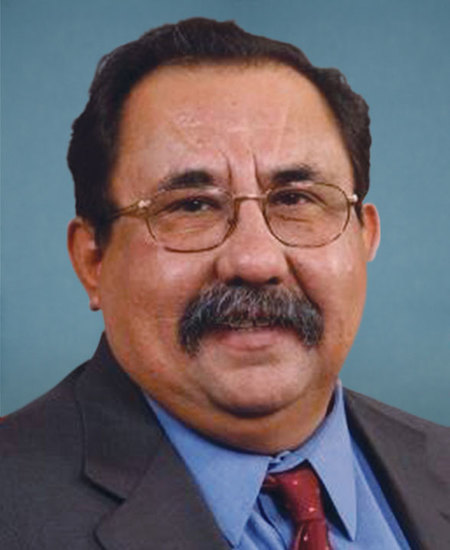
Rep. Raúl M. Grijalva
Sponsored bills
Maddy summaryHR 8732, the Domestic Workers Bill of Rights Act, would establish new labor protections for domestic workers including nannies, housekeepers, and caregivers who work in private homes. The bill requires written agreements between employers and domestic employees, provides earned sick days, ensures fair scheduling practices, and prohibits unfair wage deductions for cash shortages or communications. It also creates a Domestic Employee Standards Board to recommend workplace standards and establishes a National Domestic Employee Hotline for assistance. The bill specifically targets domestic workers who have historically been excluded from labor protections under the Fair Labor Standards Act and Civil Rights Act, benefiting an estimated 2.2 million domestic workers in the U.S. who are disproportionately women of color and immigrants.
Maddy summaryHR 8714, the "Home of Your Own Act of 2024," establishes a federal grant program administered by the Department of Housing and Urban Development (HUD) to assist first-time homebuyers. It provides up to $30,000 per person for down payments, closing costs, or necessary home repairs to make a home accessible for people with household incomes up to 120% of local median income (150% in high-cost areas). States and tribes receiving funds must distribute at least 25% through community development financial institutions and require financial counseling for applicants. The assistance must be repaid if the home is not occupied as a primary residence for 60 months, with exceptions for hardship or selling at a loss, and the program is funded at $6.7 billion annually for 2025-2029.
Maddy summaryHR 537 authorizes a Congressional Gold Medal to honor 60 diplomats who saved Jewish lives during the Holocaust by issuing visas and passports against their governments' orders, risking expulsion and personal danger. The medal will be presented to the next of kin of these diplomats, alongside representatives from their home countries, and permanently displayed at the United States Holocaust Memorial Museum. The bill also permits the sale of bronze duplicates to cover production costs, with proceeds going to the U.S. Mint. This legislation recognizes the diplomats' humanitarian actions without creating new government programs or altering existing laws.
Maddy summaryThis bill changes how the U.S. immigration system calculates the age of children seeking citizenship through a parent. It amends the Immigration and Nationality Act to use the date a parent's petition was first filed (instead of the parent's naturalization date) when determining if a child is under 21. This directly affects immigrant children who might otherwise "age out" of eligibility as their parent becomes a citizen. The key provision prevents children from losing their place in line for a visa due to time delays, ensuring their age is fixed at the initial petition filing.
Maddy summaryThis bill establishes new federal funding and structural changes to address liver cancer and liver disease disparities. It allocates $45 million annually for liver cancer research, $90 million for prevention and patient tracking programs targeting high-risk communities, and $10 million for culturally appropriate awareness campaigns. The legislation redesignates the National Institute of Diabetes and Digestive and Kidney Diseases as the National Institute of Diabetes and Digestive, Kidney, and Liver Diseases, creating a new Division of Liver Diseases within the institute. It specifically aims to address higher liver cancer rates among Asian-American, Pacific Islander, and Hispanic communities, which are disproportionately affected by hepatitis B. Key provisions include creating a National Liver Diseases Data System and requiring community consultation for outreach programs.
Maddy summaryHRES 1279 is a non-binding House resolution expressing support for designating June 2024 as "Black Music Month." It honors Black musicians, creators, and communities whose contributions have shaped American music across genres like blues, jazz, hip-hop, and gospel. The resolution calls on all Americans to recognize the month through actions that elevate Black music's artistry, promote diversity, and spread awareness of its historical impact. It does not create new laws or allocate funding, but serves as a symbolic gesture to celebrate Black music's cultural significance. The resolution was introduced by multiple House members and refers to Black music's role in American history and the civil rights movement.
Maddy summaryHR 8614 authorizes the National Academies of Sciences, Engineering, and Medicine to study potential health risks for residents living near surface coal mines in Central Appalachia. The study will examine links between mining proximity and health effects, including environmental impacts on air/water quality, gaps in existing research, and effects of abandoned mines. It requires the Academies to assess scientific evidence, identify monitoring needs, and recommend research or safeguards for affected communities. The Academies must complete this study and issue a report within 24 months of the bill's enactment.
Maddy summaryHR 8609, the Supreme Court Ethics and Investigations Act, creates two new offices within the Supreme Court: an Office of Ethics Counsel to advise justices on ethical matters like financial disclosures and gift acceptance, and an Office of Investigative Counsel to review formal ethics complaints. The Ethics Counsel provides biannual training to justices and submits annual reports to Congress on ethics advice given, while the Investigative Counsel handles complaints filed only by specific congressional leaders (e.g., committee chairs, Senate leaders) and can issue subpoenas for investigations. If a complaint is validated, the Investigative Counsel submits a report to the Chief Justice (or senior associate justice if the Chief is the subject) with findings and recommendations, which must be shared with relevant congressional committees. The bill establishes specific qualifications, pay rates ($180,000-$225,000 annually), and term limits for both offices’ staff.
Maddy summaryThis resolution (HRES 1271) is a symbolic gesture expressing the House's support for designating June 7, 2024, as "National Gun Violence Awareness Day" and June 2024 as "National Gun Violence Awareness Month." It does not create new laws or policies but urges the public to wear orange, raise awareness about gun violence, and focus on community safety during summer months when such incidents often increase. The resolution references statistics on gun-related deaths and honors victims like Hadiya Pendleton, who was killed in 2013. It directly affects the public by calling on individuals and communities to participate in awareness activities. This is a non-binding, commemorative measure with no direct legal impact on legislation or regulations.