

Maddy summaryHRES 1332 is a symbolic resolution recognizing June as LGBTQIA+ Pride Month. It encourages the celebration of Pride Month to honor the historical struggles and achievements of LGBTQIA+ people in the United States, while acknowledging the ongoing challenges they face. This resolution does not create new laws or policies, but serves as a formal recognition of LGBTQIA+ rights as human rights and highlights their integral role in American history. The resolution was introduced by multiple members of Congress and passed by the House of Representatives.
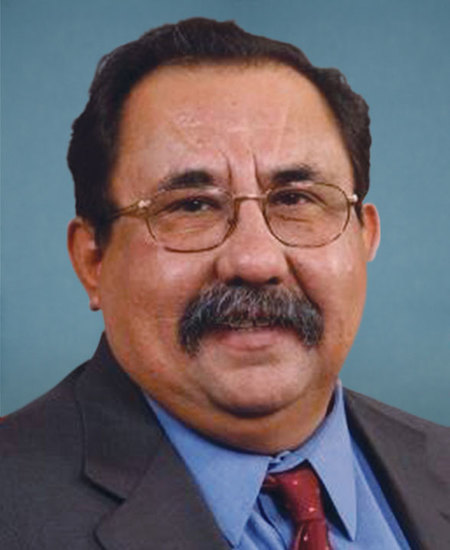
Rep. Raúl M. Grijalva
Sponsored bills
Maddy summaryHR 8911, the Worker Rights and Support Act, requires most employers to provide specific breaks to employees under the Fair Labor Standards Act. It mandates 30-minute meal breaks after 6 hours of work (unpaid unless work continues), 10-minute rest breaks every 4 hours (paid), and medical breaks (up to 20 minutes per need, paid) for documented health conditions. The bill ensures breaks are paid if employees aren't fully relieved of work duties or can't leave the premises. It does not override collective bargaining agreements or stricter state laws, and adds enforcement penalties for violations of these break requirements.
Maddy summaryThis resolution condemns Uganda's Anti-Homosexuality Act, which criminalizes consensual same-sex relationships with penalties including life imprisonment and the death penalty for certain acts. It directly affects LGBTQI+ Ugandans, who face increased violence, evictions, job loss, and barriers to healthcare due to the law's enforcement. The resolution calls on Uganda to repeal the law and supports maintaining U.S. sanctions like visa restrictions for officials involved in human rights abuses and reduced aid. It reflects U.S. government opposition to the law, which has been linked to severe human rights violations against marginalized communities.
Maddy summaryThis bill bans developers and deployers of AI algorithms from using them to deceive voters about election procedures (like voting locations or registration rules) or intimidate people from voting. It requires clear disclaimers - such as "AI Disclaimer: This output was generated by artificial intelligence" - on AI-generated election content, including fake candidate videos or altered voting information. The law sets safety standards for election-related AI, requiring developers to ensure algorithms are "safe and effective" before use. The Federal Trade Commission enforces these rules, with violations potentially leading to fines or up to one year in prison.
Maddy summaryHR 8859, the Deafblind DATA Act, requires the Census Bureau to create and publish a new annual table starting in 2026 showing the number of people in the U.S. who reported both hearing and vision loss in the American Community Survey. This table will display data by state, including sex, race, age, and economic factors like employment and income, without revealing personal details. The bill directly addresses the lack of a centralized count for deafblind individuals, who currently aren't accurately represented in census data. By cross-referencing existing survey responses, the Act aims to provide a clearer national picture to better understand and serve this population's needs.
Maddy summaryThis bill requires background checks to block gun sales to people under court orders restricting firearm access before trial. It amends federal gun law to explicitly prohibit firearm purchases, possession, or receipt by individuals subject to such pretrial court orders. The law updates background check systems (like NICS) to include these orders, ensuring courts can prevent gun access during pending criminal cases. It directly affects individuals detained before trial who face court-mandated firearm restrictions.
Maddy summaryThis bill requires the federal government to issue guidance to state Medicaid programs within 12 months to improve syphilis screening for pregnant women and newborns. It specifically encourages states to expand third-trimester and delivery screenings, integrate telehealth services, provide multilingual education for providers and patients, and enhance treatment protocols. The guidance aims to prevent congenital syphilis - where syphilis is passed from mother to baby during pregnancy - which caused over 3,700 newborn cases in 2022. States must report on implementing these practices to Congress within two years. The bill directly affects pregnant women, newborns, and Medicaid providers by standardizing and improving access to critical syphilis prevention services.
Maddy summaryThis bill would allow Americans to safely import prescription drugs from Canada, the UK, EU, and Switzerland under specific safety and quality standards. It creates a certification process for foreign pharmacies and distributors, requires imported drugs to match FDA-approved versions in active ingredients and strength, and mandates safety testing through approved laboratories. The law permits individuals to import up to a 90-day supply of qualifying drugs with a valid prescription, while requiring importers to report drug prices and manufacturing details to the FDA. It also prevents drug manufacturers from charging higher prices to foreign sellers who import drugs into the U.S.
Maddy summaryThis bill creates a federal framework for "extreme risk protection orders" (ERPOs) that temporarily remove firearms from individuals who pose a risk of harming themselves or others. Family members or law enforcement officers can petition a federal court for a temporary order (up to 14 days) based on probable cause, followed by a hearing within 72 hours to determine if a longer-term order (up to 180 days) is warranted. The bill requires clear and convincing evidence of risk at the hearing and mandates respondents to surrender firearms to law enforcement within 48 hours. It also includes provisions for reporting, training law enforcement on ERPOs, and a federal grant program to support state ERPO implementation, without preempting state laws.
Maddy summaryThis bill (HR 1208) amends the 1934 Indian Reorganization Act to clarify that the Secretary of the Interior can take land into trust for any federally recognized tribe, updating outdated language. It specifically revises Section 19 to replace "any recognized Indian tribe now under Federal jurisdiction" with "any federally recognized Indian Tribe." The bill also ratifies and confirms all past land trust decisions made for federally recognized tribes, protecting those actions from legal challenges based on historical recognition status. This change directly affects federally recognized tribes by ensuring their land trust authority remains valid under current law.