Maddy summaryHR 9168, the Plug Offshore Wells Act, requires the U.S. Department of the Interior to issue annual reports starting two years after the law's enactment. These reports must detail the number of decommissioning applications received, wells/platforms not decommissioned on time, approvals for decommissioning in place, pipeline removal status, and enforcement actions related to offshore oil and gas operations. The reports will be submitted to Congress and made publicly available online. This bill directly affects the Department of the Interior's reporting obligations and provides transparency on offshore decommissioning compliance.
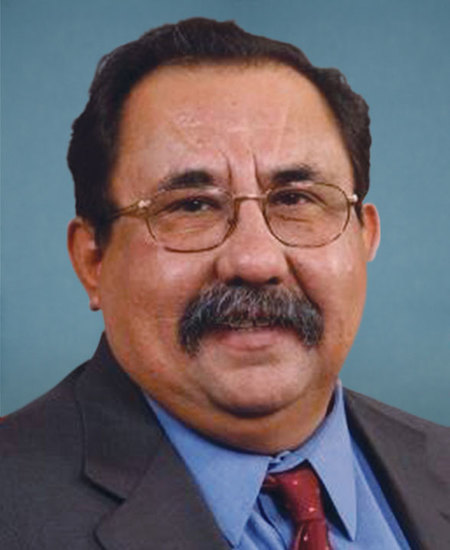
Rep. Raúl M. Grijalva
Sponsored bills
Maddy summaryThe Federal Prison Oversight Act establishes a new inspections regime for federal prisons, requiring the Justice Department's Inspector General to conduct regular assessments of Bureau of Prisons facilities. These inspections will evaluate conditions of confinement, medical care, staffing levels, safety protocols, and policies related to visitation and programming. The bill also creates a new Ombudsman position within the Department of Justice to receive and address complaints from incarcerated people, their families, and staff about health, safety, and rights concerns. The Inspector General must submit public reports with recommendations, and the Bureau must respond with corrective action plans within 60 days. The law includes protections against retaliation for those filing complaints and requires the Bureau to provide multiple confidential channels for submitting complaints.
Maddy summaryH.J. Res. 193 proposes a constitutional amendment to eliminate legal immunity for federal officials, including the President, from criminal prosecution for actions taken while performing official duties. It also prohibits the President from granting a pardon to themselves. The amendment would apply to all federal officers (such as the President, Vice President, and members of Congress) except for Congress members acting in their legislative role as defined in the Constitution. If ratified by 38 states, this change would become part of the U.S. Constitution, requiring no further congressional action.
Maddy summaryHR 9118 would cancel all federal oil and gas leases held by companies found by the Federal Trade Commission (FTC) to have coordinated with OPEC or OPEC+ countries to manipulate oil or gas prices in violation of federal antitrust laws. If the FTC issues a final order confirming such violations, the Secretary of the Interior must automatically cancel those leases and prohibit the company from bidding on new federal leases. The bill directly affects oil and gas companies that violate antitrust laws through market manipulation with OPEC nations. It creates a direct mechanism for lease cancellation based on FTC findings, without requiring new legislation for each case.
Maddy summaryHRES 1375 is a non-binding resolution recognizing extreme weather as a critical threat to children's health and well-being, emphasizing that children face unique vulnerabilities due to their developing bodies, higher exposure to pollutants, and heightened risks during events like heatwaves, wildfires, and poor air quality. It expresses Congress's view that solutions must be developed and deployed rapidly and equitably, with specific attention to children's physical and mental health needs. The resolution suggests concrete measures such as improved air filtration in schools, accessible public alerts for extreme heat, expanded cooling centers, and better infrastructure for child-friendly emergency spaces, though it does not create new laws or mandates.
Maddy summary# Summary of the Document This is a comprehensive legislative act related to water rights for Native American tribes in the Colorado River basin, specifically addressing the Navajo Nation, Hopi Tribe, and San Juan Southern Paiute Tribe. The document establishes: 1. **Water rights and delivery systems** - It creates specific water entitlements including: - Navajo Nation Cibola Water - Navajo Nation Fourth Priority Water - Hopi Tribe Cibola Water - Navajo Nation Upper Basin Colorado River Water - Hopi Tribe Upper Basin Colorado River Water 2. **Settlement Agreement** - This is a major agreement between the tribes, the federal government, and other entities that resolves longstanding water rights disputes. 3. **Accounting rules** - Detailed provisions for how different types of water deliveries will be accounted for in the Colorado River system, including special rules for water delivered to the tribes. 4. **Reservation creation** - Establishes the San Juan Southern Paiute Reservation (approximately 5,400 acres) within the Navajo Indian Reservation. 5. **Waivers and releases** - Comprehensive waivers of claims by the tribes and the United States regarding water rights and other claims. 6. **Funding** - Authorizes $5 billion in appropriations for implementation. 7. **Limited sovereign immunity waiver** - Allows the tribes to be joined in certain legal actions related to the interpretation and enforcement of the agreement. 8. **Special provisions** - Includes specific rules for the Navajo-Gallup Water Supply Project and the "iiná bá - paa tuwaqat'si" pipeline (a Navajo language term for a water pipeline). The document represents a comprehensive resolution of water rights claims for these tribes, establishes new water delivery systems, creates a legal framework for how water will be accounted for in the Colorado River basin, and creates a reservation for the San Juan Southern Paiute Tribe. It addresses unique circumstances related to the tribes' location in both the Upper and Lower Colorado River basins.

Maddy summaryHR 6362, the Protecting Benefits for Disabled Veterans Act of 2023, allows the VA to assign a total disability rating to veterans with service-connected disabilities who cannot work due to those conditions. It specifies that veterans qualify if they have one disability rated at least 60% or multiple disabilities totaling 70% (with at least one at 40%), and the VA must consider certain disability combinations as a single condition. The bill prohibits the VA from considering a veteran’s age or Social Security benefits when making this determination, and clarifies that veterans maintaining marginal employment (below the poverty threshold) may still qualify for total disability. This change directly affects disabled veterans seeking full benefits by providing clearer pathways to qualify for total disability ratings based on employment impact.
Maddy summaryHR 9005, the Teacher, Principal, and Leader Residency Access Act, amends the Higher Education Act to allow Federal Work-Study funds to support paid residency programs for aspiring teachers, principals, and school leaders. The bill enables schools to use these funds for compensation during residency training and travel, prioritizing students eligible for Federal Pell Grants. It defines a "residency program" as a structured, year-long apprenticeship where participants work alongside mentor educators while completing coursework in teaching or leadership skills, culminating in full state certification. This directly affects school districts facing teacher shortages, especially in high-need subjects and schools serving low-income or minority students, by expanding access to a proven model that increases educator retention. The policy change focuses on funding mechanisms rather than outcomes, making residency participation financially feasible for participants and institutions.
Maddy summaryThe CHOICE Act creates a new public health insurance option available through health insurance marketplaces (Exchanges) starting in 2026. It directly affects consumers seeking coverage and healthcare providers who must participate if they serve Medicare or Medicaid patients. Key provisions include the Secretary establishing geographically adjusted premiums, using Medicare reimbursement rates for providers if negotiations fail, and requiring the public option to offer bronze/silver/gold plans while complying with existing ACA rules. The bill aims to expand choices and competition in the insurance market without replacing private plans.
Maddy summaryHCONRES 119 is a non-binding congressional resolution expressing that people wrongfully or unjustly deported after establishing long-term ties in the U.S. (such as DACA recipients, veterans, or those with expunged convictions) deserve a fair process to return. It proposes creating a centralized unit within the Department of Homeland Security (DHS), modeled after DHS’s existing ImmVets program for veterans, to review applications for re-entry. The resolution does not change immigration law but urges DHS to establish this dedicated process to address systemic barriers like lengthy delays, complex procedures, and limited access to legal help. It specifically targets individuals separated from families after years in the U.S., including those deported due to errors, protests, or outdated convictions. The resolution emphasizes repairing past injustices without altering current legal frameworks.