

Maddy summaryHRES 1432 designates September 10, 2024, as "National Firearm Suicide Prevention Day" to raise public awareness about firearm suicides and promote safe storage practices. The resolution encourages healthcare professionals to discuss safe firearm storage with patients and supports the day's goals of reducing firearm suicides through education. It directly affects the general public and healthcare providers by highlighting evidence that safe storage lowers suicide risk, referencing statistics like 54.6% of U.S. suicides in 2022 involving firearms. The bill is symbolic, with no new legal requirements, and aligns with existing awareness efforts like Firearm Suicide Prevention Day.
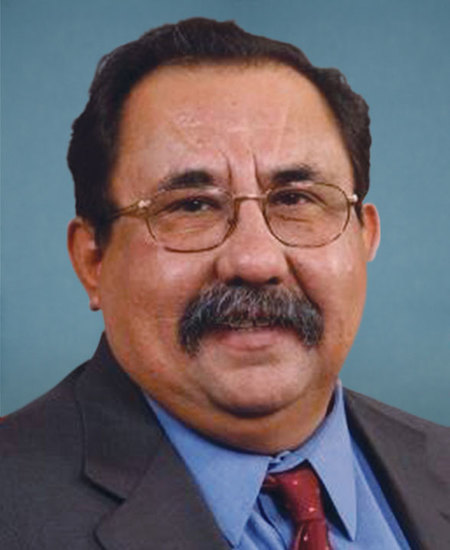
Rep. Raúl M. Grijalva
Sponsored bills
Maddy summaryHRES 1436 is a symbolic resolution (not a law) introduced in the U.S. House of Representatives. It recognizes suicide as a preventable public health crisis by citing statistics from the CDC, VA, and SAMHSA showing rising suicide rates across age groups, including veterans and adolescents. The resolution formally supports designating September as "National Suicide Prevention Month" and September 10, 2024, as "World Suicide Prevention Day." It does not create new policies, allocate funding, or directly affect any individuals - its purpose is solely to express congressional support for suicide prevention awareness and efforts.
Maddy summaryHRES 1422 is a resolution recognizing the 60th anniversary of the Wilderness Act (enacted in 1964), which established the National Wilderness Preservation System. The resolution commends advocates for the Act, acknowledges wilderness areas' role in protecting over 112 million acres of public lands, and highlights their benefits for recreation, clean water, wildlife habitat, and climate resilience. It specifically emphasizes the importance of including Tribal governments in wilderness designation and management. As a commemorative resolution, it does not create new laws or directly affect any group.
Maddy summaryThe School Hunger Elimination Act of 2024 automatically certifies children for free or reduced-price school meals if they are already receiving Medicaid benefits (with household income at or below 133% of the federal poverty line for free meals) or Supplemental Security Income (SSI). It requires states to establish data-sharing agreements with Medicaid agencies by the 2025 school year, eliminating the need for families to submit separate applications for meal eligibility. This change directly affects children in low-income households already enrolled in Medicaid or SSI, streamlining access to school meals without additional paperwork.
Maddy summaryHR 8492 prohibits wildlife killing contests - events where participants kill animals for cash, prizes, or entertainment - on all federal public lands managed by agencies like the National Park Service or U.S. Forest Service. It specifically bans contests targeting species such as coyotes, foxes, and bobcats, except for field trials with hunting dogs, contests for deer/birds (Galliformes/Anatidae), or agency-led invasive species control. The law requires federal agencies to issue implementing regulations within a year of enactment. It directly affects organizers, sponsors, and participants of such contests on federally managed lands, while allowing states to maintain stricter rules.
Maddy summaryHR 6765, the Wildlife Disease Surveillance for Pandemic Prevention Act, creates a national system for monitoring wildlife diseases to help prevent future pandemics. The bill provides $15.5 million annually to states and $3 million to tribes to develop wildlife health action plans and contribute data to a new National Wildlife Disease Database. It establishes a Wildlife Disease Surveillance Program, a Wildlife Disease Emergency Response Program, and Centers for Study and Diagnostics of Wildlife Diseases at institutions of higher education. The legislation also creates a Federal One Health Interagency Working Group and a Wildlife Disease Surveillance Advisory Committee to coordinate across agencies and ensure tribal and state participation. This bill directly affects states, tribes, federal agencies, and research institutions by requiring data sharing, funding new surveillance capabilities, and establishing new coordination mechanisms for wildlife disease prevention.
Maddy summaryThe Equal Pay for Equal Work Act establishes a National Equal Pay Enforcement Task Force to strengthen enforcement of existing equal pay laws. The task force, made up of representatives from the Equal Employment Opportunity Commission, Department of Justice, Department of Labor, and Office of Personnel Management, will coordinate efforts to investigate pay disparities and develop solutions. It will create action plans to address enforcement gaps and improve public education about pay equity. This bill directly affects federal agencies and workers facing wage discrimination by enhancing how equal pay laws are enforced across government.
Maddy summaryThis bill (HR 8896) allows veterans awarded the Purple Heart for service after September 11, 2001, to transfer unused portions of their Post-9/11 GI Bill educational benefits to family members. Eligible veterans can transfer up to 36 months of unused benefits to a spouse or child, with children needing to complete high school or turn 18 before using the benefits. The transfer can be modified or revoked at any time, and transferred benefits cannot be treated as marital property in divorce. This expands existing transfer options, which previously excluded Purple Heart recipients, to include them under the same rules as other veterans.
Maddy summaryThe Elder Pride Protection Act of 2024 establishes a new federal task force (the ELDER Task Force) within the Department of Justice to address elder abuse targeting LGBTQI+ seniors. The task force, formed within 90 days of the bill's enactment, will study abuse patterns against LGBTQI+ individuals aged 60+, develop best practices for law enforcement, and create educational materials for prevention and response. It will coordinate federal, state, and local efforts and report to Congress within one year. The bill directly affects LGBTQI+ seniors facing abuse, focusing on concrete policy actions through research, resource development, and interagency coordination.
Maddy summaryThis bill creates a new program to provide emergency grants to farm worker organizations during covered disasters. It directly affects migrant and seasonal farm workers who lose income or cannot work due to events like hurricanes, wildfires, pandemics, or extreme weather. The grants fund immediate relief (including direct cash or aid), building community resilience, infrastructure support, and emergency services. Funds remain available until spent, and the program requires consultation with eligible organizations, defined as farm worker groups or qualified nonprofits with relevant experience.