

Peace Corps Reauthorization Act of 2022 This bill reauthorizes through FY2024 and modifies operations of the Peace Corps. Changes include increasing the readjustment allowance paid to volunteers when their service terminates and providing statutory authority for an executive order that grants returned volunteers noncompetitive eligibility for federal civil-service positions. Additionally, the bill entitles returned volunteers to sixty days of health care benefits. The Peace Corps must also provide volunteers with information about enrolling in U.S. health plans before service termination and mental health care during and after service. The bill also includes provisions to address involuntary termination of Peace Corps service in emergencies, including by expediting re-enrollment of involuntarily terminated volunteers. The Peace Corps must also adequately insure volunteers' safety and must coordinate with the Department of State to periodically update agreements concerning the security of Peace Corps volunteers and staff abroad. The bill also authorizes Peace Corps to recruit domestically based volunteers to serve in the United States at the request of another agency or to provide services in a host country virtually, modifies the Peace Corps National Advisory Council's membership and functions, expands whistleblower protections for volunteers, increases the rate of pay that applies to a volunteer's workers compensation claim, requires Peace Corps to implement a zero tolerance drug use policy regarding volunteer involvement with illegal drugs, and emphasizes the use of the internet in Peace Corps programs. Furthermore, the bill requires reporting, including on the provision of mental health services to volunteers.
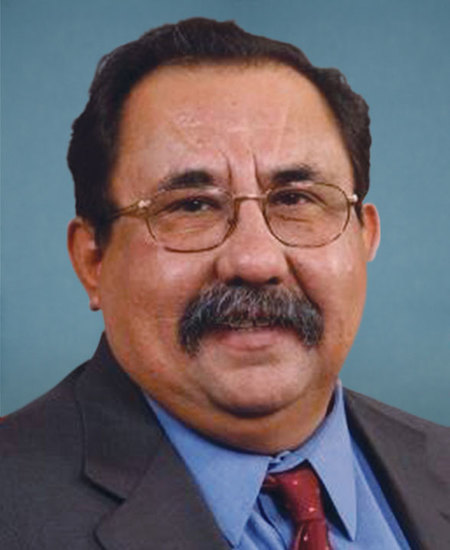
Rep. Raúl M. Grijalva
Sponsored bills
Digital Equity Foundation Act of 2022 This bill sets out a process for establishing the Foundation for Digital Equity to raise funding for, develop programs and partnerships to, and otherwise support efforts to expand access to broadband internet and promote digital literacy, inclusion, and equity. The bill authorizes the foundation to carry out a range of activities to advance its mission, such as (1) establishing for-profit subsidiaries to stimulate economic development and attract investment partners, and (2) awarding grants.
Expanding Service Coordinators Act This bill reauthorizes through FY2027 funding for service coordinator programs, which embed staff in certain federally assisted housing to arrange for transportation, case management, and other supportive services for eligible residents. The bill also makes service coordinators eligible to have qualifying student loans discharged through the Public Service Loan Forgiveness program. Additionally, the Government Accountability Office must study best practices and other matters concerning service coordinator programs in federally assisted housing in rural areas.
Lowering Obstacles to Achievement Now Act or the LOAN Act This bill makes various changes to federal student aid programs, including by providing funding to increase the maximum Pell Grant award for each eligible student and reducing the number of monthly loan payments required for loan forgiveness under the Public Service Loan Forgiveness (PSLF) program.
Loan Forgiveness for Educators Act of 2022 This bill expands the Teacher Loan Forgiveness program. Among other provisions, the bill (1) renames the program the Educator Loan Forgiveness program, (2) expands program eligibility to early childhood educators and program directors serving in early childhood education programs and school leaders serving in public high-need schools, and (3) establishes a program in which the Department of Education cancels monthly student loan payments during qualifying service and provides complete loan forgiveness after five years of service.
Improving Seniors' Timely Access to Care Act of 2022 This bill establishes several requirements and standards relating to prior authorization processes under Medicare Advantage (MA) plans. Specifically, MA plans must (1) establish an electronic prior authorization program that meets specified standards, including the ability to provide real-time decisions in response to requests for items and services that are routinely approved; (2) annually publish specified prior authorization information, including the percentage of requests approved and the average response time; and (3) meet other standards, as set by the Centers for Medicare & Medicaid Services, relating to the quality and timeliness of prior authorization determinations.
Worker Safety in Climate Disasters Act This bill provides paid emergency leave time (80 hours for a full-time employee) for an employee who is unable to work (or telework) due to certain climate disasters.
Wind Safety Standard Act of 2022 This bill requires the Occupational Safety and Health Administration to issue a standard for preventing workplace injuries caused by high winds (i.e., winds of such velocity that the winds could blow an employee from an elevated location, cause an employee to lose control of equipment or material, or expose an employee to other hazards).
Great Bend of the Gila Conservation Act This bill establishes the Great Bend of the Gila National Conservation Area and the Palo Verde National Conservation Area in Arizona. The bill designates in Maricopa County in Arizona approximately 9,809 acres as the Gila Bend Wilderness, approximately 23,464 acres as the Red Rock Canyon Wilderness, and approximately 23,712 acres as the Ringtail Wilderness.
Advancing Tribal Parity on Public Land Act This bill addresses tribal interests in the disposal and management of public land. Specifically, the bill prohibits the federal government from disposing of public land or National Forest System land unless the Department of the Interior or the Department of Agriculture (USDA) determines, through consultation with any interested Indian tribe, that such disposal would not impact the rights and interests of any interested tribe and would not impair access to a reservation. Interested Indian tribe means an Indian tribe with (1) historic, precontact, cultural, or religious connection to a cultural site located on the tract of public land; (2) a former reservation located on the tract of public land; or (3) treaty rights or other reserved rights associated with the tract of public land. Interior and USDA must, prior to conducting a sale of a tract of public land, notify all tribes of the availability of land for sale. Further, Interior and USDA must sell the tract of land to an interested Indian tribe that submits a bid at fair market value. Land acquired by an interested tribe shall be taken into trust by Interior for the benefit of the tribe. Additionally, the bill revises various public land provisions, including to (1) add the interests of tribes to the list of considerations for land exchanges, and (2) authorize tribes to acquire land for recreational and other public purposes. The bill also requires each public land advisory board to include at least one representative of an interested Indian tribe.