

Maddy summaryHR 794, the Lunar New Year Day Act, would designate the Lunar New Year as a federal holiday by adding it to the list of official federal holidays under Title 5 of the U.S. Code. This change would directly affect federal government operations and employees, who would observe the holiday on the date of the Lunar New Year each year. The bill’s sole mechanism is amending the existing holiday schedule to include "Lunar New Year Day" following the Birthday of Martin Luther King, Jr. It does not create new programs, allocate funding, or impact non-federal entities.
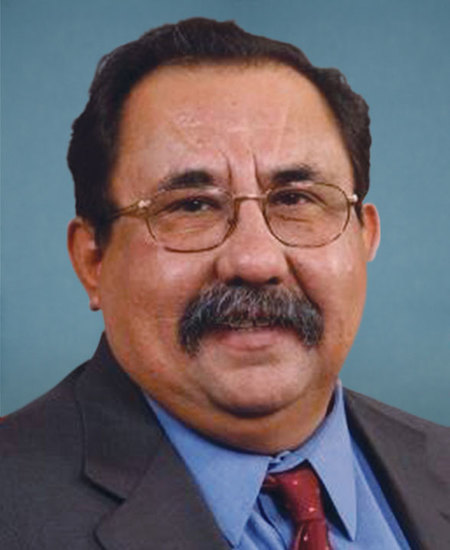
Rep. Raúl M. Grijalva
Sponsored bills
Maddy summaryThis bill requires the U.S. Department of Education to proactively notify eligible college students about potential access to SNAP (food stamp) benefits. It targets students with a negative or zero student aid index (SAI) who file the Free Application for Federal Student Aid (FAFSA). The Department must send annual written and electronic notices explaining SNAP eligibility and providing state contact information for applying. The bill also mandates consultation between the Education and Agriculture Departments to design these notifications. This is a policy change focused on improving access to nutrition assistance for low-income students already enrolled in college.
Maddy summaryHRES 66 is a non-binding resolution affirming the U.S. government's leadership in global education. It calls on the State Department and USAID to prioritize quality, inclusive public education for girls, children with disabilities, and children in crisis settings, while integrating education into humanitarian responses. The resolution urges these agencies to meet existing commitments to international education programs and advance learning outcomes for marginalized youth worldwide. It does not create new laws or funding but emphasizes coordination across U.S. government agencies to support global education efforts.
Maddy summaryHRES 68 is a non-binding House resolution expressing strong disapproval of the President’s announcement to withdraw the U.S. from the Paris Agreement. It commends states, businesses, and citizens supporting the Agreement, urges the President to reverse the withdrawal decision, and calls for Congress to prioritize U.S. climate leadership. The resolution does not create new laws or affect specific groups but formally states the House’s position against withdrawing from the international climate accord. It was introduced by 115 co-sponsors and reflects broad congressional concern about reversing U.S. climate commitments.
Maddy summaryHRES 61 is a symbolic resolution designating January as "Muslim-American Heritage Month" to celebrate the contributions of Muslim Americans to U.S. society. It does not create new laws or affect specific groups legally, but formally recognizes their historical and cultural impact through non-binding support. The resolution highlights Muslim Americans' roles in fields like business, science, military service, and the arts, while acknowledging challenges like religious discrimination. It urges the public to observe the month with ceremonies celebrating their heritage.
Maddy summaryHR 669, the "Restricting First Use of Nuclear Weapons Act of 2025," requires Congress to declare war before the U.S. can conduct a first-use nuclear strike. It directly affects the President (who currently has sole authority to authorize such strikes), military commanders, and Congress by mandating that federal funds cannot be used for a first-use attack without a congressional declaration of war. The bill defines a "first-use nuclear strike" as an attack launched without prior confirmation that the U.S., its territories, or allies were first hit with nuclear weapons. This law changes policy by creating a constitutional check on presidential nuclear authority, requiring explicit congressional approval for the initial use of nuclear weapons.
Maddy summaryHR 612, the Health Care Providers Safety Act of 2025, provides federal funding to help health care facilities improve safety. It authorizes the Secretary to award grants to hospitals, clinics, and other health care providers to cover costs for physical security (like structural improvements) and cyber security (such as data privacy tools and video surveillance systems). These grants directly help health care providers protect their facilities, staff, and patients from security threats. The bill creates a new funding mechanism under the Public Health Service Act, making specific security upgrades eligible for federal support.
Maddy summaryHR 609, the Assuring Medicare's Promise Act of 2025, directs revenue from the net investment income tax (currently applied to investment income) into the Medicare Hospital Insurance Trust Fund. It expands the tax base to include certain business income for high-income individuals with modified adjusted gross income exceeding $400,000 ($500,000 for joint filers), with a phase-in to limit the tax increase. The bill ensures this tax revenue directly supports Medicare's hospital insurance program, applying to taxable years beginning after December 31, 2025. The changes do not alter the tax rate but broaden the income types subject to the tax for high earners.
Neighbors Not Enemies Act This bill repeals provisions authorizing the President to apprehend and remove from the United States the citizens of a particular nation, if the United States has declared war against that nation or that nation has threatened an invasion against the United States.
Maddy summaryThe Close the Medigap Act of 2025 would prohibit Medigap insurance issuers from denying coverage or charging higher premiums based on health status, pre-existing conditions, genetic information, or other factors. It requires insurers to spend a minimum percentage of premiums on health care claims and improves the Medicare Plan Finder website to provide clearer information about coverage options, out-of-pocket costs, and guaranteed issue requirements. The bill applies to Medigap policies effective January 1, 2026, with full implementation by 2031, and requires Medigap brokers to disclose payments they receive from insurers. These changes would directly affect Medicare beneficiaries, particularly those with pre-existing conditions who have historically faced barriers to obtaining affordable supplemental coverage.