

National Origin-Based Antidiscrimination for Nonimmigrants Act or the NO BAN Act This bill imposes limitations on the President's authority to suspend or restrict aliens from entering the United States. It also prohibits religious discrimination in various immigration-related decisions, such as whether to issue an immigrant or nonimmigrant visa, unless there is a statutory basis for such discrimination. The President may temporarily restrict the entry of any aliens or class of aliens after the Department of State determines that the restriction would address specific and credible facts that threaten U.S. interests such as public safety. The bill also imposes limitations on such restrictions, such as requiring the President, State Department, and the Department of Homeland Security (DHS) to (1) only issue a restriction when required to address a compelling government interest, and (2) narrowly tailor the suspension to use the least restrictive means to achieve such an interest. Before imposing a restriction, the State Department and DHS shall consult with Congress. The State Department and DHS shall report to Congress about the restriction within 48 hours of the restriction's imposition. If such a report is not made, the restriction shall immediately terminate. Individuals or entities present in the United States and unlawfully harmed by such a restriction may sue in federal court. The bill transfers the authority to suspend the entry of aliens traveling to the United States on a commercial airline that failed to comply with regulations related to detecting fraudulent travel documents from the Department of Justice to DHS.
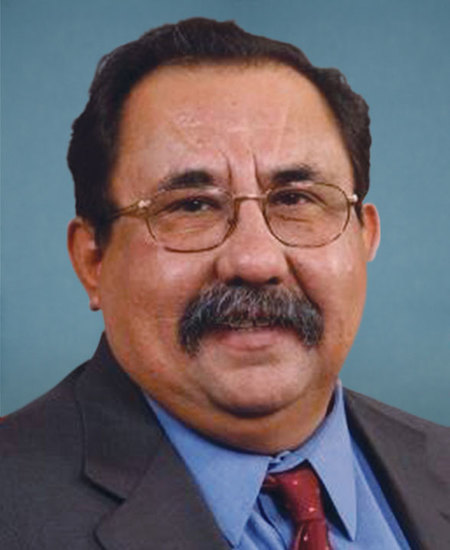
Rep. Raúl M. Grijalva
Sponsored bills
Maddy summaryHR 922, the Period PROUD Act of 2025, allocates $1.9 billion annually (2025-2028) through the Social Services Block Grant Program, with $200 million specifically dedicated each year (2026-2029) to provide free menstrual products to low-income menstruating individuals. It requires states to distribute these funds to eligible nonprofits with experience in community distribution of basic needs, integrating the program with existing services like SNAP, Medicaid, and WIC. The bill mandates that funds supplement, not replace, other existing programs, prohibits limiting where products can be distributed, and caps administrative costs at 9% of allocated funds. States must report annually and an evaluation of the program’s effectiveness will be completed by 2031.
Maddy summaryHR 944, the Access to Counsel Act, requires U.S. immigration officials to provide certain immigrants a meaningful opportunity to consult with legal counsel during key immigration processes. It directly affects U.S. nationals, lawful permanent residents returning from travel, visa holders, refugees, asylees, and parolees subject to secondary or deferred inspection at ports of entry. The bill mandates that officials ensure access to counsel (including via phone) within one hour of inspection starting, allow counsel to present evidence, and accommodate in-person meetings when possible. It also requires officials to provide counsel access before accepting Form I-407 abandonment forms from lawful permanent residents, unless waived in writing. The law takes effect 180 days after enactment and preserves existing rights to counsel under other immigration laws.
Maddy summaryHJRES 32 is a symbolic congressional resolution expressing support for designating February 3-7, 2025, as "National School Counseling Week." It does not create new laws or funding but honors school counselors' roles in supporting students' academic, social-emotional, and career development. The resolution encourages public recognition of counselors' contributions, including helping students navigate challenges like mental health, bullying, and college readiness. It specifically references the American School Counselor Association's designation of this week and aims to raise awareness about the importance of school counseling services. The resolution has no binding effect on schools or budgets.
Stop Antiabortion Disinformation Act or the SAD Act This bill prohibits deceptive advertising for reproductive health services. Specifically, the bill makes it unlawful for a person (i.e., individual, partnership, corporation, association, or organization) to deceptively advertise the reproductive health services they offer, including by misrepresenting that the person (1) offers or provides contraception or abortion services (or referrals for such contraception or abortion services), or (2) employs or offers access to licensed medical personnel. The bill provides for enforcement by the Federal Trade Commission. In addition to any other penalty, violations are subject to a civil penalty that may not exceed the greater of $100,000 (adjusted annually for inflation) or 50% of the revenue earned during the preceding 12-month period by the ultimate parent entity of the person who violated the bill.
Maddy summaryThis bill allows the FDA to request microbial sampling at large livestock facilities (concentrated animal feeding operations or CAFOs) during foodborne illness outbreaks to identify causes and protect public health. CAFOs must grant "reasonable access" for sampling of animals, plants, water, and the environment, though they can specify timing and location to avoid disruption. The law clarifies it does not impose new requirements beyond sampling for USDA-regulated foods (like meat or poultry) and requires sharing collected data with the USDA and public health agencies. It directly affects CAFOs and federal food safety agencies, focusing on outbreak response mechanisms.
Maddy summaryHR 844, the "Black History is American History Act," amends the Elementary and Secondary Education Act to require that Black history be included in all American history and civics education programs for K-12 students. The bill specifically adds "which shall include Black history" to multiple provisions, ensuring it becomes a standard part of curriculum standards, teacher training, and national assessments like the National Assessment of Educational Progress. This policy change directly affects public school curricula, educators, and students across the U.S. by mandating historically accurate instruction on African American contributions as integral to American history. The bill references the National Museum of African American History and Culture as a resource provider for educators implementing these changes.
Maddy summaryThis resolution expresses the House of Representatives' position that Congress should take steps to prevent the privatization of the United States Postal Service (USPS), ensuring it remains a federal independent agency. It highlights USPS’s constitutional role, self-sustaining nature (relying on service revenue, not taxpayer funds), and critical functions - serving 168 million addresses daily, supporting rural communities, and underpinning e-commerce. The resolution opposes privatization, noting it would raise prices, reduce services, and harm the $1.9 trillion mailing industry. As a non-binding resolution, it reflects the House’s stance but does not create new law or policy.
Maddy summaryHRES 75 is a symbolic resolution recognizing the cultural and historical significance of Lunar New Year (celebrated as the Year of the Snake in 2025). It acknowledges Lunar New Year's origins in China over 4,000 years ago, its global celebration as Seollal (Korea) and Tết (Vietnam), and its importance to Asian American communities in the U.S. The resolution expresses respect for Asian Americans and others celebrating the holiday and wishes them a happy new year, but it creates no new laws, funding, or obligations. As a ceremonial resolution, it has no direct policy impact.
Maddy summaryHR 764, the Global Health, Empowerment and Rights Act, removes two barriers for foreign nongovernmental organizations (NGOs) seeking U.S. foreign assistance. It ensures these organizations cannot be denied funding solely because they provide health services (like counseling and referrals) using non-U.S. government funds, as long as those services comply with local laws. The bill also requires that foreign NGOs face the same rules on using non-U.S. funds for advocacy and lobbying as U.S. NGOs receiving similar aid. This directly affects international health-focused NGOs working in countries where U.S. aid is provided.