

Maddy summaryThe Special Government Employees Transparency Act of 2025 limits how long individuals can serve as special government employees (SGEs) in the executive branch to 130 days within any 365-day period. If an SGE exceeds this limit, their agency must reclassify them as a regular civil service employee within 30 days and provide written notice about their new status and appeal rights. The bill also creates a public database listing key details - including name, pay, agency, and dates - of "covered" SGEs (those with duties comparable to GS-11 level or higher, not on advisory committees, and not full-time students). Additionally, agencies must publicly post financial disclosure reports for these covered SGEs, excluding certain reports or national defense information, through existing federal disclosure procedures.
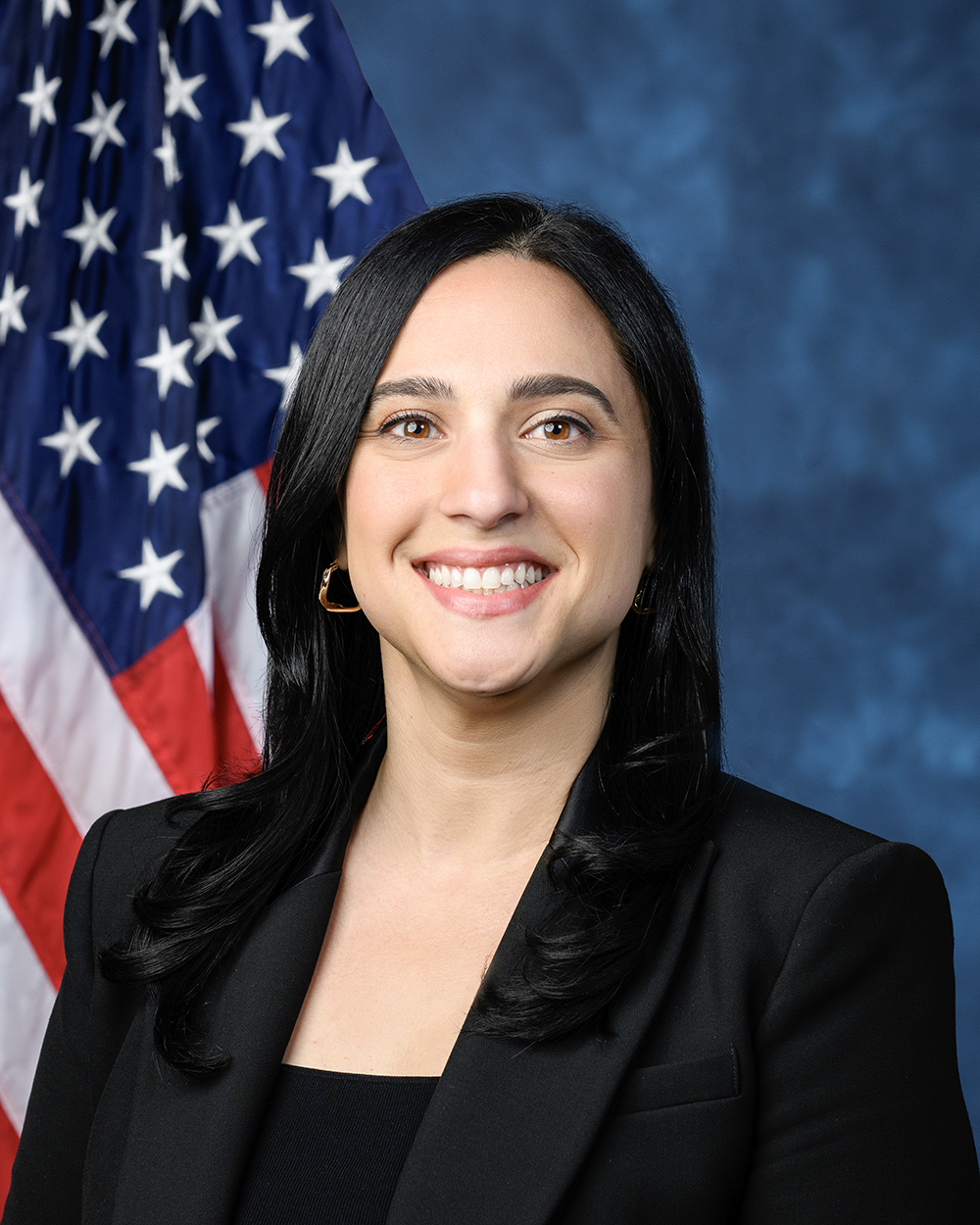
Rep. Yassamin Ansari
Sponsored bills
Maddy summaryHR 2439 authorizes $50 million for fiscal year 2026 and $55 million for 2027 to fund the United Nations Population Fund (UNFPA), directly supporting its global programs. The bill specifies that these funds will help end preventable maternal deaths, address unmet contraceptive needs, combat gender-based violence, and end harmful practices like child marriage and female genital mutilation. UNFPA operates in over 150 countries, primarily aiding women and girls in developing nations and crisis zones, including those affected by conflict or natural disasters. The bill emphasizes UNFPA’s compliance with U.S. restrictions (not funding abortion) and its role in advancing U.S. strategic interests through voluntary family planning and reproductive health services.
Maddy summary# Summary of the American Housing and Economic Mobility Act of 2025 This comprehensive legislation addresses housing affordability, civil rights, financial inclusion, and tax policy through multiple titles: **Fair Housing Expansion (Title I):** - Expands protections under the Fair Housing Act to include gender identity, sexual orientation, marital status, source of income, and veteran status - Requires housing providers receiving federal assistance to comply with enhanced accessibility standards (twice as many units must be accessible) **Community Reinvestment Act Strengthening (Title II):** - Requires banks to form diverse Community Advisory Committees in each metropolitan area - Mandates regular biannual consultations between bank executives and community advisory groups - Requires detailed data collection on lending practices by demographic factors (including race, ethnicity, and disability status) - Establishes new requirements for banks to analyze and report on disparities in access to credit **Veterans' Housing Access (Title III):** - Expands eligibility for VA home loans to include direct descendants of veterans who served between June 22, 1944, and April 11, 1968, who are first-time, first-generation homebuyers **Public Housing Improvements (Title IV):** - Requires public housing agencies to analyze where participants live and develop strategies to increase access to higher-opportunity neighborhoods - Mandates regional collaboration among housing agencies to reduce disparities in access - Requires HUD to develop mapping tools to help agencies analyze neighborhood access **Estate Tax Reforms (Title V):** - Increases estate tax rates for large estates (over $13 million) - Reduces the basic exclusion amount from $13 million to $3.5 million - Imposes a 10% surtax on estates exceeding $1 billion - Increases the exclusion limit for farm real property from $750,000 to $3 million - Increases the exclusion for land subject to conservation easements from $500,000 to $2 million - Creates a new 5-8% surcharge on high-income estates and trusts **Additional Provisions:** - Strengthens credit union service to underserved areas - Raises public welfare caps for banks to increase investments in low-income communities - Requires new data collection and reporting requirements for financial institutions This legislation represents a significant expansion of housing rights, financial inclusion, and tax policy reforms aimed at reducing disparities in access to housing and financial services while reforming the estate tax system.
Maddy summaryThis bill, titled "Abolish Super PACs Act" but actually regulating them, would impose contribution limits on super PACs by redefining them as "independent expenditure committees" under federal election law. It sets a $5,000 annual threshold for activities qualifying a committee as a super PAC, capping individual contributions to these entities to reduce corruption risks from unlimited donations. The legislation targets the top contributors who gave over 96% of super PAC funds in 2024, aiming to limit the appearance of quid pro quo arrangements. It would apply to all qualifying committees starting in the first full calendar year after enactment.
Maddy summaryThis bill would require federal firearms licensees to prohibit sales of specific high-capacity rifles and shotguns to people under 21. It targets semiautomatic centerfire rifles and shotguns capable of holding more than 5 rounds in their magazines, raising the age limit from 18 to 21 for these weapons. Exceptions apply for active military members and certain government employees authorized to carry firearms. The law directly affects gun retailers and individuals under 21 seeking to purchase these specific firearms. It modifies existing federal gun sale rules without changing age requirements for other firearms.
Maddy summaryHR 2318, the Electronic Permitting Modernization Act, requires the U.S. Department of the Interior to create modern online systems for processing permits, forms, and related paperwork currently handled manually. This directly affects businesses, developers, tribes, and state/local governments that apply for Department permits, replacing paper processes with digital applications, payments, and tracking. Key provisions include building a public online hub linking all electronic permitting systems, providing contact details for assistance, and requiring consultation with stakeholders during development. The bill prohibits disclosing protected information and mandates consistency with existing environmental review rules, while banning duplicated systems.
Maddy summaryThe Paycheck Fairness Act strengthens equal pay protections by expanding the definition of "sex" to include pregnancy, childbirth, sexual orientation, gender identity, and sex characteristics. It modifies employer defenses for pay disparities to require proof that any pay difference is job-related, not based on sex, and accounts for the entire pay gap. The bill prohibits employers from asking about salary history, enhances penalties for violations, and requires employers with 100+ employees to collect and report detailed pay data by race, sex, and job category. It also establishes training programs for employers on eliminating pay bias and creates a National Equal Pay Enforcement Task Force to coordinate enforcement efforts. This legislation directly affects employers, particularly those with 100+ employees, and aims to address pay disparities impacting women, people of color, and other underrepresented groups.
Maddy summaryH.J. Res. 80 would declare the Equal Rights Amendment (ERA) part of the U.S. Constitution, asserting it has been ratified by 38 states (three-fourths of the states) despite the original 1972 deadline. If passed, this resolution would formally establish the ERA as a constitutional amendment, requiring all federal and state laws to align with its gender equality protections. The bill does not create new laws but confirms the ERA's status as part of the Constitution, affecting how laws are interpreted and enforced. It is a procedural step to resolve the legal dispute over the ERA's validity after decades of debate.
Maddy summaryHRES 244 is a symbolic resolution recognizing Nowruz, the ancient Persian New Year celebrated by hundreds of millions globally, including Iranian Americans in the U.S. It formally acknowledges Nowruz's cultural and historical significance, dating back over 3,000 years, and highlights Iranian Americans' contributions to U.S. society. The resolution expresses appreciation for their observance of Nowruz and connects the holiday's themes of renewal and compassion to shared values like human rights and freedom of expression. It does not create new laws or obligations but affirms support for the holiday's spirit and the aspirations of Iranians seeking democratic rights. The resolution was introduced by a bipartisan group of House members and refers to Nowruz as embodying "virtuous" conduct and compassion across all backgrounds.
Maddy summaryThis resolution expresses symbolic support for designating a month to honor Iranian American heritage. It acknowledges the contributions of over 540,000 Iranian Americans in the U.S., including their business ownership (over 33,000 businesses), cultural impact (like the Nowruz celebration), and achievements in science, medicine, and public service. The resolution encourages nationwide observance through programs and celebrations but does not create new laws or requirements. It is a non-binding expression of support, consistent with similar resolutions recognizing other cultural heritages.