

Maddy summaryThe DEFUND Act of 2023 would end U.S. membership in the United Nations and all its affiliated bodies, including the World Health Organization. It repeals all U.S. participation laws, cuts all funding for UN contributions, closes the U.S. Mission to the UN, and requires the UN to vacate U.S. government property. The bill also revokes diplomatic immunity for UN personnel and prohibits future U.S. re-entry into the UN without explicit Senate approval. These provisions would fundamentally sever U.S. legal and financial ties to the United Nations system.
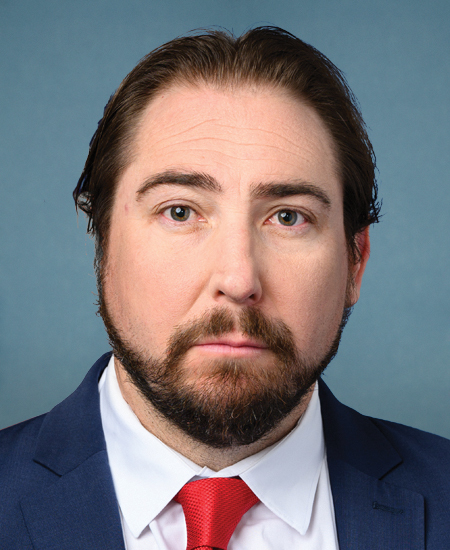
Rep. Elijah Crane
Sponsored bills
Maddy summaryHR 6612, the Birthright Citizenship Act of 2023, clarifies who qualifies for U.S. citizenship at birth under the 14th Amendment. It amends immigration law to define that a child born in the U.S. is "subject to the jurisdiction" for citizenship if one parent is a U.S. citizen, a lawful permanent resident living in the U.S., or an active-duty military member. The bill directly affects children born in the U.S. to parents in these specific categories, ensuring they meet the citizenship definition without altering the constitutional right itself. It explicitly states this definition applies only to births occurring after the law's enactment, leaving existing citizenship status unaffected for those born before. The bill aims to codify existing constitutional principles through specific, narrow criteria for parental status.
Maddy summaryHR 6300, the Veterans Education is Timeless Act of 2023, removes expiration dates for all Department of Veterans Affairs (VA) education benefits. It directly affects veterans and their dependents who use programs like the Post-9/11 GI Bill, Survivors' Benefits, and others, allowing them to access education benefits at any time without a deadline. The bill amends multiple sections of Title 38 to state that benefits "shall be afforded... at any time and are not subject to any delimiting date." It also requires the VA to refund veterans for contributions if they apply for a refund, and applies retroactively to all eligible individuals.
Maddy summaryThe SCREEN Act requires online platforms that host pornographic content for profit to implement age verification technology to block minors from accessing such material. It applies to platforms operating in the U.S. market or interstate commerce that create, host, or distribute content deemed "harmful to minors" (including pornography). Platforms must publicly disclose their verification methods, secure user data collected for age checks, and prevent minors from accessing prohibited content. The Federal Trade Commission will enforce these requirements through audits, treating violations as unfair business practices under existing law.
Maddy summaryHR 6410, the U.S. Data on U.S. Soil Act, requires major technology platforms with over 100 million monthly U.S. users to store and restrict access to U.S. citizen data within the United States. Specifically, it forbids storing this "covered data" (including personal identifiers linked to U.S. nationals) in data centers located in foreign adversary countries or allowing officials from those countries to access it. The Federal Trade Commission enforces these rules as violations of unfair business practices, with penalties under the FTC Act. The law applies to large consumer-facing platforms like social media and apps, while preserving stricter state privacy laws and excluding data not tied to U.S. citizens.
Maddy summaryHR 6432, the Safeguarding Honest Speech Act, prohibits federal agencies from using funds to require employees or contractors to use preferred pronouns or names that conflict with a person’s biological sex at birth (defined as "sex" based on reproductive biology and genetics). It directly affects federal workers and contractors by banning mandatory language use tied to gender identity. The bill mandates agencies issue a formal response within 30 days of a complaint about such policies and allows affected employees to sue for damages, including up to $100,000 in punitive damages, with a one-year statute of limitations. Key provisions focus on preventing compelled speech in federal workplaces through funding restrictions and enforceable legal remedies.
Maddy summaryThe Veteran Improvement Commercial Driver License Act of 2023 modifies rules for veterans' educational benefits to streamline approval of commercial driver education programs at branch locations. It allows a branch of an educational institution to be exempt from full approval requirements if it is appropriately licensed and uses the same curriculum as an approved main location. Schools must submit an annual report to the Department of Veterans Affairs verifying curriculum consistency, and the VA may withhold this exemption if needed. The changes will take effect 180 days after the VA establishes reporting rules, which must be finalized within 180 days of the bill's enactment.
Reinforcing Immigration Status for Credit Knowledge Act or the RISK Act This bill allows a creditor to refuse to extend credit to a non-U.S. national ( alien under federal law) who does not have lawful status under U.S. immigration laws.
Maddy summaryHR 6305, the Terminate CDC Overreach Act, limits the CDC's authority to issue regulations preventing communicable disease spread. It restricts the CDC to regulations focused solely on interstate transmission prevention (e.g., isolating infected individuals moving between states), requiring Congress to disapprove any broader regulations within 6 days. The bill also mandates that CDC guidance documents with broad public impact must include scientific evidence, such as clinical data or studies. This directly affects the CDC's rulemaking process and requires Congress to actively review and potentially block new CDC health regulations.
Maddy summaryThis bill prohibits federal funding for two specific initiatives: the Justice40 Initiative (focused on delivering 40% of climate benefits to disadvantaged communities) and the American Climate Corps (a program announced in a September 2023 White House fact sheet to create climate jobs for young people). It blocks all federal budget allocations for these programs, directly affecting their implementation. The bill does not create new programs or alter existing laws, but prevents the use of taxpayer funds to support these two named initiatives.