

Maddy summaryHR 9534, the National Constitutional Carry Act, would prohibit states and localities from banning or restricting the public carrying of legally owned firearms by eligible U.S. citizens. It directly affects all gun owners who meet federal and state possession requirements, removing the need for permits or licenses to carry in public spaces. Key provisions state that any state law restricting public carry - such as requiring permits or imposing financial barriers - would be invalidated, with exceptions for privately-owned businesses that clearly prohibit firearms or locations with security screening. The bill bases this on Supreme Court rulings affirming the constitutional right to carry firearms for self-defense outside the home.
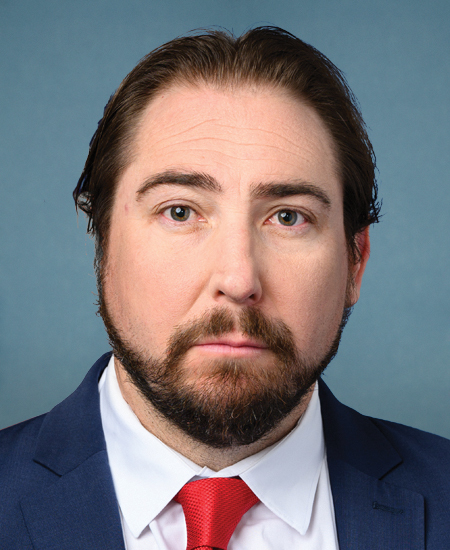
Rep. Elijah Crane
Sponsored bills
Maddy summaryHR 8282, the "Illegitimate Court Counteraction Act," imposes U.S. sanctions on foreign individuals or entities supporting the International Criminal Court (ICC) in investigating or prosecuting "protected persons." Protected persons include U.S. military personnel, officials, and allied personnel (from non-ICC member countries) who are not under ICC jurisdiction. The bill requires the President to block assets and deny visas to targeted foreign persons and their immediate family members within 60 days of the ICC attempting such actions. It mandates congressional notification of sanctions and allows termination if the ICC ceases all such efforts against protected persons. The law focuses on restricting U.S. economic and travel access to ICC supporters targeting specific U.S. and allied personnel.
Maddy summaryThis bill amends an existing reporting requirement in the 2023 National Defense Authorization Act. It changes the provision to require the Department of Homeland Security to submit annual reports on counter-illicit cross-border tunnel operations, rather than just one report after developing a strategic plan. The bill does not create new programs or alter border security policy; it only modifies the frequency of required reporting. This procedural change directly affects the Department of Homeland Security's reporting obligations.
Maddy summaryHRES 1425 is a non-binding resolution (not a law) passed by the House of Representatives. It states that requiring valid photo identification for voting is a "fundamental component of secure elections," citing examples where photo ID is already required for other government services (like Social Security or banking) and private activities (like buying a car or boarding a plane). The resolution does not create new voting requirements or change election laws - it only expresses the House's position. It directly affects the legislative record but has no legal impact on voter eligibility or election procedures.
Maddy summaryHJRES 167 cancels a U.S. Department of Agriculture rule that would have allowed electronic eartags as official identification for cattle and bison. The resolution directs that the rule published in the Federal Register on May 9, 2024 (89 Fed. Reg. 39540), has no force or effect. This directly affects ranchers and farmers who would have been required to use electronic identification systems for livestock. The bill halts the implementation of this specific regulatory change without creating new requirements.
Maddy summaryThis bill (HR 8394) restricts the Chinese government and its controlled commercial entities from accessing U.S. capital markets, exchanges, and financial services if the U.S. Treasury determines they violate specific international financial laws. It targets new investments and transactions by prohibiting U.S. financial entities (like stock exchanges, banks, and brokers) from accepting such investments if the Chinese government fails to comply with three key areas: sovereign debt succession rules, transparency/disclosure standards, and prohibitions against discriminatory payments or default. The measure applies only to new transactions, not existing investments, and is triggered by a Treasury determination after consultation with the Committee on Foreign Investment in the U.S.
Maddy summaryThis bill authorizes border states (adjacent to the U.S. northern or southern border) to place movable, temporary structures on federal land near the border for security purposes without needing a special use permit. States must notify the relevant federal agency (e.g., Bureau of Land Management or Forest Service) at least 45 days before placement, and structures can remain for up to one year, with possible 90-day extensions if U.S. Customs and Border Protection determines "operational control" hasn't been achieved. The bill directly affects border states and federal land management agencies by streamlining temporary border security measures on public lands.
Maddy summaryHR 7490, the Hire Veterans Act, establishes a 5-year pilot program to help veterans secure jobs with federal land management agencies (like the National Park Service and Forest Service). It requires agencies to administer skills tests for veterans in 20 specific career fields (such as firefighting, ecology, and land management) and refer qualified veterans for noncompetitive hiring. Veterans who don’t initially qualify may receive agency training and retake tests until they meet requirements. The program directly affects veterans seeking federal employment in these fields, with agencies managing referrals and appointments through the Office of Personnel Management.
Maddy summaryThe Respect State Housing Laws Act amends the CARES Act by removing subsection (c) of Section 4024, which governed notice requirements for housing assistance programs. This change eliminates a specific federal notice provision that applied to tenants and landlords receiving CARES Act housing aid. The bill directly affects the administrative process for housing assistance under the CARES Act, streamlining or removing a requirement for notice delivery. It modifies an existing provision without creating new policy or altering broader housing protections.
Maddy summaryThis bill gives states the option to restrict Supplemental Nutrition Assistance Program (SNAP) benefits for specific items. States may ban purchases of sugary drinks, candy, ice cream, and prepared desserts like cakes or cookies using SNAP benefits. The Secretary of Agriculture will maintain a list of these restricted items, but states can implement bans without federal approval or additional reporting. This change directly affects SNAP participants in states that choose to adopt such restrictions, altering which food items can be bought with benefits.