

Maddy summaryThis bill allows states to require certain Medicaid recipients to work or participate in job training to maintain coverage. Specifically, it permits states to impose work requirements on nondisabled, nonelderly, nonpregnant adults (excluding those with children under 6, pregnant women, or individuals under 19). States must implement these requirements 120 days after the bill's enactment, but must exempt pregnant individuals, parents of young children, and others meeting specific criteria. The policy changes Medicaid eligibility rules for this group, giving states an optional pathway to condition benefits on work activity.
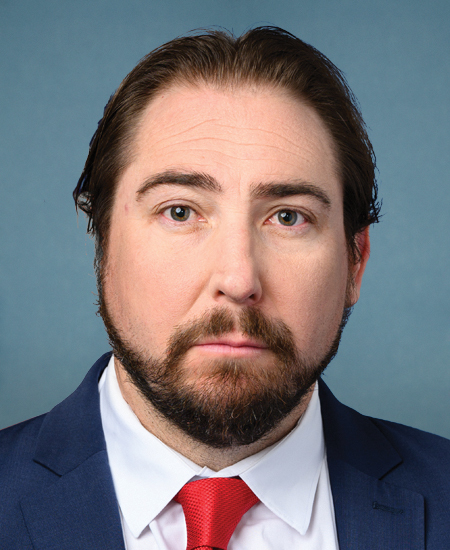
Rep. Elijah Crane
Sponsored bills
Maddy summaryThis bill removes legal immunity for vaccine manufacturers by allowing individuals injured by vaccines to sue them directly in court after filing a claim with the federal vaccine injury compensation program (VICP). It eliminates time limits for filing VICP claims (previously 24-36 months) and explicitly excludes COVID-19 vaccines from the program's coverage. The changes affect people seeking compensation for vaccine injuries and vaccine manufacturers, who will no longer automatically avoid lawsuits. The bill also repeals provisions that previously restricted legal action after VICP claims.
Maddy summaryHR 9731, the Special Interest Alien Reporting Act of 2024, requires the Department of Homeland Security (DHS) to publish monthly reports on individuals classified as "special interest aliens" attempting unlawful entry into the U.S. These reports, due by the seventh day of each month, must detail the total number and nationalities of such individuals, broken down by geographic region and location of encounter (e.g., ports of entry, border areas, or interior). The reports must also identify if encounters involve individuals from "covered nations" (as defined in existing law). This bill mandates transparency for Congress and the public but does not change immigration law or enforcement practices.
Maddy summaryHR 9757, the "No More Taxpayer Cash for the Taliban Act," bans U.S. federal funds from being used for direct cash assistance to individuals in Afghanistan or for providing U.S. currency to the United Nations to support such aid. The bill specifically prohibits federal agencies from funding direct cash payments to Afghans and stops the Federal Reserve from selling U.S. currency to the UN for this purpose. It aims to prevent billions of taxpayer dollars (as reported by SIGAR) from indirectly funding the Taliban through mechanisms like aid taxation and currency exchange fees at the Taliban-controlled central bank. The law applies directly to federal departments, the UN, and non-governmental organizations receiving U.S. funds for aid in Afghanistan.
Maddy summaryHJRES 144 is a congressional disapproval resolution targeting a specific rule issued by the Bureau of Alcohol, Tobacco, Firearms, and Explosives (ATF) on April 19, 2024. The resolution seeks to block the ATF's rule that redefined the term "engaged in the business" for firearm dealers, which would have affected how federal licensing requirements apply to certain sellers. If enacted, this resolution would nullify the rule, preventing it from taking effect under procedures in Title 5 of the U.S. Code. The bill directly impacts firearm dealers operating under the current regulatory framework and the ATF's enforcement authority.
Maddy summaryThis bill (HJRES 163) is a congressional disapproval resolution targeting an Environmental Protection Agency (EPA) rule finalized on May 9, 2024. The EPA rule established new emissions standards for greenhouse gases from fossil fuel power plants (both new and existing) and repealed a previous rule called the Affordable Clean Energy Rule. The resolution would block this EPA rule from taking effect by invoking the Congressional Review Act (Chapter 8 of Title 5, U.S. Code). If passed, it would prevent the EPA rule from being enforced, directly affecting fossil fuel power plant operators and the EPA’s regulatory authority over emissions.
Maddy summaryHJRES 133 is a congressional resolution seeking to block an Environmental Protection Agency (EPA) rule titled "Greenhouse Gas Emissions Standards for Heavy-Duty Vehicles-Phase 3." This rule, published in the Federal Register on April 22, 2024, established new emissions requirements for large trucks and commercial vehicles. The resolution, if passed, would prevent the EPA rule from taking effect by formally disapproving it under standard congressional review procedures. The measure directly affects the EPA’s regulatory authority and vehicle manufacturers who would have been required to comply with the proposed standards.
Maddy summaryHR 9617, the KAMALA Act, prohibits federal housing and community development grants from being used to assist individuals who are not U.S. citizens or lawfully present in the U.S. (specifically, those not admitted for permanent residence under immigration law). This directly affects state and local governments, municipalities, and tribal entities receiving federal housing funds under the Housing and Community Development Act of 1974, preventing them from using those funds for housing or community programs aiding undocumented immigrants. The bill amends two sections of the 1974 Act: it blocks grant funds from assisting undocumented people (Section 105) and bars grants to any recipient entity that provides such assistance (Section 103). These changes apply to all fiscal years starting in 2024 and later.
Maddy summaryHR 705, the Veterans 2nd Amendment Protection Act, prohibits the Department of Veterans Affairs (VA) from automatically sending veterans' personal information to the national background check system solely because a fiduciary (like a guardian) manages their benefits. It specifically blocks the VA from sharing this data with the Justice Department without a court order finding the veteran a danger to themselves or others. This directly affects veterans who have a fiduciary appointed due to incapacity but are not deemed dangerous, preventing automatic barriers to firearm purchases based only on their fiduciary status. The bill amends 38 U.S.C. § 5501B to require judicial authorization before such data can be transmitted.
Maddy summaryThis bill blocks U.S. Department of Homeland Security (DHS) funding to colleges and universities that maintain relationships with Confucius Institutes or "Chinese entities of concern" (defined as institutions linked to China's military or defense sectors). It requires affected schools to terminate such relationships within 12 months of the bill's enactment to regain eligibility for DHS funds. The law directly impacts higher education institutions receiving DHS funding, not all schools or federal programs. Key provisions mandate DHS to deny funding to institutions with ongoing ties to these entities, with eligibility restored only after relationship termination.