

Small Business Succession Planning Act This bill requires the Small Business Administration (SBA) to establish a program to assist small businesses with developing and implementing business succession plans. The bill also provides a tax credit for a business that establishes a succession plan or that successfully carries out such a plan. A business succession plan identifies who will assume the ownership responsibilities of a small business upon the owner's death or retirement, and it includes an operational description of the small business to ensure the continuation of operations. To carry out the program, the SBA must develop and make publicly available a toolkit to assist small business with succession planning. Further, it must train resource partners on the toolkit, educate small businesses about the program, and ensure that each SBA district office and each resource partner employs someone to counsel small businesses on using the toolkit.
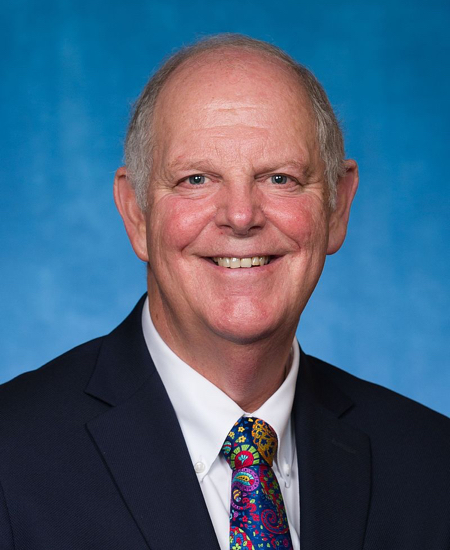
Rep. Tom O’Halleran
Sponsored bills
"Six Triple Eight" Congressional Gold Medal Act of 2021 This bill directs the Speaker of the House of Representatives and the President pro tempore of the Senate to arrange for the award of a Congressional Gold Medal in honor of the women of the 6888th Central Postal Directory Battalion (commonly known as the Six Triple Eight) in recognition of their pioneering military service, devotion to duty, and contributions to increase the morale of personnel stationed in the European theater of operations during World War II. The medal shall be given to the Smithsonian Institution and made available for display and research.
Moms Matter Act This bill establishes two grant programs to address maternal mental health conditions and substance use disorders, with a focus on racial and ethnic minority groups. First, the Substance Abuse and Mental Health Services Administration must award grants for maternal behavioral health services. Eligible grantees include state, tribal, and local governments; health care providers; and organizations that serve pregnant and postpartum individuals. Second, the Department of Health and Human Services may award grants to grow and diversify the maternal mental and behavioral health workforce by establishing or expanding schools and training programs.
American Family Act of 2021 This bill modifies the child tax credit to (1) make the credit fully refundable, (2) increase the amount of the credit and allow an additional credit for children who are under six years of age, (3) require the amount of the credit to be adjusted annually for inflation, and (4) require the Department of the Treasury to establish a program for making advance payments of the credit on a monthly basis.
This resolution expresses the sense of the House of Representatives that the U.S. Postal Service should continue door delivery for all customers.
Gym Mitigation and Survival Act of 2021 or the GYMS Act of 2021 This bill establishes a grant program to provide economic support to eligible fitness facilities in response to the COVID-19 (i.e., coronavirus disease 2019) pandemic. Specifically, the bill authorizes the Small Business Administration to make initial and supplemental grants to privately owned fitness facilities that primarily provide health or fitness services and that do not offer golf, hunting, sailing, or riding facilities. The total amount of grant funds for a recipient may not exceed $25 million, and the recipient must use these funds for payroll costs, rent or mortgage obligations, and other ordinary and necessary business expenses.
Tracking COVID-19 Variants Act This bill expands viral genomic sequencing, disease surveillance, and other public health research activities. Specifically, the Centers for Disease Control and Prevention (CDC) must issue guidance on the sequencing of the virus that causes COVID-19 (i.e., coronavirus disease 2019). Additionally, the CDC must establish a program to strengthen genomic sequencing, analytics, and disease surveillance activities. As part of this program, the CDC must provide grants and technical assistance to health departments to build their capacity to carry out such activities. Furthermore, the National Center for Health Statistics (NCHS) must carry out a demonstration program to expand an existing program that links different federal data sets for statistical public health research, including research on food insecurity, housing instability, and other social determinants of health. In particular, the program must support linkages with the National Death Index, a database of death records maintained by the NCHS.
This resolution supports the naming of new or undedicated Department of Veterans Affairs facilities after women veterans and minority veterans to reflect the diversity of all who have served in the Armed Forces.
Real Economic Support That Acknowledges Unique Restaurant Assistance Needed To Survive Act of 2021 or the RESTAURANTS Act of 2021 This bill temporarily establishes and provides funding for the Restaurant Revitalization Fund, from which the Department of the Treasury shall make grants to eligible food and beverage purveyors to cover specified costs such as payroll, operational expenses, and paid sick leave. For the grant program's initial period, Treasury must (1) prioritize awarding grants to marginalized and underrepresented communities, and (2) only award grants to eligible food and beverage purveyors with annual revenues of less than $1.5 million in 2019. For tax purposes, grant amounts are excluded from the recipient's gross income. An entity that received a loan under the Paycheck Protection Program established to support small businesses in response to COVID-19 (i.e., coronavirus disease 2019) may not apply for or use a restaurant revitalization grant for the same expenses for which the entity received the paycheck protection loan. Further, a grant applicant may request an additional amount to cover the cost of providing 10 days of paid sick leave to its employees. Treasury must report a list of grant recipients with the amount each recipient received, as well as demographics and other specified information.
Scientific Integrity Act This bill revises provisions regarding the release of scientific research results by federal agencies. Each agency that funds, conducts, or oversees scientific research must (1) adopt and enforce a scientific integrity policy that includes requirements such as that scientific conclusions are not based on political considerations, and (2) submit such policy to the Office of Science and Technology Policy (OSTP) for approval. Each agency must make such policy available to the public and submit such policy to Congress. Agencies and the OSTP must periodically review the policies. The Government Accountability Office shall review implementation of the policies. Each agency shall (1) appoint a Scientific Integrity Officer, (2) establish a process for dispute resolution consistent with the scientific integrity policy, and (3) establish a specified training program for current and new employees.