

Maddy summaryHRES 641 is a ceremonial resolution recognizing the 75th anniversary of the National Association of Conservation Districts (NACD). It celebrates NACD's history as a locally led conservation organization with 3,000 districts across all 50 states and territories, which works with landowners and governments to manage natural resources. The resolution describes NACD's mission of promoting voluntary, incentive-driven conservation programs at the local level. As a non-binding resolution, it does not create new laws or funding, but formally honors NACD's role in conservation efforts.

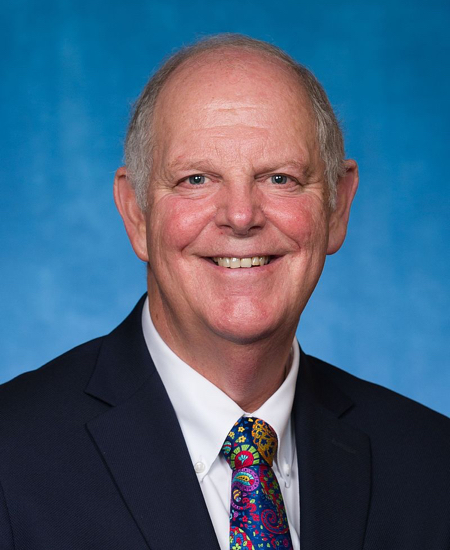
Rep. Tom O’Halleran
Sponsored bills
Lodging Options Developed for Government Employees Act or the LODGE Act This bill expands the current authority of the Department of the Interior to enter into agreements with housing entities to provide rental housing for employees. The bill allows Interior to enter agreements with other federal agencies, state or local governments, tribal governments, or other public or private organizations for purposes of facilitating housing accommodation projects for rent to field employees and members of the public on public lands, including National Park System units; off public lands in the vicinity of system units; or on a combination of such lands. Interior may allow field employees and members of the public to occupy and lease project quarters. Field employees and members of the public shall be prohibited from subleasing housing units or quarters developed or leased in accordance with a housing partnership agreement under this bill, including all forms of short-term rentals. To the maximum extent practicable, priority for occupancy in project quarters shall be given to field employees. Interior may collect, or authorize entities who have entered into partnership housing agreements under this bill to collect, rents directly from field employees and members of the public occupying housing units or quarters. The bill modifies the lease-to-build program to allow Interior to lease federal land and interests in land to qualified persons for the construction of field employee quarters for any period not to exceed 60 years (under current law not to exceed 50 years).
Advancing Conservation and Education Act This bill allows the states of Alaska, Arizona, California, Colorado, Idaho, Montana, New Mexico, North Dakota, Oregon, South Dakota, Utah, Washington, or Wyoming to relinquish state land grant parcels wholly or primarily within eligible areas and select, in exchange, public land within the state. Eligible areas are areas within the outer boundaries of units or components of the National Park, National Wilderness Preservation, National Wildlife Refuge, or National Landscape Conservation Systems, areas identified by the Bureau of Land Management (BLM) as having wilderness characteristics, certain designated lands within the National Forest System or administered by the BLM, and sentinel landscapes designated by the Department of Agriculture, Department of Defense, or Department of the Interior. Interior shall create a process for the relinquishment of such parcels. States may select in exchange, and Interior may convey, lands that are mineral in character. The overall value of the state land grant parcels and the public land to be conveyed shall be equal or made equal. The bill sets forth requirements regarding hazardous materials on land to be conveyed, water rights, grazing permits, road rights-of-ways, and protection of Indian rights.
Faster Payments to Veterans' Survivors Act of 2022 This act modifies policies and procedures related to the payment of benefits under certain life insurance programs administered by the Department of Veterans Affairs (VA). If a primary beneficiary has not made a claim for payment within one year (currently two years) after the death of the insured under the National Service Life Insurance (NSLI) program or the United States Government Life Insurance (USGLI) program, the VA is authorized to make payment to another designated beneficiary as if the primary beneficiary had predeceased the insured. If no designated beneficiary makes a claim within two years (currently four years) after the death of the insured, the VA is authorized to make a payment to a person the VA deems to be equitably entitled to such benefit. The act also modifies the beneficiary designation process under NSLI and USGLI. Specifically, if a person does not designate a beneficiary for insurance, or if the designated beneficiary predeceases the insured person, the VA must determine the beneficiary in a specified order of succession. Additionally, the act requires the VA to improve its processes and procedures with respect to identifying, locating, and paying hard-to-find beneficiaries of life insurance policies, including by improving its website search tools.
This act designates the facility of the United States Postal Service located at 16605 East Avenue of the Fountains in Fountain Hills, Arizona, as the Dr. C.T. Wright Post Office Building.
Old Pascua Community Land Acquisition Act This act directs the Department of the Interior to take tribally owned lands in Pima County, Arizona, into trust for the benefit of the Pascua Yaqui Tribe of Arizona. Lands taken into trust shall be part of the Pascua Yaqui Reservation. The act allows gaming on the land taken into trust.
This act prescribes that a peer support specialist of the Department of Veterans Affairs (VA) must not be responsible for providing assistance to a veteran regarding a claim for compensation for a covered mental health condition (e.g., post-traumatic stress disorder) based on military sexual trauma (MST) experienced during active service. Such specialists must only provide counseling services, guidance, and support and must not participate in the adjudication of the claim. As part of the forms for claims for compensation for a covered mental health condition based on MST, the VA must include an option for a veteran to elect to be referred to a MST trauma coordinator at the VA facility closest to the veteran's residence. Additionally, the VA must (1) ensure that its peer support specialists receive annual training on providing peer support regarding MST, and (2) provide annual training on the processing of claims for compensation for covered mental health conditions based on MST to its MST coordinators and peer specialists.
Blackwater Trading Post Land Transfer Act This act directs the Department of the Interior to take the approximately 55.3 acres of land of the Blackwater Trading Post in Pinal County, Arizona, into trust for the benefit of the Gila River Indian Community, if the community conveys to Interior all of its interest in the land. The land is made part of the community's reservation. Further, the act prohibits gaming on the land taken into trust.
Aviation Funding Stability Act of 20 21 This bill provides continuing appropriations to the Federal Aviation Administration (FAA) from the Airport and Airway Trust Fund if an appropriations bill for the FAA has not been enacted before a fiscal year begins or a joint resolution making continuing appropriations for the FAA is not in effect. The bill provides appropriations at the rate of operations that was provided for the prior fiscal year to continue programs, projects, and activities for which funds were provided in the preceding fiscal year.
Safeguard Tribal Objects of Patrimony Act of 2021 This act prohibits the exportation of Native American cultural items and archaeological resources that were illegally obtained; provides for the return of such items, including voluntary returns; and establishes and increases related criminal penalties. Specifically, the act makes it a federal crime to export, attempt to export, or otherwise transport from the United States Native American cultural items and archaeological resources without obtaining an export certification. U.S. Customs and Border Protection must detain any item requiring an export certification that does not have one. The act requires the Department of the Interior and the Department of State to each designate a liaison to facilitate and hold trainings and workshops on the voluntary return of human remains and cultural items. Additionally, Interior must refer individuals and organizations to Indian tribes and Native Hawaiian organizations to facilitate the voluntary return of human remains and cultural items; convene an interagency working group; and convene a Native working group consisting of representatives of Indian tribes and Native Hawaiian organizations to provide advice on issues concerning the return of, and illegal trade in, human remains and cultural items. The act also increases the maximum criminal penalties for violating the Native American Graves Protection and Repatriation Act. In particular, the act increases from 5 years to 10 years the maximum prison term for an individual convicted of a second or subsequent violation of selling, purchasing, using for profit, or transporting for sale or profit human remains or cultural items that were illegally obtained.