This act directs the Speaker of the House of Representatives and the President pro tempore of the Senate to arrange for the posthumous award of a Congressional Gold Medal to commemorate Glen Doherty, Tyrone Woods, J. Christopher Stevens, and Sean Smith, four Americans killed in the September 11, 2012, attack on the U.S. consulate in Benghazi, Libya. (Stevens was the U.S. Ambassador to Libya at the time, Smith was an officer in the Foreign Service, and Doherty and Woods were both government contractors and former Navy SEALs.) After the medal has been awarded, it shall be given to the Central Intelligence Agency Museum.
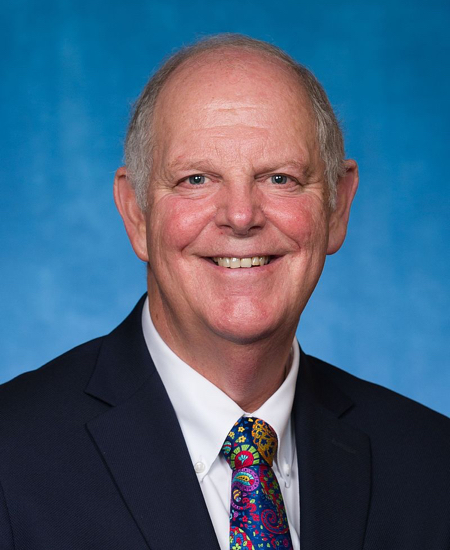
Rep. Tom O’Halleran
Sponsored bills
Arizona Tribes Water Marketing Act of 2022 This bill authorizes Arizona Tribes to enter into an agreement or option to lease, exchange, or store a certain portion of their water to be used or located off a tribe's reservation if it is used or located in the Lower Basin in the state of Arizona and not in Navajo, Apache, or Cochise counties.
Cardiovascular Advances in Research and Opportunities Legacy Act This act addresses research, education, and awareness concerning valvular heart disease and its treatment. This disease is caused by damage to or disease affecting any valve that controls blood flow in the heart. The National Institutes of Health may conduct or support research on the disease in consultation with the National Heart, Lung, and Blood Institute (NHLBI). The NHLBI must also conduct a workshop on mitral valve prolapse, which occurs when the valve between the chambers of the left side of the heart seals improperly. The Department of Health and Human Services (HHS) must develop best practices to treat valvular heart disease. HHS may also carry out other projects to increase education and awareness of the disease.
Big Cat Public Safety Act This act revises requirements governing the trade of big cats (i.e., species of lion, tiger, leopard, cheetah, jaguar, or cougar or any hybrid of such species) under the Lacey Act to limit the possession, breeding, and exhibition of big cats. The Lacey Act prohibits any person from importing, exporting, buying, selling, transporting, receiving, or acquiring big cats across state lines or the U.S. border. However, some exemptions are provided for certain entities, such as universities and wildlife sanctuaries. (Sec. 3) The act expands the Lacey Act prohibitions to include a prohibition on possessing or breeding big cats. Breeding means facilitating propagation or reproduction (whether intentionally or negligently), or failing to prevent propagation or reproduction. Owners of big cats that were born before this act's enactment may keep their big cats, but the owners must register them with the U.S. Fish and Wildlife Service. The act modifies the list of entities that are exempt from prohibitions to export, buy, sell, transport, receive, acquire, possess, or breed big cats. The modified list includes exemptions for entities or facilities exhibiting animals to the public if they (1) hold a Class C license in good standing under the Animal Welfare Act, and (2) do not allow individuals to come into direct physical contact with big cats. However, direct contact is allowed if the individual is a trained professional, a veterinarian, or directly supporting conservation programs that do not involve commercial activities and meet other specified restrictions. (Sec. 4) A person who knowingly violates the act must be fined not more than $20,000, or imprisoned for no more than five years, or both. The act considers each violation to be a separate offense. The offense must be deemed to have been committed not only in the district where the violation first occurred, but also in any district in which the defendant may have taken or been in possession of the prohibited wildlife species. (Sec. 5) The act extends forfeiture provisions to fish, wildlife, or plants that are bred or possessed; thus, big cats bred or possessed in violation of the act are subject to forfeiture. (Sec. 6) The Department of the Interior must issue regulations to implement this act.

Rebuild America's Schools Act of 2022 This bill provides support for long-term improvements to public elementary and secondary school facilities. First, the bill sets forth allocations to states and establishes a need-based grant program for local educational agencies (LEAs) to improve school facilities. Further, the bill specifies allowable uses of grant funds, including carrying out major repairs, improving indoor air quality, and making facilities accessible to disabled individuals. Additionally, the bill requires LEAs that receive funds for new construction, modernization, or renovation projects to comply with hazard-resistance building codes and performance criteria under the WaterSense program of the Environmental Protection Agency. Further, the bill requires such LEAs to adopt certain green practices (environmental standards) and requires the use of iron, steel, and manufactured products that are made in the United States (Buy America). The bill restores school infrastructure tax credit bonds. The bill also sets forth reporting requirements, including annual reports on grant program projects and a report by the Government Accountability Office that requires a study of the geographic distribution of projects, the impact of selected projects on student and staff health and safety, and the accessibility of projects to high-poverty schools. The bill also establishes the Office of School Infrastructure and Sustainability within the Department of Education. Next, the bill extends through FY2027 the Impact Aid Construction program. Finally, the bill establishes a grant program to assist LEAs with repairing or replacing concrete foundations affected by pyrrhotite (an iron sulfide material linked to crumbling foundations).
This bill extends through FY2021 the inapplicability of the requirement for counties to elect to receive certain payments under the Secure Rural Schools and Community Self-Determination Act of 2000. That act provides compensation to counties for the presence of untaxable federal land within their borders.
Ski Hill Resources for Economic Development Act or the SHRED Act This bill establishes the Ski Area Fee Retention Account. A specified portion of rental charges for ski area permits on a Forest Service unit shall be deposited in such account. Amounts in the fund shall be available to the unit for expenditure without further appropriation for ski area administration, improvements, visitor services, and wildfire preparedness. Funds may be reallocated only if the amounts collected exceed the reasonable needs of the unit.
Respect for Marriage Act This act provides statutory authority for same-sex and interracial marriages. Specifically, the act replaces provisions that define, for purposes of federal law, marriage as between a man and a woman and spouse as a person of the opposite sex with provisions that recognize any marriage between two individuals that is valid under state law. (The Supreme Court held that the current provisions were unconstitutional in United States v. Windsor in 2013.) The act also replaces provisions that do not require states to recognize same-sex marriages from other states with provisions that prohibit the denial of full faith and credit or any right or claim relating to out-of-state marriages on the basis of sex, race, ethnicity, or national origin. (The Supreme Court held that state laws barring same-sex marriages were unconstitutional in Obergefell v. Hodges in 2015; the Court held that state laws barring interracial marriages were unconstitutional in Loving v. Virginia in 1967.) The act allows the Department of Justice to bring a civil action and establishes a private right of action for violations. The act does not (1) affect religious liberties or conscience protections that are available under the Constitution or federal law, (2) require religious organizations to provide goods or services to formally recognize or celebrate a marriage, (3) affect any benefits or rights that do not arise from a marriage, or (4) recognize under federal law any marriage between more than two individuals.
International Violence Against Women Act of 2022 This bill requires a U.S. global strategy to prevent and respond to violence against women and girls. The bill establishes in the Department of State an Office of Global Women's Issues, which shall be headed by an Ambassador-at-Large for Global Women's Issues. The Ambassador-at-Large shall (1) coordinate U.S. government efforts regarding gender equality and the advancement of women and girls in foreign policy, and (2) develop or update periodically a U.S. global strategy to prevent and respond to gender-based violence. The bill establishes in the U.S. Agency for International Development the position of Senior Coordinator for Gender Equality and Women's Empowerment who shall coordinate policies, programs, and funding regarding gender equality and women's empowerment.
San Juan Southern Paiute Tribal Homelands Act of 2022 This bill approves, ratifies, and confirms a specified treaty entered into by the Navajo Nation and the San Juan Southern Paiute Tribe, thus settling land claims and other disputes. It also proclaims approximately 5,400 acres of land as the San Juan Southern Paiute Reservation to be held in trust as a reservation for the exclusive benefit of the tribe.