

Native VetSuccess at Tribal Colleges and Universities Pilot Program Act This bill directs the Department of Veterans Affairs (VA) to take specified actions to assist veterans with education, employment, and housing. First, the bill requires the VA to carry out a five-year pilot program to provide on-campus benefits assistance and counseling to eligible students at tribal colleges and universities. An eligible student is a student who (1) is a veteran, a service member, or a dependent of a veteran or service member; and (2) is eligible for any service or benefit under the VetSuccess on Campus program. Next, the bill increases through FY2023 the annual funding limit for the Veteran Employment Through Technology Education Courses pilot program. In addition, the bill authorizes the VA to provide educational assistance, including a monthly housing stipend, to an eligible veteran who is pursuing an educational program on less than a half-time basis during the veteran's last semester, term, or academic period of enrollment. The bill extends to December 9, 2030, certain housing loan fees under the VA home loan program. Finally, the bill extends to September 30, 2025, the authority of the VA to enter into agreements with certain entities to provide housing assistance for homeless veterans. The bill also revises the program, including by allowing the VA to enter into agreements with tribal entities.
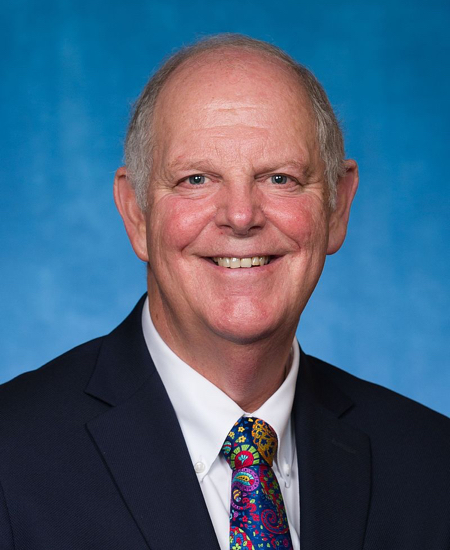
Rep. Tom O’Halleran
Sponsored bills
Ghost Army Congressional Gold Medal Act This bill directs the Speaker of the House of Representatives and the President pro tempore of the Senate to award a Congressional Gold Medal to the 23rd Headquarters Special Troops and the 3133d Signal Service Company, known as the Ghost Army , collectively, in recognition of its service during World War II.
This resolution expresses support for the designation of DIPG Awareness Day. DIPG is diffuse intrinsic pontine glioma, a terminal childhood brain cancer.
Institutional Grants for New Infrastructure, Technology, and Education for HBCU Excellence Act or the IGNITE HBCU Excellence Act This bill establishes a grant program to support long-term improvements of historically Black colleges and universities (HBCUs) and graduate programs at HBCUs. Specifically, the bill requires the Department of Education (ED) to award grants to HBCUs to improve campus facilities. A recipient must use grant funds for certain activities, such as constructing or renovating facilities, carrying out major repairs, and strengthening the safety and security of a campus. Any new construction, modernization, or renovation projects must meet building code and energy and water conservation requirements. Further, HBCUs must seek to procure contracts from certain small businesses, including those owned and controlled by veterans and service-disabled veterans. The bill prohibits the use of grant funds for specified activities, including for the payment of routine and predictable maintenance costs, minor repairs, and utility bills. The Government Accountability Office must study the implementation of the grant program. The bill also requires ED to repay the outstanding balance of principal, interest, fees, and costs and any related reimbursements for certain capital financing loans.
Recognizing the Protection of Motorsports Act of 2019 or the RPM Act of 2019 [ sic ] This bill authorizes the modification of a vehicle's air emission controls for vehicles that are not legal for operation on a street or highway and are used solely for competition.
Non-Opioids Prevent Addiction In the Nation Act or the NOPAIN Act This bill temporarily establishes separate payments for certain non-opioid treatments under the Medicare prospective payment system for hospital outpatient department services and the payment system for ambulatory surgical center services. The bill applies to pain management treatments that are able to replace or reduce opioid consumption, as shown through clinical trials or data.
This bill requires the Department of Health and Human Services to award additional funds to the Indian Health Service Sanitation Facilities Construction Program. This program provides American Indian and Alaska Native homes and communities with water supply, sewage disposal, and solid waste disposal facilities.
Pregnant Workers Fairness Act This bill prohibits employment practices that discriminate against making reasonable accommodations for qualified employees affected by pregnancy, childbirth, or related medical conditions. A qualified employee is an employee or applicant who, with or without reasonable accommodation, can perform the essential functions of the position, with specified exceptions. Specifically, the bill declares that it is an unlawful employment practice to fail to make reasonable accommodations to known limitations of such employees unless the accommodation would impose an undue hardship on an entity's business operation; require a qualified employee affected by such condition to accept an accommodation other than any reasonable accommodation arrived at through an interactive process; deny employment opportunities based on the need of the entity to make such reasonable accommodations to a qualified employee; require such employees to take paid or unpaid leave if another reasonable accommodation can be provided; or take adverse action in terms, conditions, or privileges of employment against a qualified employee requesting or using such reasonable accommodations. The bill sets forth enforcement procedures and remedies that cover different types of employees in relation to such unlawful employment practices. The Equal Employment Opportunity Commission must provide examples of reasonable accommodations that shall be provided to affected employees unless the employer can demonstrate that doing so would impose an undue hardship. The bill prohibits state immunity under the Eleventh Amendment to the Constitution from an action for a violation of this bill.
Teacher, Principal, and Leader Residency Access Act This bill expands the federal work-study programs at institutions of higher education (IHEs) to include work-study programs that compensate students serving in a residency program at the IHE. R esidency program refers to a school-based educator preparation program in which a prospective teacher, principal, or school leader (1) works for one academic year with a mentor teacher, principal, or other school leader; (2) receives concurrent instruction from the IHE; (3) acquires effective teaching or school leader skills; and (4) attains certification or licensure prior to completion of the program.
Metastatic Breast Cancer Access to Care Act This bill expedites payment of Social Security Disability Insurance (SSDI) benefits and eligibility for Medicare coverage for those with metastatic breast cancer (i.e., breast cancer that has spread to other sites in the body). Specifically, the bill eliminates the 5-month waiting period for SSDI benefits and the subsequent 24-month waiting period for Medicare coverage for individuals with metastatic breast cancer. Under current law, individuals generally must wait five months after the onset of disability to begin receiving SSDI benefits and an additional 24 months to become eligible for Medicare.